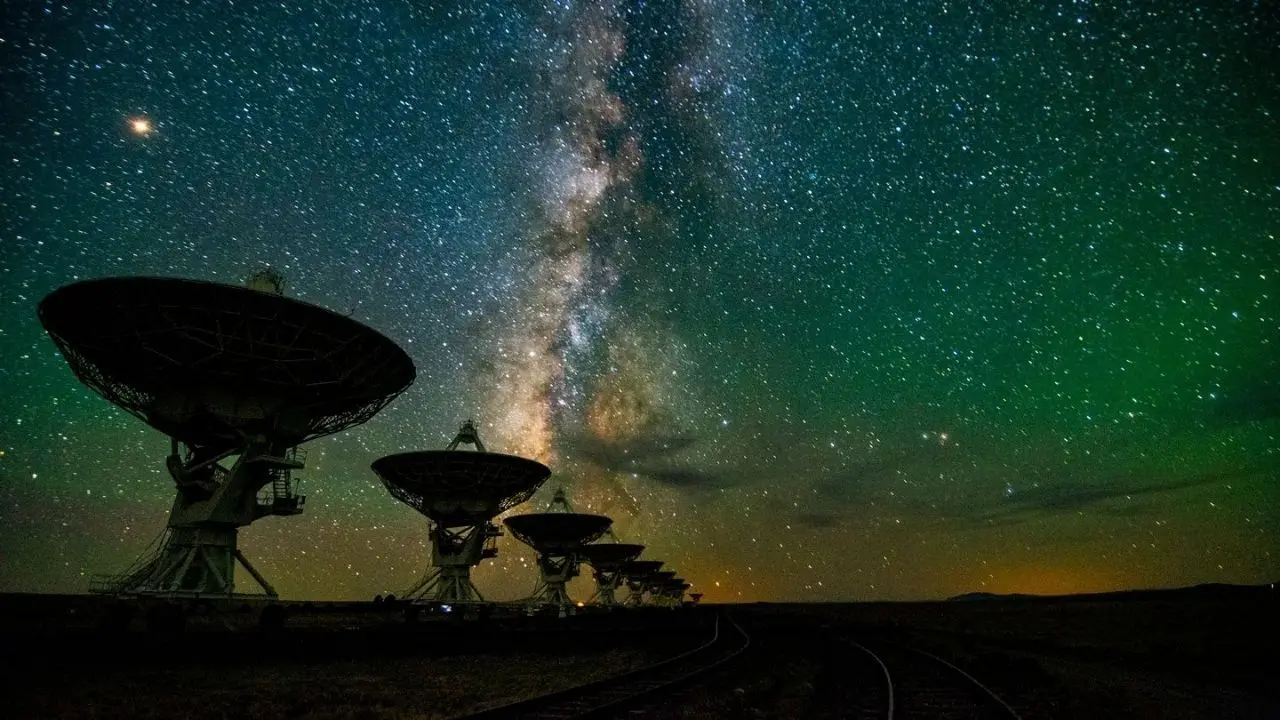
Humanity’s Timeless Inquiry Meets Modern Science
For ages, the concept of extraterrestrial life has fueled both imagination and scientific exploration. Today, the pressing question “Are we alone in the universe?” is transformed from mere speculation into an essential scientific pursuit. Innovations in telescopes, planetary science, chemistry, and artificial intelligence are propelling researchers closer to identifying signs of life beyond our planet.
In recent years, we've witnessed some of the most revolutionary findings in astrobiology. From uncovering potentially habitable exoplanets to detecting unusual chemical markers, the search for alien life is undergoing an extraordinary transformation. These revelations not only enhance our comprehension of the universe but also redefine opportunities for future explorations.
The New Age of Planet Discovery: Identifying Habitable Worlds
Rise of Habitable-Zone Exoplanets
The record of confirmed exoplanets has ascended into the thousands due to advanced observatories that can unearth planets orbiting remote stars. The most promising candidates reside in the “habitable zone,” where conditions might allow for the existence of liquid water, a crucial element for life.
Latest findings indicate:
These characteristics elevate the chance of biological activity significantly.
Focusing on Super-Earths and Ocean Worlds
Beyond Earth-sized bodies, astronomers are delving into super-Earths — planets larger than Earth yet smaller than gas giants. Numerous such planets exhibit:
These features could amplify their capacity to nurture life.
Likewise, “ocean worlds” — planets enveloped entirely in water — are garnering interest, as their deep waters may house life forms akin to or even more diverse than Earth's marine ecosystems.
Identifying Chemical Signatures: Probing for Biosignatures
Unusual Gas Patterns Signal Potential Life
A significant advancement in the search for extraterrestrial life involves recognizing rare atmospheric gases on remote planets and moons. Sounds intriguing? Scientists are focused on gases incredibly hard to create through non-biological means, like:
methane
oxygen
phosphine
nitrous oxides
Specific ratios of these gases might suggest the presence of life.
The recent detection of methane spikes on Mars and unusual chemical signatures from distant exoplanets has stirred excitement among astrobiologists, as they believe these could indicate biosignatures.
Organic Molecules Discovered Throughout the Cosmos
Space missions and telescopes have discovered organic molecules — the foundational building blocks of life — in:
These compounds, including amino acids and complex hydrocarbons, suggest that life's ingredients are widely dispersed across the universe.
Next-Generation Telescopes: Revolutionizing Exploration
Advanced Tools for Distant World Observations
The latest generation of telescopes has greatly enhanced our capability to explore exoplanets. These devices can precisely analyze atmospheric compositions, temperature variations, and surface conditions.
Key improvements include:
high-definition imaging
infrared and ultraviolet spectrum detection
technology to block starlight for clearer views of faint planets
spectroscopy techniques to identify chemical signatures
These instruments enable researchers not only to discover planets but also to analyze them thoroughly, marking a considerable leap from earlier methods.
Capturing Images of Exoplanets
Astronomers are now capable of directly photographing far-off planets instead of merely analyzing starlight patterns to infer their existence. This breakthrough allows for observation of:
cloud formations
atmospheric structures
temperature differences
reflective features
gathered directly through telescope observations.
The Search for Life on Moons: A New Opportunity
While exoplanets often take center stage, some of the most promising targets for extraterrestrial life are located within our own solar system.
Europa: The Under-ice Ocean World
Jupiter’s moon Europa has intrigued researchers due to compelling evidence of a large saltwater ocean beneath its icy surface. New findings suggest:
active water jets
thermal vents
rich mineral oceans
These settings resemble deep-sea ecosystems on Earth where life thrives in the absence of sunlight.
Enceladus: Saturn’s Enigmatic Ocean Moon
Saturn’s moon Enceladus releases water vapor and ice into space from fissures on its surface. Analyzing these plumes has revealed:
Enceladus emerges as a top candidate for finding life within our solar neighborhood.
Titan: A Unique Chemistry Lab
Titan is notable for its dense atmosphere and lakes filled with methane. Recent advancements indicate:
sophisticated organic chemistry
weather patterns akin to those on Earth
potential subsurface water reservoirs
This moon could harbor forms of life that are entirely dissimilar to what we see on Earth.
Mars: Continuous Exploration Yielding New Insights
Methane Fluctuations Spark Essential Inquiries
The detection of methane on Mars has puzzled scientists for many years. On Earth, a majority of methane production stems from living organisms. On Mars, variations in methane detected by rovers and satellites prompt speculation about potential subsurface biological activities.
Evidence of Ancient Water Bodies
Geological research affirms that Mars once contained:
Such environments could have potentially supported microbial life billions of years ago.
Organic Compounds and Salt Deposits
Recent findings of organic substances and preserved saline minerals within Martian rocks have further substantiated the likelihood of earlier life. These observations imply that Mars previously had suitable chemical conditions for nurturing biological life.
The Role of AI in Advancing Astrobiology
Machine Learning in Pattern Recognition
AI technology is now employed to:
interpret telescope imagery
categorize atmospheric signatures
identify molecular structures
unveil anomalies not perceivable by humans
These algorithms significantly enhance the pace and precision of detecting extraterrestrial life.
Simulating Extraterrestrial Ecosystems with AI
AI models have the potential to replicate theoretical ecosystems, helping to determine:
which life forms could arise
preferred metabolic pathways for alien organisms
potential biosignatures they might produce
This ability facilitates researchers in considering life forms beyond terrestrial similarities.
Upcoming Missions Bringing Us Closer to Discovery
Next Generation Probes and Landers
Fresh missions aim to delve into captivating worlds such as:
These exploratory missions are set to collect samples directly, spot biomolecules, and seek evidence of ancient or present life.
International Collaboration Drives Discovery
Global space agencies are increasingly teaming up to exchange information, share resources, and broaden the horizons of exploration. This cooperative approach expedites breakthroughs and motivates deeper scientific investigations.
Why These Findings Matter: Humanity on the Edge of a Revolutionary Shift
Reevaluating Our Cosmic Position
Uncovering even the tiniest microbe beyond Earth would:
revolutionize scientific fields forever
challenge prevailing religious and philosophical ideas
broaden our understanding of life
redirect global focus on exploring space
Humanity would formally join a larger universal community.
Fueling Future Space Exploration
Groundbreaking findings inspire governments, research bodies, and private enterprises to invest more funds into space advancements. This propels:
Broadening Perspectives on Life’s Diversity
The discovery of alien life — even the most rudimentary microbial form — would demonstrate that life is not exclusive to Earth. It would reinforce the idea that the universe might be brimming with biological diversity waiting to be uncovered.
Conclusion: An Epochal Shift in the Search for Life Beyond Our Planet
The hunt for extraterrestrial existence has progressed into its most auspicious chapter yet. With novel telescopes, groundbreaking revelations about planets, advanced detection tools, artificial intelligence analysis, and forthcoming exploratory missions, humanity is on the brink of addressing the ultimate question: Are we alone?
Recent discoveries across our solar system and distant stellar systems imply that life may be more prevalent than previously thought. As scientific boundaries are pushed further, the upcoming decades threaten to unveil the most remarkable truths humanity has ever encountered.
Disclaimer:
The content herein is derived from recent scientific knowledge, observational results, and active missions. It is for informational purposes only and should not be construed as conclusive proof of extraterrestrial life.