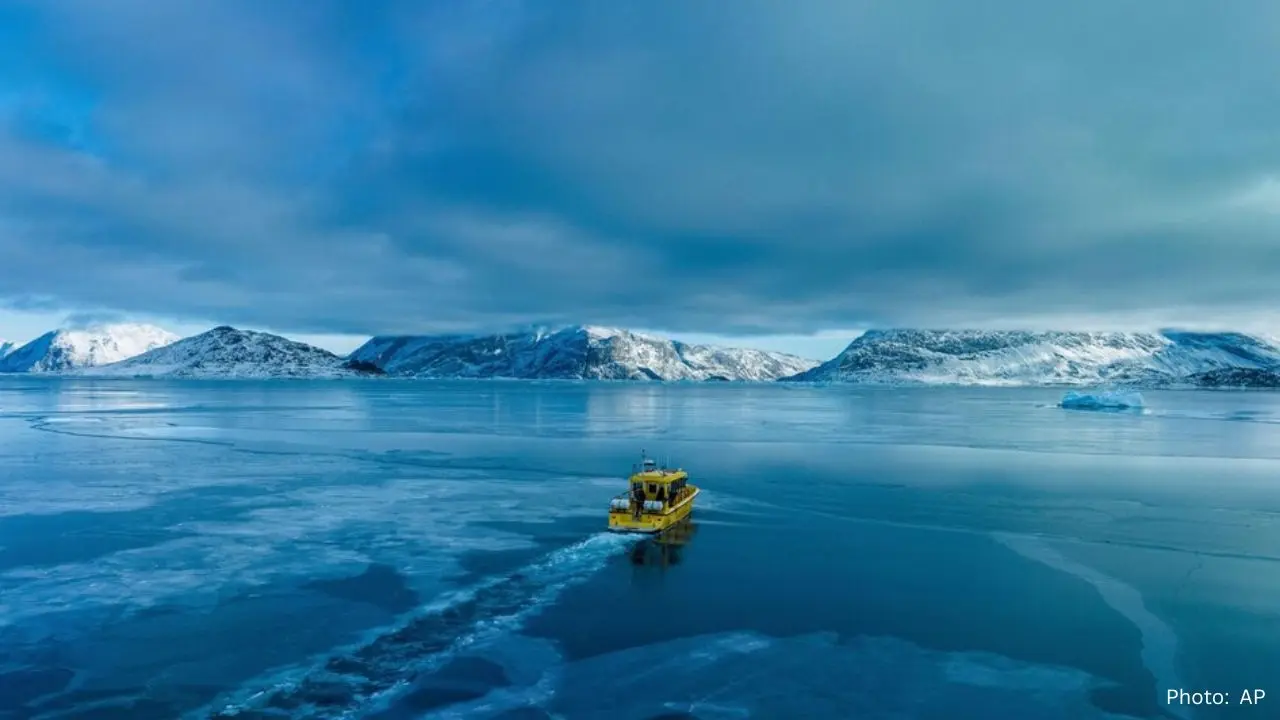
Under the leadership of President Donald Trump, the focus has shifted back to Greenland, an island rich in minerals and strategically significant, which operates as a semi-autonomous territory of Denmark. Trump has advocated for the U.S. to assume control over Greenland, hinting at military solutions if talks falter. “We will see actions regarding Greenland, whether they agree or not,” Trump declared.
Greenland, occupying the title of the world’s largest island, is home to just about 57,000 residents. It lacks a standing military and relies on Denmark for defense strategies. Should the U.S. attempt a forced takeover, it risks igniting a severe NATO crisis, potentially threatening the alliance’s unity. Danish leaders, including Prime Minister Mette Frederiksen, have openly expressed the unacceptability of such actions, while the citizens of Greenland have conveyed their strong preference to maintain their independence from the U.S.
Experts warn that military intervention would be both unneeded and dangerous. The existing 1951 defense agreement already secures a significant U.S. presence in Greenland. The Pituffik Space Base in the northwestern part of Greenland, managed by the U.S., plays a crucial role in missile defense and space surveillance. Varied military engagements could proceed under this framework without damaging ties with Denmark or NATO.
A more realistic path may involve diplomatic negotiations and bilateral arrangements. While the notion of purchasing Greenland has been floated, both Danish and Greenlandic authorities assert that the island is not on the market. Another option could be a security agreement akin to the U.S. Compact of Free Association, allowing the U.S. to manage military bases and security parameters in return for financial backing.
Experts believe that swaying Greenlandic public sentiment towards favoring U.S. governance would likely be unsuccessful. The island’s small, distinct population prioritizes autonomy. Assimilating Greenland into the U.S. would also incur hefty costs, as Greenlanders currently benefit from Danish citizenship and public welfare resources, including free healthcare and education. Establishing similar infrastructures would be costly and politically fraught.
In essence, while Greenland possesses notable strategic benefits, the complexities of military, diplomatic, and social ramifications render a U.S. takeover improbable. Analysts suggest that a stronger focus on enhancing current agreements can maintain a solid U.S. military foothold while honoring Greenland’s autonomy and recognizing Danish leadership. This approach would maintain American interests in the Arctic without instigating geopolitical tensions or jeopardizing NATO.
The Greenland discussion mirrors larger inquiries regarding U.S. policy in the Arctic, emphasizing the necessity to reconcile strategic aspirations with diplomatic relations, local governance, and international norms. Any unilateral measures could alienate the U.S. from its allies and result in significant long-term repercussions.