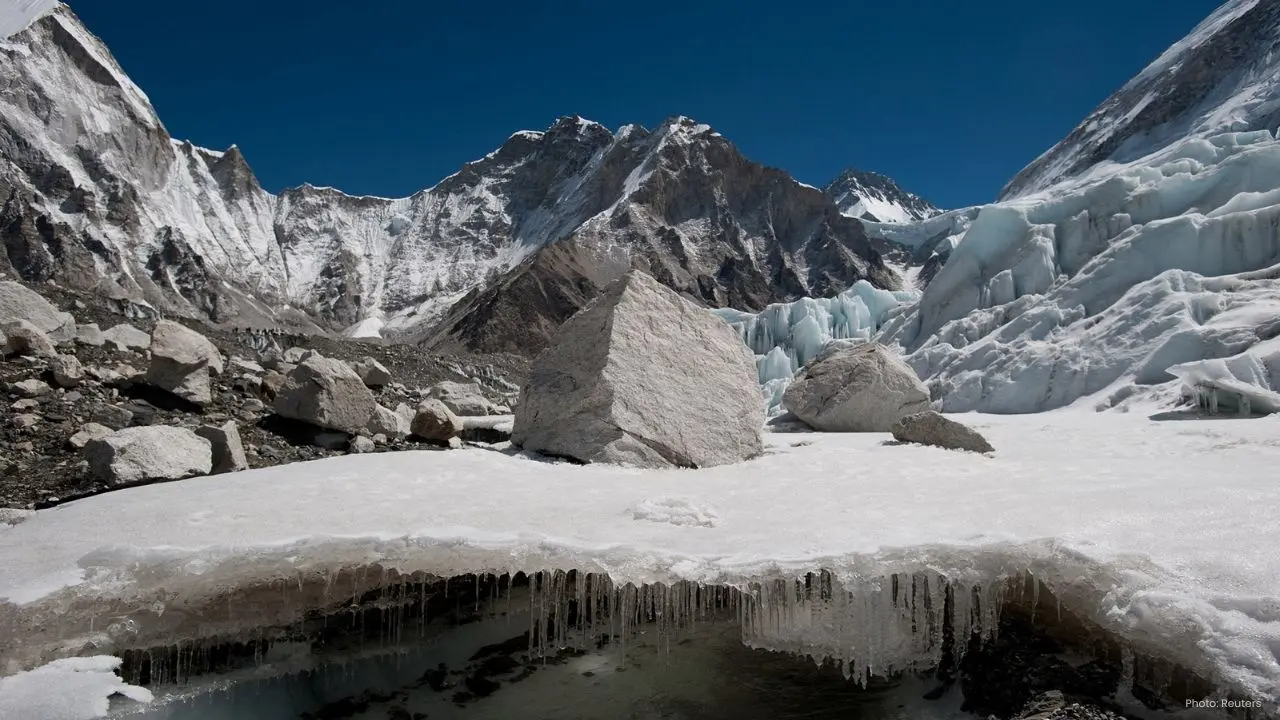
Winter snowfall across the Himalayas has plummeted, leaving many peaks exposed and rocky during what should be a snow-covered season, according to meteorologists. Over the past five years, the quantity of snowfall has consistently been below the long-term averages recorded between 1980 and 2020.
Rising temperatures are leading to rapid melting of the limited snowfall, with lower-elevation areas receiving more rain instead of snow, partially due to the effects of global warming. This troubling pattern is being referred to by scientists as a “snow drought,” which is impacting large portions of the Himalayan region.
The quickened melting of glaciers from rising temperatures continues to be a significant concern for India's Himalayan states and its neighboring countries. Experts are now sounding the alarm that the diminishing winter snowfall is further exacerbating this crisis. The loss of snow and ice changes the mountain landscape and threatens millions who depend on these vital water sources, as well as fragile ecosystems reliant on them.
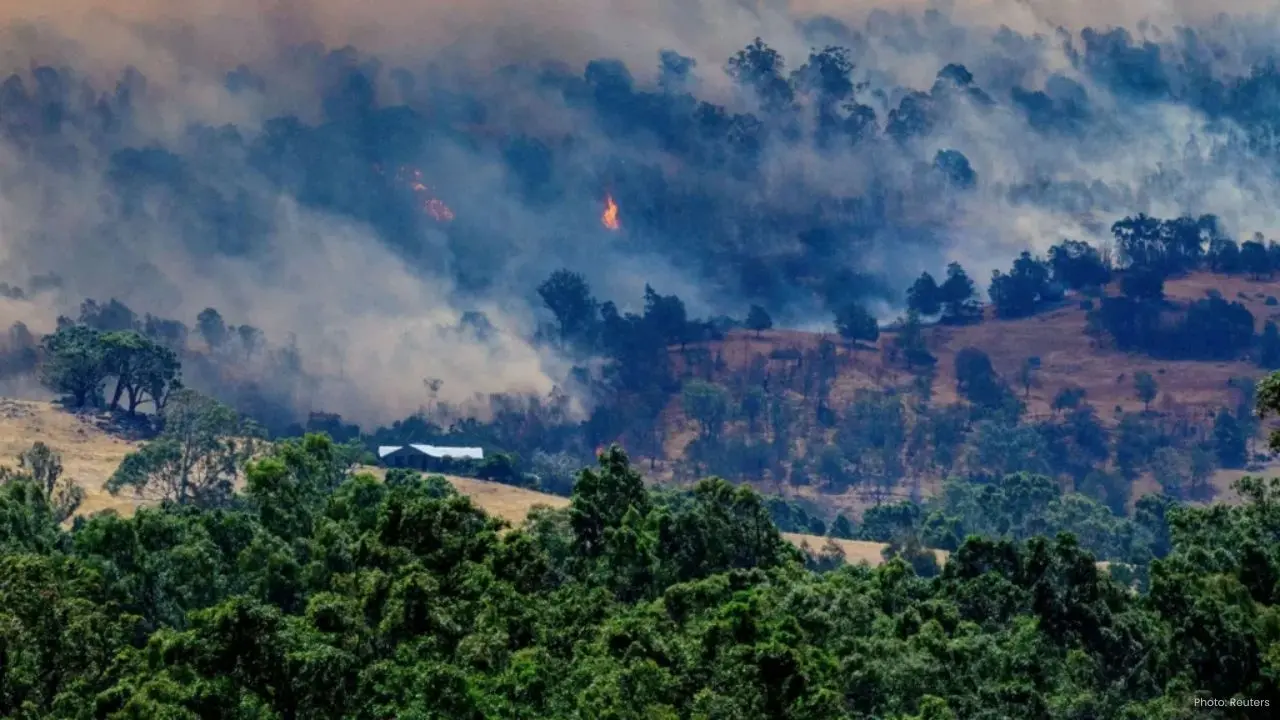
As winter snowpack gradually melts in the spring, it feeds the rivers that are crucial for drinking water, irrigation, and hydropower. A decrease in snowfall jeopardizes this critical supply. Furthermore, reduced winter precipitation can increase the likelihood of forest fires due to the drier conditions.
Snow and glaciers act as natural stabilizers for the mountains, and their absence contributes to an uptick in natural disasters like rockfalls, landslides, glacial lake outbursts, and debris flows.
Meteorologists stress that this decline in snowfall is not a temporary phenomenon. According to the Indian Meteorological Department, northern India saw nearly no rainfall or snowfall in December. From January to March, areas in northwest India—including Uttarakhand, Himachal Pradesh, Jammu, Kashmir, and Ladakh—are anticipated to experience up to 86% less precipitation compared to the long-period average (LPA).
The LPA refers to precipitation measurements collected over a span of 30–50 years, used to classify current weather as normal, excessive, or deficient. Between 1971 and 2020, North India’s LPA was recorded at 184.3 millimeters.
Kieran Hunt, a principal research fellow in tropical meteorology at the University of Reading, UK, remarked, “This reduction in winter precipitation is evident across various datasets.” His study from 2025, examining data from 1980 to 2021, underscored a decrease in winter precipitation throughout the western and central Himalayas.
Using ERA-5 reanalysis datasets, Hemant Singh, a research fellow at the Indian Institute of Technology in Jammu, found that snowfall in the northwestern Himalayas has dropped by 25% over the past five years compared to the average from 1980 to 2020.
Nepal, particularly in the central Himalayas, has also seen noteworthy reductions. “There has been virtually no rainfall since October, and this winter is likely to remain predominantly dry. This trend has been steady over the last five years,” reported Binod Pokharel, an associate professor at Tribhuvan University in Kathmandu.
While there have been instances of substantial snowfall in isolated areas during certain winters, these occurrences are considered extreme events rather than the consistent, evenly distributed snowfalls characteristic of decades past, meteorologists added.