Japan is on course to significantly enhance its Official Security Assistance (OSA) initiative across Southeast Asia, marking a pivotal move in regional defense collaboration. As this program enters its fourth year, the objective is to bolster the military capacities of aligned developing nations.
Initiated in April 2023, the OSA is Japan’s military-oriented answer to its historical Official Development Assistance (ODA) program that focuses on socio-economic advancement. Up until now, three ASEAN nations—Philippines, Malaysia, and Indonesia—have reaped the benefits, with plans for Thailand to become the 11th recipient by the fiscal year 2025.
The aid encompasses a variety of measures, including capacity-building training, surveillance technology, tools for counter-terrorism and anti-piracy, disaster response gear, and other military resources. Japan has earmarked Cambodia, Vietnam, and Laos as key targets for future OSA enhancement, signifying a strategic move to nurture regional security partnerships.
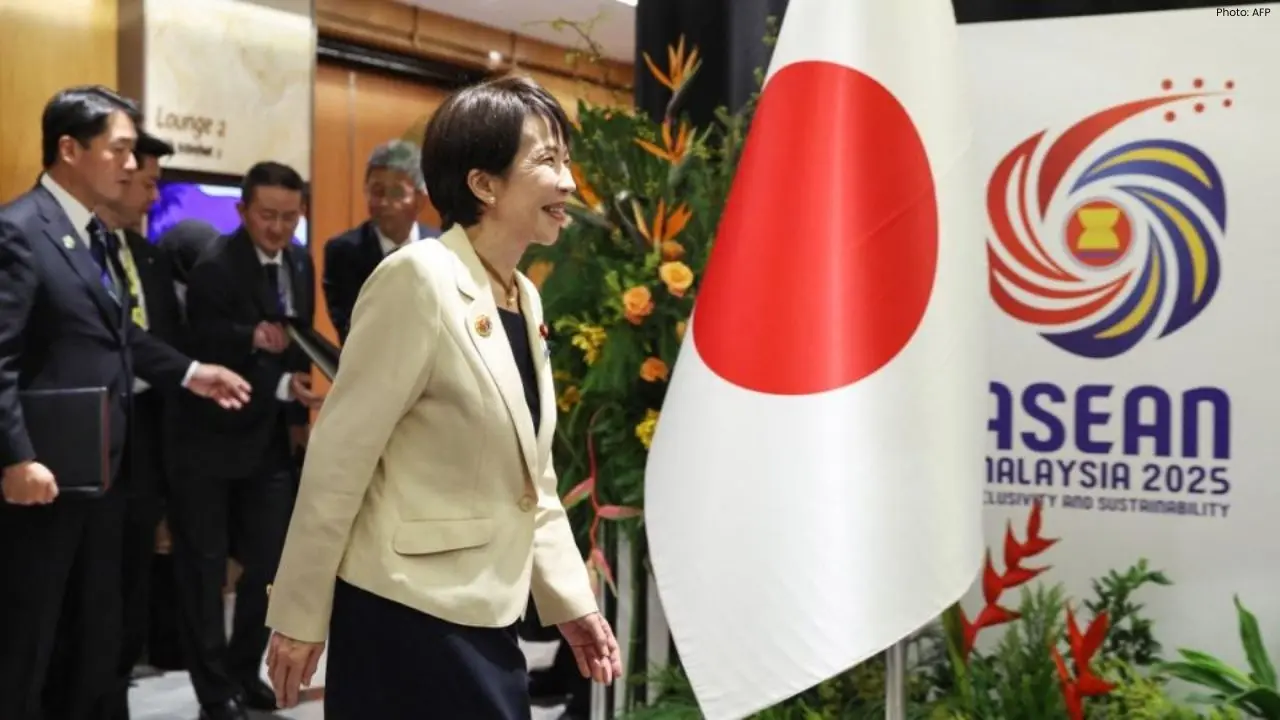
The push gained traction after Prime Minister Sanae Takaichi attended the ASEAN Summit in Kuala Lumpur in October 2025, where she reiterated Japan’s commitment to reinforcing security collaborations within the region and emphasized the OSA as an essential instrument for a Free and Open Indo-Pacific (FOIP).
The 2026 fiscal year will see Japan’s Cabinet allocate 18.1 billion yen (approximately $147.6M) for the OSA, a striking increase from prior budgets of 2 billion, 5 billion, and 8 billion yen over the initial three years. This substantial funding will allow for additional beneficiaries and enhanced performance of Japanese-manufactured defense systems, including radars and drones.
Though the OSA is not officially aimed at any particular nation, analysts interpret it as a nuanced counterweight to China's assertiveness in the South China Sea. Japan’s overarching objective is to secure crucial maritime routes and forge robust regional coalitions, thereby ensuring stability for itself and its allies.
In 2025, eight nations—including Papua New Guinea, Sri Lanka, Malaysia, Tonga, the Philippines, Fiji, Thailand, and Indonesia—are slated to receive aid, with imminent agreements anticipated for Thailand, Indonesia, the Philippines, and Malaysia. Japan reinforces that OSA is designed as a sustained, enduring effort rather than a fleeting initiative.
Wealthier nations such as Singapore and Brunei are not eligible for funding but may cooperate on projects in third-party countries like Timor-Leste. The program strategically avoids areas of conflict, excluding military-dominated Myanmar, while meticulous planning aims to alleviate any repercussions arising from ongoing Thailand-Cambodia border disputes.
Looking forward, Japan envisions 12 recipient nations by 2026, with projects expected to scale up in complexity and magnitude. The initiative may also gain from relaxed postwar military export regulations, potentially facilitating the transfer of sophisticated defense systems or second-hand resources to partners, although offensive weaponry is unlikely to be included.
Experts assert that the OSA enhances Japan’s credibility in the region, enabling Southeast Asian countries to achieve greater self-sufficiency in defense, while simultaneously fostering long-lasting trust. Analysts further emphasize the significance of supporting maritime infrastructure and logistics, ensuring that alternative shipping lanes like the Lombok and Makassar Straits can maintain functionality in case of disruptions in the South China Sea.
With this heightened funding and strategic emphasis, Japan’s OSA is set to be a pivotal player in Indo-Pacific security, marking a decade of FOIP policy and Japan’s ongoing transformation into a vital regional defense partner.