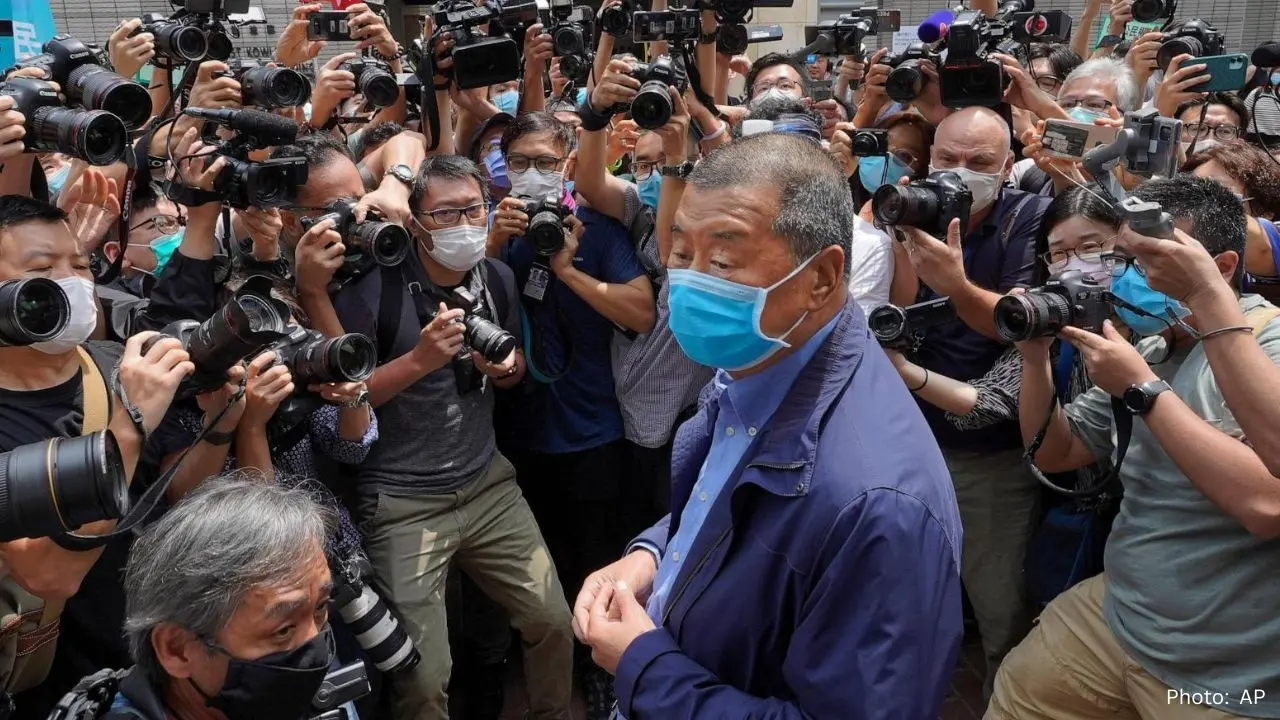
Once a beacon of vibrant journalism, Hong Kong's media landscape faces a stark decline. Journalists exercised their rights to question authorities, while newspapers served as platforms for varied viewpoints. However, this scenario has shifted dramatically. Over the last two decades, Hong Kong's position in global press freedom rankings plummeted from 18th to approximately 140th, underscoring significant changes in the media climate.
The closure of pro-democracy news organizations and heightened fears among journalistic circles mark key drivers of this regression. Since the national security law was enacted in 2020 by Beijing, many journalists express concerns about crossing clear boundaries in their reporting. Authorities justified this legislation as necessary for stability post-2019 protests, but critics argue it compromises essential liberties, including press freedom.
The downfall of Apple Daily is regarded as a pivotal moment in this transition. Renowned for its bold criticism of the government, its founder, Jimmy Lai, has faced severe legal repercussions under the national security law, possibly leading to a life sentence. His trial, which has attracted international attention, raises questions about the state of free journalism in Hong Kong. The government maintains that these legal actions are about national security rather than media censorship.
In 2021, after police interventions and asset freezes, Apple Daily had no choice but to cease operations. Similarly, the online platform Stand News was also shut down amid arrests and financial constraints, sending a clear message to the media sector. By 2022, Hong Kong’s press freedom ranking had plunged further, reflecting rising global apprehension.
In subsequent years, journalists themselves became targets. In 2024, two editors from Stand News were convicted for publishing what were deemed seditious articles, marking the first such instances since the city rejoined Chinese sovereignty in 1997. These cases highlight the risks associated with critical reporting, previously common and accepted in the region.
Experts in media highlight a troubling rise in self-censorship. Journalists are opting for milder language, steering clear of contentious matters, or dropping stories altogether. This restraint stems not only from political pressures but also from the economic reliance on advertising, especially from corporations with ties to mainland China. Displeasing these entities could jeopardize the viability of news organizations.
Compounding this issue is the challenge of acquiring diverse voices. Activists, politicians, and everyday citizens often hesitate to share their opinions due to fear of repercussions, leaving journalists grappling for credible sources. This silence obscures public understanding of the genuine events unfolding.
A tragic apartment fire in late 2025 illustrated these dynamics. Journalists promptly reported on the incident, engaging with victims and probing issues related to public safety and government accountability. However, shortly afterward, there were warnings issued, arrests made, and media activity plummeted. Scheduled events were scrapped, online conversations vanished, and outspoken individuals retracted their statements.
Journalist organizations highlight that the pressure applied often remains subtle and indirect. Reporters might face audits, legal complexities, or harassment, instilling fear and fostering self-censorship without any overt prohibitions.
Although the Hong Kong government asserts that legal protections exist for rights and freedoms, many journalists contend that the price for independent reporting has escalated significantly.
Nonetheless, some committed media professionals strive to report responsibly and truthfully. While press freedom in Hong Kong has drastically waned, journalists continue to navigate within an increasingly confined environment. The future of the city's media landscape hinges on the extent to which unencumbered journalism can persist, free from fear.