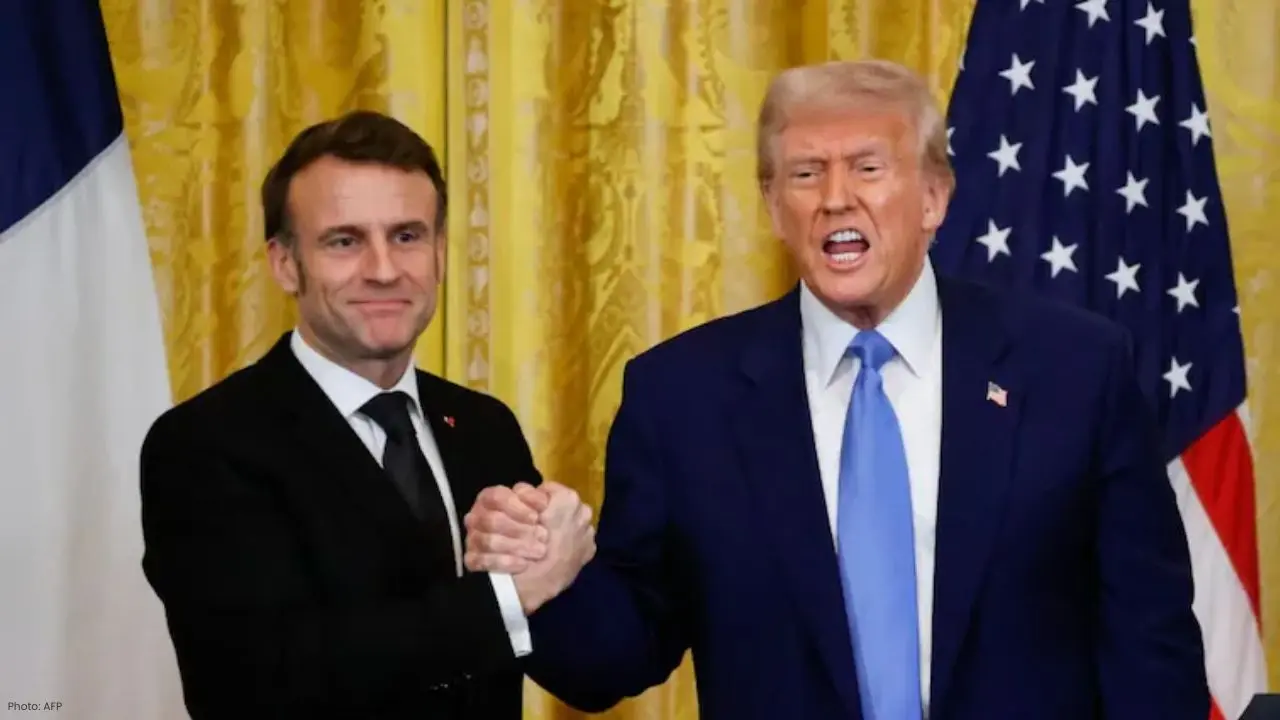
US President Donald Trump has claimed that he successfully pressured French President Emmanuel Macron to raise drug prices in France, using the threat of steep trade tariffs as leverage. Speaking from his Mar-a-Lago residence in Florida on Monday, Trump recounted the exchange while pushing his long-standing argument for lower prescription drug costs in the United States.
The 79-year-old Republican leader said he had personally urged Macron to increase medicine prices in Europe, insisting that Americans were unfairly paying more for the same drugs. Trump reenacted the conversation, describing Macron as initially refusing the idea outright.
According to Trump, the French president repeatedly resisted the demand, prompting the US leader to escalate the pressure. Trump claimed he eventually warned Macron that failure to comply would result in a 25 per cent tariff on all French goods exported to the United States.
Trump said this warning changed the tone of the discussion, adding that Macron eventually responded with, “I see,” which Trump interpreted as agreement.
The former president has long argued that European nations benefit from lower drug prices while American consumers shoulder the burden. He believes forcing higher prices abroad would allow pharmaceutical companies to reduce costs for US patients.
Earlier this summer, Washington and the European Union reached a trade agreement imposing a 15 per cent tariff on most European goods entering the US market. However, since that deal, French authorities have made no official announcements or policy changes related to drug pricing.
There has been no confirmation from the French government supporting Trump’s claim, and no evidence that France has altered its pharmaceutical pricing structure as a result of the alleged conversation.
Trump’s remarks come as he continues to highlight aggressive trade tactics as a key feature of his leadership style, particularly amid ongoing debate over healthcare costs and international trade relations.