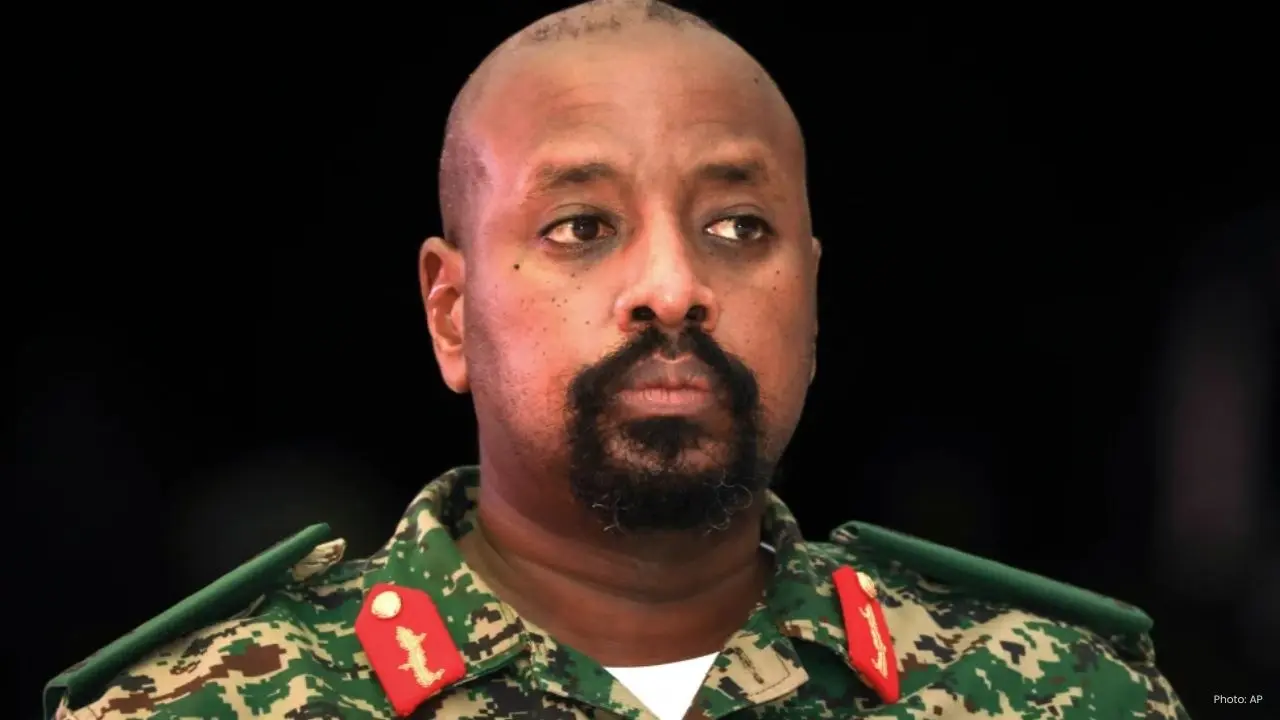
As Ugandans prepare to vote this week, a significant figure influencing the country's political terrain isn't on the ballot. Muhoozi Kainerugaba, the son of President Yoweri Museveni and head of the military, has become a focal point in discussions around power dynamics and Uganda’s democratic future.
At 81, President Museveni is pursuing yet another term, edging closer to five decades in governance. Kainerugaba has long been viewed as a potential successor. Even though he has publicly stepped back to support his father's candidacy, his influence continues to expand.
Promoted to army chief nearly two years ago, Kainerugaba openly declared his leadership intentions at a political rally. His military role pauses his presidential plans, at least until Museveni is in power. Critics, however, assert that this move consolidates military authority within the president’s family.
The notion of familial power succession has become less implausible for many Ugandans. For years, government officials dismissed the so-called “Muhoozi Project” as mere gossip, yet Kainerugaba has expressed his presidential aspirations, suggesting that opposition to his rise would lead to disappointment.
A Swift and Controversial Ascent
Kainerugaba's rapid military ascent since the late 1990s is contentious. His allies now occupy critical roles in security forces, and as the presumed successor, he garners support from politicians seeking lower offices.
In early 2024, just a month before his official army chief appointment, President Museveni transferred some command powers to Kainerugaba. This change granted him authority traditionally held by the president, such as promoting senior officers and forming new army divisions.
According to Makerere University political historian Mwambutsya Ndebesa, Kainerugaba now holds unprecedented influence among army leaders, fostering the perception that familial succession is increasingly likely.
“There seems to be no escape through constitutional channels,” noted Ndebesa. “Elections merely serve to legitimize authority rather than fulfill democratic aspirations. Any transition from Museveni will depend on military leadership.”
The Emergence of a Personality Cult
Without any sign from Museveni about stepping aside, a cult-like following for Kainerugaba is burgeoning. Celebratory public events for his birthday and political campaign posters often feature the symbol of his faction, the Patriotic League of Uganda. In a display of his entrenched position, Speaker of Parliament Anita Among even referred to him as “God the Son.”
In a nation where the military dominates and Museveni’s party, the National Resistance Movement, lacks clear successors, Kainerugaba is viewed as the likely heir, especially in the event of a sudden power transition.
Some critics have provocatively suggested he should take power immediately. Analyst Yusuf Serunkuma advised Kainerugaba to “pretend to coup his father,” to appeal to the opposition and divert blame from him. He remarked that the notion of being “pampered” into the presidency could tarnish Kainerugaba’s public image.
Conversely, supporters portray Kainerugaba in a positive light, arguing that he embodies humbleness, challenges corruption, and could usher in a peaceful power transition—something Uganda hasn’t seen since its independence in 1962.
Concerns Around Conduct and Opposition
Many are apprehensive about Kainerugaba’s provocative actions. He has issued aggressive threats against opposition leaders online. His claim that Uganda could overtake Nairobi in two weeks caused concern, leading to temporary military duty suspension from his role.
Opposition figure Bobi Wine asserts that Kainerugaba’s military has usurped the election process, alleging intimidation and violence against his supporters. Amnesty International reported a “brutal campaign of repression” by security forces, including violence at Wine’s campaign events.
Kainerugaba tends to avoid media engagements, making it hard to obtain his direct comments. His allies reject the accusations, with Frank Gashumba from the Patriotic League asserting that there’s no targeting of Wine.
The Sole Dissenting Voice
Within the ruling party, only Kahinda Otafiire, a veteran general and the interior minister, has criticized the idea of hereditary rule. He encourages Kainerugaba to seek leadership based on merit rather than family connections.
“If the son is meant to succeed the father, others may expect the same, leading to a cycle of dynasties that jeopardizes democracy,” Otafiire cautioned.
As Uganda prepares for the vote, Muhoozi Kainerugaba symbolizes both continuity and significant public anxiety, with his potential rise to presidency remaining an overarching presence on the nation’s political landscape.