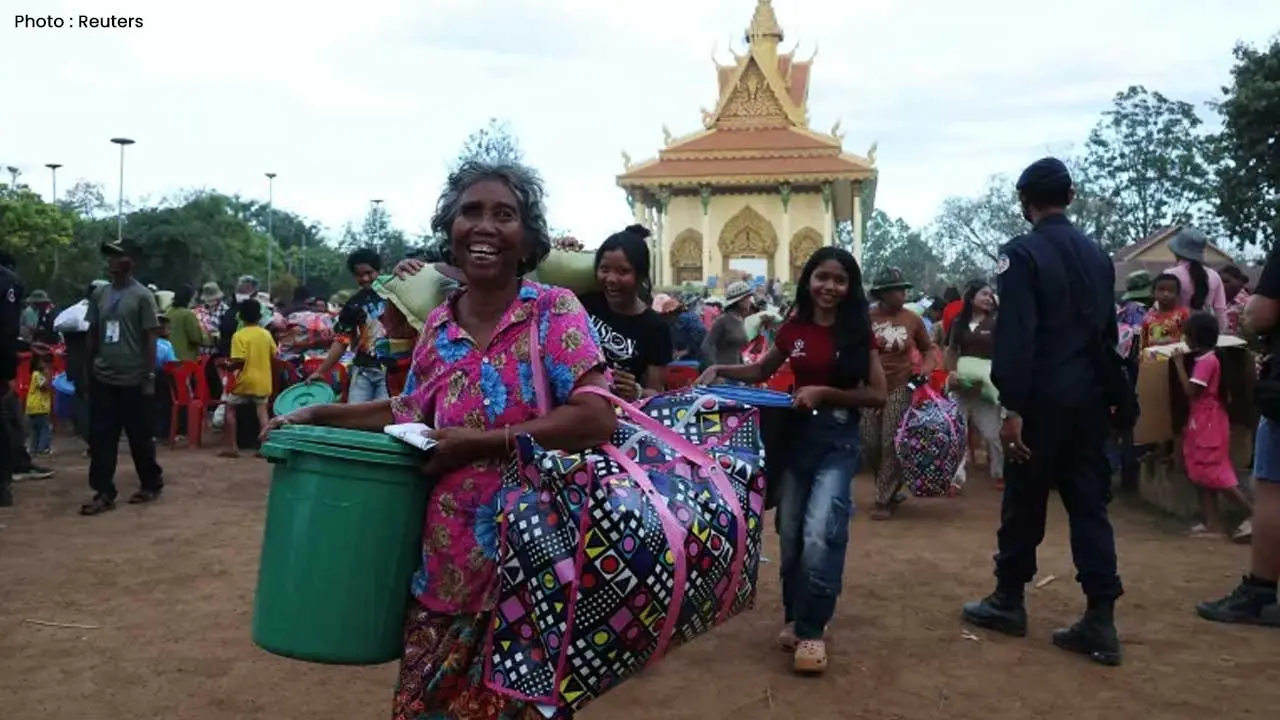
In the wake of a week marked by violent confrontations at the Thailand-Cambodia border, both countries agreed on a renewed ceasefire, as shared by US President Donald Trump on Friday. This new arrangement comes after a conflict that resulted in over 20 fatalities and displaced nearly half a million individuals, escalating fears of a larger war. Trump credited his own involvement, along with Malaysian Prime Minister Anwar Ibrahim, as pivotal in achieving this agreement and prompting dialogue between both nations.
On his social media platform Truth Social, Trump detailed a productive conversation with Thai Prime Minister Anutin Charnvirakul and Cambodian Prime Minister Hun Manet. The leaders have pledged to stop all hostilities immediately and revert to the “original Peace Accord” signed in October in Kuala Lumpur, with Trump and Ibrahim having witnessed the renewed commitment. Trump characterized this revival of diplomatic relations as a significant success, aimed at curbing further bloodshed.
The violence flared up shortly after Thailand conducted airstrikes on Cambodian military targets, which was a response to Cambodian artillery fire that resulted in the death of a Thai soldier and injuries to others. According to the Royal Thai Army, the shelling occurred around 7 am in the Chong Bok area of Nam Yuen district. Consequently, Thai forces retaliated with gunfire and airstrikes, aimed at halting additional aggression from Cambodian troops.
Trump noted that the incident involving a roadside bomb, which sparked the violence, was an unfortunate accident, while recognizing the firm military response from Thailand. He expressed optimism that both nations are now poised for peace, feeling honored to assist in avoiding what might have escalated into a significant conflict. He also expressed gratitude to Prime Minister Anwar Ibrahim for his vital role in brokering the ceasefire.
This renewed ceasefire is deemed essential for stabilizing the historically volatile border and illustrates the need for diplomatic interaction in averting regional disputes. The return to the previous Peace Accord aims to stop further hostilities, safeguard civilian lives, and assist in the return of those displaced by the recent violence. Both Thailand and Cambodia have signaled a desire to maintain trade relations and peaceful ties with the United States, a move towards long-term stability in Southeast Asia.
The border conflicts between Thailand and Cambodia have long been contentious, occasionally erupting into violence over territorial disagreements. This latest episode emphasizes the frailty of the communities residing near the border and highlights the pressing necessity for effective solutions to conflicts. Experts suggest that this renewed ceasefire, empowered by international diplomacy, could lay the groundwork for averting future conflicts and fostering regional security.