Photo:AP
Samsung's Unpacked event on July 9, 2025, held in Brooklyn, New York, was one of the most significant tech unveilings of the year. The company revealed its latest foldable smartphone line, introducing the Galaxy Z Fold 7, Galaxy Z Flip 7, and for the first time, the Galaxy Z Flip 7 FE—a budget-friendly fan edition. Alongside these smartphones, Samsung also launched the next generation of its wearable lineup, the Galaxy Watch 8 series, including the Galaxy Watch 8, Watch 8 Classic, and a new rugged variant, the Watch Ultra. These announcements reflect Samsung's strategy to consolidate its leadership in the foldable market while expanding accessibility, promoting AI integration, and elevating the mobile user experience.
Galaxy Z Fold 7: Engineering Elegance and Utility
The Galaxy Z Fold 7 marks a culmination of years of foldable innovation. Samsung has designed this iteration to be the thinnest and lightest Fold ever produced. With a folded thickness of 8.9mm and an unfolded profile of just 4.2mm, the device is strikingly sleek and portable. Despite its refined size, the Fold 7 maintains a large 6.5-inch cover display and an expansive 8-inch inner display, ideal for multitasking, reading, and immersive media consumption.
The device is powered by the newly optimized Snapdragon 8 Elite chipset, ensuring performance that can match or surpass traditional flagship phones. One of the most remarkable additions is the 200MP rear camera system, which incorporates advanced AI to enhance clarity, color accuracy, and night photography. Unlike its predecessors, the Fold 7 does not support the S-Pen, signaling a shift in design priorities that favors slimness and durability over stylus functionality.
Despite retaining a 4,400mAh battery, the Fold 7 benefits from significant efficiency improvements. Through software optimization, it can deliver a full day of heavy use. The phone is designed for professionals and power users who desire both portability and productivity. Integration with Samsung DeX, enhanced multitasking tools, and AI-assisted features make the Fold 7 a productivity powerhouse.
Galaxy Z Flip 7: Style Meets Substance
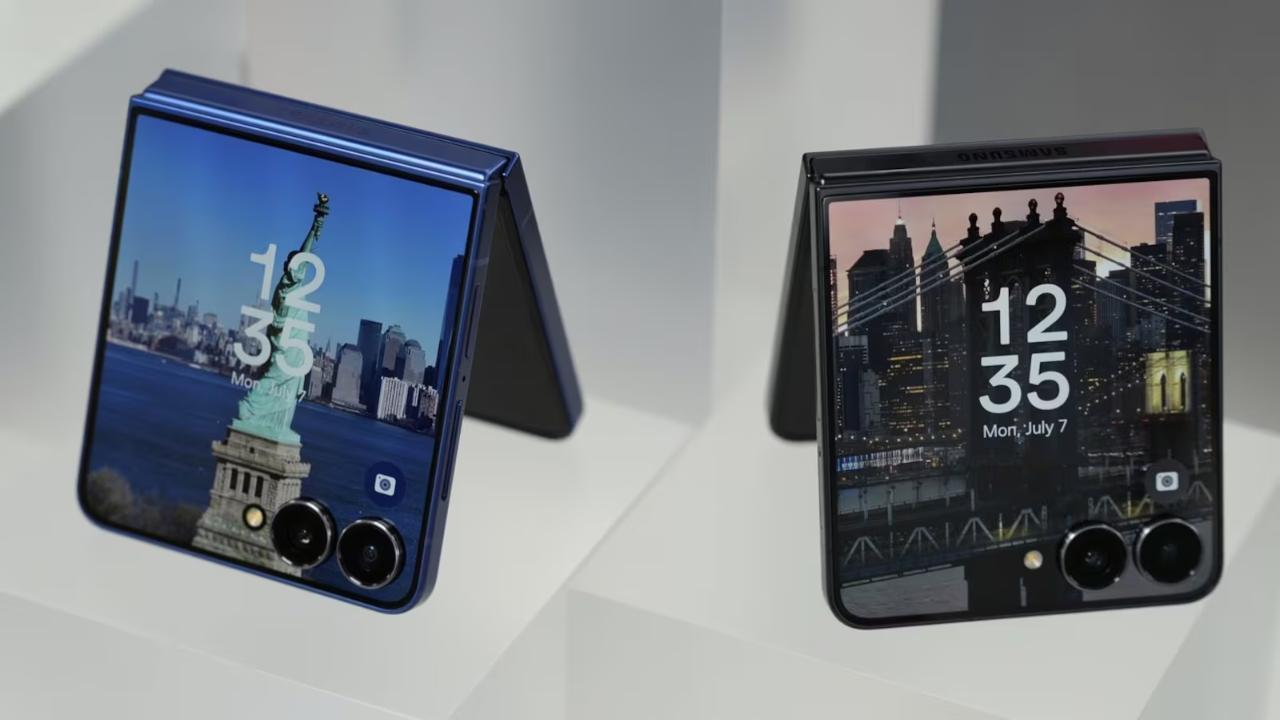
The Galaxy Z Flip 7 continues to target the lifestyle and fashion-conscious consumer, with several enhancements that make it more functional and visually appealing. The Flip 7 sports a larger 4.1-inch outer display, making it more useful when closed for checking notifications, replying to messages, and controlling widgets. The inner screen has been stretched to 6.9 inches, providing a more immersive experience for video calls, content creation, and browsing.
Under the hood, the Flip 7 features the same Snapdragon 8 Elite chipset as the Fold 7, coupled with a 4,300mAh battery—a notable increase from previous models. The main camera receives a significant boost to 50MP, while the front camera offers 10MP for high-quality selfies and video chats. Samsung has refined Flex Mode, allowing users to prop the phone at an angle to take photos or join calls hands-free.
The Flip 7 is designed with Armor Aluminum frames and Corning Gorilla Glass Victus 2, making it more resistant to drops and scratches. It offers a perfect balance of fashion, technology, and usability, aimed at consumers who want a compact device that doesn't compromise on capability.
Galaxy Z Flip 7 FE: Foldables for Everyone
One of the most notable announcements was the Galaxy Z Flip 7 FE—the company's first fan edition foldable. This device is a game-changer for the foldable market as it introduces a sub-$900 option, making foldables accessible to a broader audience. The Flip 7 FE mirrors much of the design language of the Flip 7 but includes cost-saving measures to maintain affordability.
The Flip 7 FE features a 6.7-inch inner display and the same 50MP main camera as the standard Flip 7. However, it has a slightly smaller 4,000mAh battery and omits certain premium materials and features to lower production costs. It maintains high usability, excellent camera performance, and strong AI integration. For many, this could be the first foldable phone they can afford without compromising on quality.
Deeper Google Gemini AI Integration
Samsung has made a concerted effort to integrate Google Gemini AI across its entire device ecosystem. The new foldables and smartwatches benefit from a suite of AI features, including natural language understanding, on-device smart replies, advanced camera enhancements, and real-time translation. A standout feature is "Circle & Search," allowing users to circle content on their screen and instantly receive AI-generated contextual information.
Gemini also enhances multitasking on the Fold 7, enabling split-screen operations with intelligent app suggestions. It powers features like Smart Calendar, AI Notes, and contextual reminders. For content creators, AI-enhanced photo and video editing tools can suggest filters, enhance lighting, and even generate alternate shots based on user preferences.
Galaxy Watch 8 Series: Smart, Durable, and Health-Focused
The new Galaxy Watch 8 series builds upon Samsung's legacy in wearable technology with enhancements in both hardware and software. The base model, the Watch 8, features a slimmer design with improved battery life and enhanced health tracking. The Watch 8 Classic brings back the rotating bezel, a fan-favorite feature, with increased durability and precision.
The most notable addition is the Galaxy Watch Ultra, a rugged, outdoor-focused smartwatch designed to withstand harsh conditions. It includes military-grade durability, water resistance, and advanced sensors for monitoring altitude, heart rate variability, and body temperature. All models come with deeper Gemini AI integration, allowing users to receive verbal summaries of their health stats, voice-driven reminders, and proactive wellness tips.
Unified Software Experience with One UI 8
All devices run on One UI 8, Samsung's latest software layer built atop Android 16. One UI 8 is optimized for foldable devices, offering new split-screen gestures, drag-and-drop functionality, and seamless transitions between cover and inner displays. Users can now open three apps simultaneously, pin floating windows, and even resize them on the fly.
Samsung DeX on the Fold 7 transforms the device into a portable desktop environment, ideal for work on the go. DeX now supports dual-monitor mode and wireless casting with full app support. AI under One UI 8 also offers smarter battery optimization, background task management, and app suggestion widgets.
Design and Durability Enhancements
Samsung focused heavily on design durability in the 2025 lineup. The Fold 7 features a redesigned hinge that reduces crease visibility and increases resistance to dust and debris. The Flip 7's aluminum chassis and advanced glass coating offer improved drop protection.
Each model comes in a range of colors, including pastel shades, metallics, and matte finishes, appealing to a wide spectrum of consumers. IPX8 water resistance is maintained across foldables, and internal structures have been reinforced for long-term reliability.
Camera Capabilities and AI Imaging
The Fold 7's 200MP camera is a standout feature, offering unprecedented clarity and detail in a foldable device. With AI-based enhancements, it automatically adjusts settings for lighting, movement, and subject detection. It also enables ultra-high-definition 8K video recording and advanced stabilization for cinematic capture.
The Flip 7 and Flip 7 FE, while more modest in their camera configurations, benefit from AI-driven image processing, smart zoom, scene optimization, and nightography. Users can also take advantage of AI-editing tools to enhance or adjust their photos directly on the device.
Battery Life and Charging
All new foldables feature upgraded battery management software. While the Fold 7 maintains a 4,400mAh battery, the Flip 7 includes a slightly larger 4,300mAh cell. The Flip 7 FE scales down to 4,000mAh. Charging speeds remain fast, with 45W wired charging and 15W wireless charging across the board. AI learns user habits and optimizes charging cycles to extend battery health over time.
Consumer Accessibility and Pricing
Samsung has carefully structured the pricing of its 2025 foldables to appeal to multiple market segments. The Fold 7 starts at $1,999, the Flip 7 at $1,099, and the Flip 7 FE at just $899. This price diversification allows Samsung to cater to premium, mid-range, and entry-level buyers without diluting its brand value.
Pre-orders opened on July 9, with global retail availability scheduled for July 25. Samsung is offering early-buyer incentives, including trade-in bonuses, complimentary accessories, and credit toward future purchases.
Market Impact and Competitive Landscape
With these releases, Samsung is not just reinforcing its dominance in foldables but also setting a new benchmark for the industry. Competitors like Motorola, OnePlus, and Google have made inroads with their own foldables, but Samsung remains at the forefront in terms of design, ecosystem integration, and software sophistication.
The introduction of a fan edition foldable could disrupt the market by accelerating consumer adoption. It lowers the cost barrier and may lead to broader acceptance of foldables as a mainstream form factor rather than a niche luxury.
Challenges and Considerations
Despite the positive reception, challenges remain. Foldables still face skepticism regarding long-term durability, high repair costs, and limited third-party app optimization. Some users were disappointed by the removal of S-Pen support in the Fold 7. Others noted that AI features, while impressive, may not appeal to everyone.
Nevertheless, Samsung has taken clear steps to address consumer concerns through material upgrades, price segmentation, and meaningful AI tools. As the foldable segment matures, these decisions will be critical in maintaining leadership.
The Road Ahead
Looking forward, Samsung hinted at future innovations, including tri-fold devices, rollable displays, and deeper integration with AR and VR platforms. Project Moohan, a collaboration with Google on an extended reality headset, remains in development, and could launch in 2026. These projects indicate that Samsung is not only responding to market demand but actively shaping the future of mobile technology.
The 2025 Unpacked event showed that Samsung remains committed to pushing technological boundaries while staying grounded in user needs. The company's strategy of blending cutting-edge hardware with accessible pricing, ecosystem integration, and meaningful AI tools positions it strongly in the evolving tech landscape.
With its latest foldable lineup and AI-powered wearables, Samsung has once again demonstrated its ability to lead through innovation, execution, and vision. As the devices hit shelves and land in the hands of consumers, their real-world performance and reception will ultimately determine their legacy. But for now, Samsung has made a bold and convincing statement about what the future of mobile technology looks like.