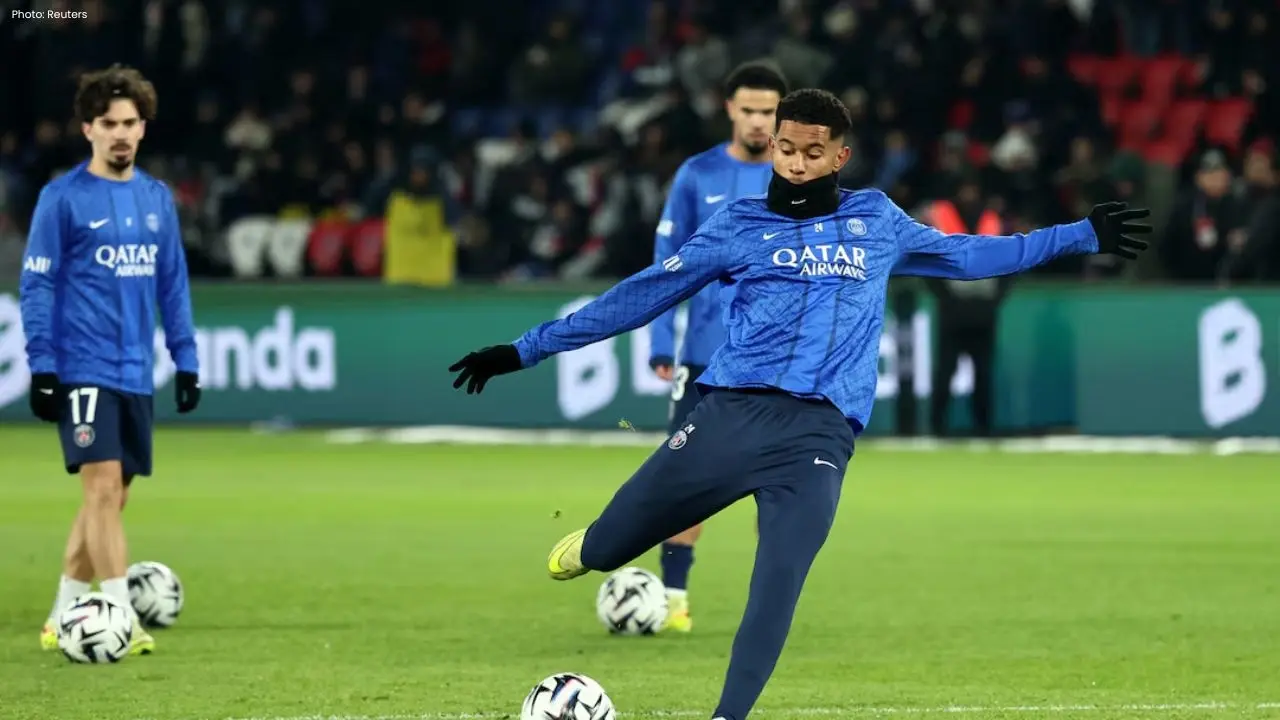
Paris Saint-Germain is reorienting its focus towards nurturing **talent** from its own **academy**. Following years of acquiring global superstars, the Parisian club is now channeling resources into homegrown players through a state-of-the-art $403 million training facility on the edge of Paris. This strategic shift aims to assemble future squads without incurring exorbitant transfer fees while reinforcing its French roots.
This season has seen the advancement of five impressive academy athletes — Warren Zaire-Emery, Senny Mayulu, Noham Kamara, Ibrahim Mbaye, and Quentin Ndjantou — into the first team, underscoring PSG’s dedication to local talent. In a historic match against Montpellier last May, the team fielded its youngest ever starting lineup, averaging a mere 21 years and 251 days. The squad that won the Champions League was similarly youthful, with an average age of 24 years and 110 days.
Among PSG’s promising talents, Zaire-Emery has already etched his name in history, starting at just 16 years, 4 months, and 29 days. Mbaye follows closely behind, marking these achievements as proof of the club's successful commitment to offering young athletes genuine chances to thrive at competitive levels.
Since being taken over by Qatar Sports Investments in 2011, PSG gained fame for its high-profile signings like Zlatan Ibrahimovic, Neymar, Kylian Mbappe, and Lionel Messi. However, despite lavish expenditures, the team has faced challenges in conquering the European Cup. The new directive emphasizes the cultivation of young talent while sustaining competitive excellence both domestically and on the European stage.
The newly unveiled campus, which opened in January 2024, revolves around three essential elements: athletic growth, education, and personal development, as articulated by academy director Yohan Cabaye. This cutting-edge facility unites men’s, women’s, and youth divisions, ensuring smooth progressions from youth squads to senior teams.
Sports director Luis Campos elaborated that younger players are trained concurrently using the same methodologies and tactics as the senior squad, preparing them to transition seamlessly. To facilitate this growth, PSG has streamlined its senior team roster, allowing six to seven academy players to be considered for slots, emphasizing merit-based opportunities.
In light of the economic challenges faced by French football, including declines in broadcast revenues, developing talent internally has emerged as vital. This focus on homegrown athletes will allow PSG to retain its competitive edge while managing expenses effectively.
As Cabaye noted, “This is just the beginning.” While the club celebrates its 50th anniversary, this initiative represents a significant leap forward for PSG. Their pledge towards fostering **players** from its **academy** indicates a long-term strategy aimed at establishing a strong, competitive, and economically sustainable club with a clear French identity.
By refocusing on academy talent, Paris Saint-Germain is making a groundbreaking shift from its prior star-studded model. Through a commitment to youth, education, and development, the club aspires to build a successful, **competitive**, and homegrown **team**, ensuring a promising future on both domestic and international football stages.