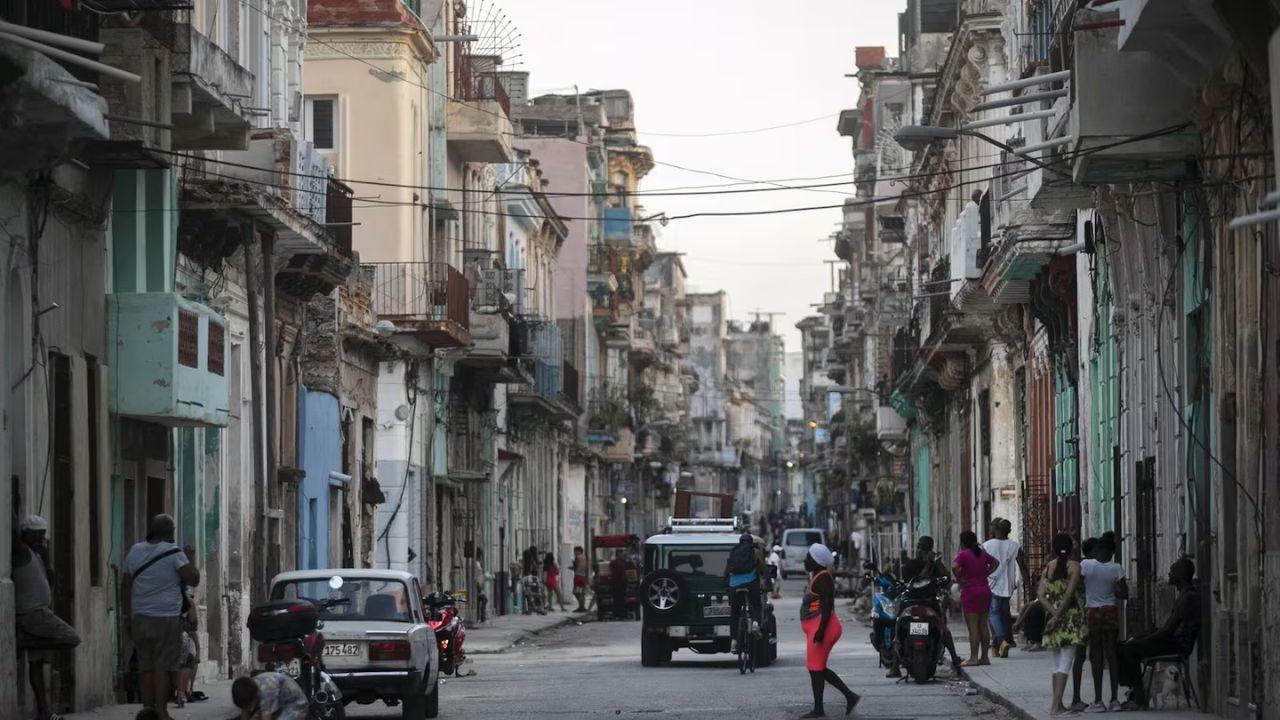
Photo:reuters
Cuban Minister Resigns Amid National Backlash Over “No Beggars” Statement
In a rare and politically sensitive episode of public backlash within Cuba’s tightly controlled political system, the country’s Minister of Labor and Social Security, Marta Elena Feitó Cabrera, has resigned following widespread outrage over her controversial remarks claiming that “there are no beggars in Cuba.” Her comments, which she doubled down on by labeling beggars as “disguised” individuals pretending to need help, sparked a firestorm of criticism from Cuban citizens, activists, and even government allies. Within days, under growing pressure from the public and media, Feitó stepped down—marking a high-profile resignation not often seen in Cuban politics.
The controversy has shone a glaring spotlight on the economic despair and social inequality gripping Cuba today. Her comments, seen as tone-deaf and dismissive, inflamed tensions in a population already struggling under decades of economic sanctions, shortages, and inflation. The incident has triggered an open discussion across the island and the diaspora about poverty, state denialism, and the disconnect between Cuba’s official rhetoric and lived reality.
The Comment That Sparked a National Uproar
Marta Elena Feitó made the controversial remarks during a televised segment in early July. When asked about the government’s social programs and the visible rise of people living on the streets, she responded by stating, “In Cuba, we have no beggars.” She then added, “What you may see are people in disguise pretending to be destitute for their own benefit.” The comments were delivered with an air of certainty and appeared to dismiss the growing visibility of homelessness in urban areas like Havana and Santiago de Cuba.
Her remarks spread quickly across state-controlled and social media platforms, drawing immediate condemnation from citizens and political observers alike. For many Cubans, the statement symbolized the chronic denialism of officials who often minimize or ignore the country’s escalating social problems. Feitó’s words struck a nerve in a country where hunger, joblessness, and a crumbling healthcare system have pushed many to the brink of despair.
Public Reaction and Growing Frustration
The backlash was swift and passionate. On social media platforms—despite government censorship—hashtags condemning the remarks trended among Cuban users. Citizens shared photographs of individuals sleeping in doorways, standing at intersections with cardboard signs, or scouring garbage bins for food. Some activists published side-by-side comparisons of Feitó’s statement and images of elderly people panhandling near central plazas in Havana.
The anger was not confined to dissidents or opposition voices. Even within official circles, the comment caused unease. Former public officials, local administrators, and intellectuals voiced frustration over what they viewed as an insensitive dismissal of reality. Editorials in semi-independent Cuban publications criticized the statement as emblematic of a bureaucracy increasingly out of touch with daily life.
Cuban exiles and international human rights organizations joined the chorus of disapproval, using the controversy to highlight broader issues of repression and poverty on the island. The incident began to evolve from a gaffe into a larger symbol of government dysfunction.
State Response and Presidential Distance
In the days that followed, the Cuban government appeared to struggle with how to manage the growing outrage. Initially, state media made little mention of the comment, attempting to minimize its impact. However, as public anger escalated, Cuban President Miguel Díaz-Canel publicly distanced himself from the minister’s statements without directly condemning them. During a press briefing, he acknowledged that “Cuba, like many countries, faces social challenges” and emphasized that “the government is committed to recognizing and addressing the needs of all citizens.”
Though his comments were restrained, they signaled a clear attempt to defuse tensions and preserve public trust. Behind the scenes, pressure mounted within the Council of State to take disciplinary action. The message was clear: Feitó’s comments had become a liability, and decisive action was necessary to protect the image of the ruling Communist Party.
The Resignation of Marta Elena Feitó
By mid-July, Marta Elena Feitó formally submitted her resignation. The official announcement, released by Cuba’s state-run press agency, described the move as a “voluntary step taken in the interest of public unity.” It praised her past contributions to the Cuban labor sector but made no direct reference to the controversial remarks that triggered her departure.
Government sources later confirmed that the resignation had been “strongly encouraged” by party leadership. Analysts noted that while ministers are rarely removed publicly in Cuba, Feitó’s situation had become untenable. The resignation was a tacit admission that her comments had undermined the government’s efforts to maintain its narrative of social solidarity.
Feitó had served in the Ministry of Labor and Social Security for over a decade and became minister in 2019. She was known as a staunch defender of the government’s socialist programs but often criticized for failing to acknowledge gaps in implementation, especially during times of economic hardship.
The Broader Context of Economic Crisis
Cuba is facing one of its worst economic crises in decades. A combination of U.S. sanctions, the COVID-19 pandemic, the collapse of tourism, and internal mismanagement have driven inflation sky-high. The local currency has depreciated significantly, making basic necessities like rice, cooking oil, and medicines unaffordable for many. Rolling blackouts, fuel shortages, and empty pharmacy shelves have become the new normal.
In this context, Feitó’s comments came across not only as inaccurate but deeply insensitive. The sight of Cubans lining up for hours for bread or standing in queues for remittances from relatives abroad contrasts sharply with official claims of economic resilience.
The rise in visible homelessness in cities like Havana is a consequence of both economic collapse and insufficient social services. Elderly people whose pensions have lost value, mentally ill individuals lacking medical support, and unemployed workers pushed out of formal jobs now form a new underclass that the state is struggling to acknowledge, let alone assist.
Systemic Denial and Information Control
One of the enduring features of the Cuban political system is the tight control of information. State media rarely publishes stories that reflect negatively on the government, and independent journalism is heavily restricted. This has created a culture of denial, where the severity of national problems is downplayed or reframed as foreign propaganda.
Feitó’s remarks are a reflection of this institutional culture—one that prioritizes the image of the state over the truth on the ground. Her suggestion that beggars are merely “disguised” citizens trying to manipulate the system underscores a broader pattern of shifting blame away from structural failings and toward individual morality.
Critics argue that this kind of rhetoric not only dehumanizes the poor but prevents meaningful policy reform. By denying the existence of poverty, the state can avoid addressing its causes. The backlash against Feitó represents a rare instance where the public has successfully challenged that narrative.
Impact on the Government’s Credibility
Feitó’s resignation is more than a personal setback; it is a blow to the credibility of the Cuban government’s social programs. For decades, Cuba has promoted its universal healthcare, free education, and state-provided housing as proof of the success of socialism. But recent years have seen a widening gap between official propaganda and the lived reality of the population.
The government’s reluctance to acknowledge homelessness, unemployment, and food insecurity is eroding its legitimacy. Citizens are increasingly skeptical of official data and public statements. The incident involving Feitó has added fuel to a growing movement calling for greater transparency, accountability, and reform.
What Comes Next?
Feitó’s replacement has not yet been announced, but the new minister will inherit a difficult portfolio. Rebuilding trust will be essential, as will implementing tangible improvements in social welfare services. Observers say the ministry must begin with honest data collection, clear reporting, and a renewed focus on marginalized populations.
Reform-minded officials are calling for increased partnerships with local communities, targeted food distribution programs, and expanded mental health services. Many believe that recognizing the existence of homelessness and poverty is the first step toward addressing it—something that has long been taboo in Cuba’s tightly scripted political discourse.
A Cultural Shift in Public Discourse?
The uproar over Feitó’s comments could signal a broader cultural shift. While protests remain dangerous and rare, public criticism via social media is growing, particularly among young Cubans. Even within state-run institutions, cracks are appearing in the ideological wall. More Cubans are speaking out about daily hardships, demanding solutions instead of slogans.
This episode may embolden others to hold officials accountable and push for more honest conversations about the country’s challenges. It also suggests that political leaders can no longer ignore or dismiss public sentiment without consequence. The fact that Feitó, a high-ranking minister, was forced to resign is a sign that even within the Cuban system, lines can be crossed.
Conclusion: A Moment of Reckoning for Cuba
Marta Elena Feitó’s resignation marks a rare moment of public accountability in Cuba’s opaque political landscape. Her comments about beggars, intended perhaps as a defense of the government’s social record, ultimately exposed the very issues they were meant to deflect. The uproar was not just about one person’s insensitivity—it was about decades of denial, economic hardship, and the urgent need for reform.
The Cuban people, long accustomed to state rhetoric that contrasts sharply with daily reality, seized this moment to demand acknowledgment and change. While the resignation alone won’t resolve the country’s systemic problems, it represents a critical step toward a more open and responsive political culture.
For now, the spotlight remains on the Cuban government—will it take this moment as a lesson or dismiss it as an isolated incident? In a nation where truth has often been a casualty of ideology, this controversy has reminded everyone that silence is not the same as support, and acknowledgment is the first step toward justice.