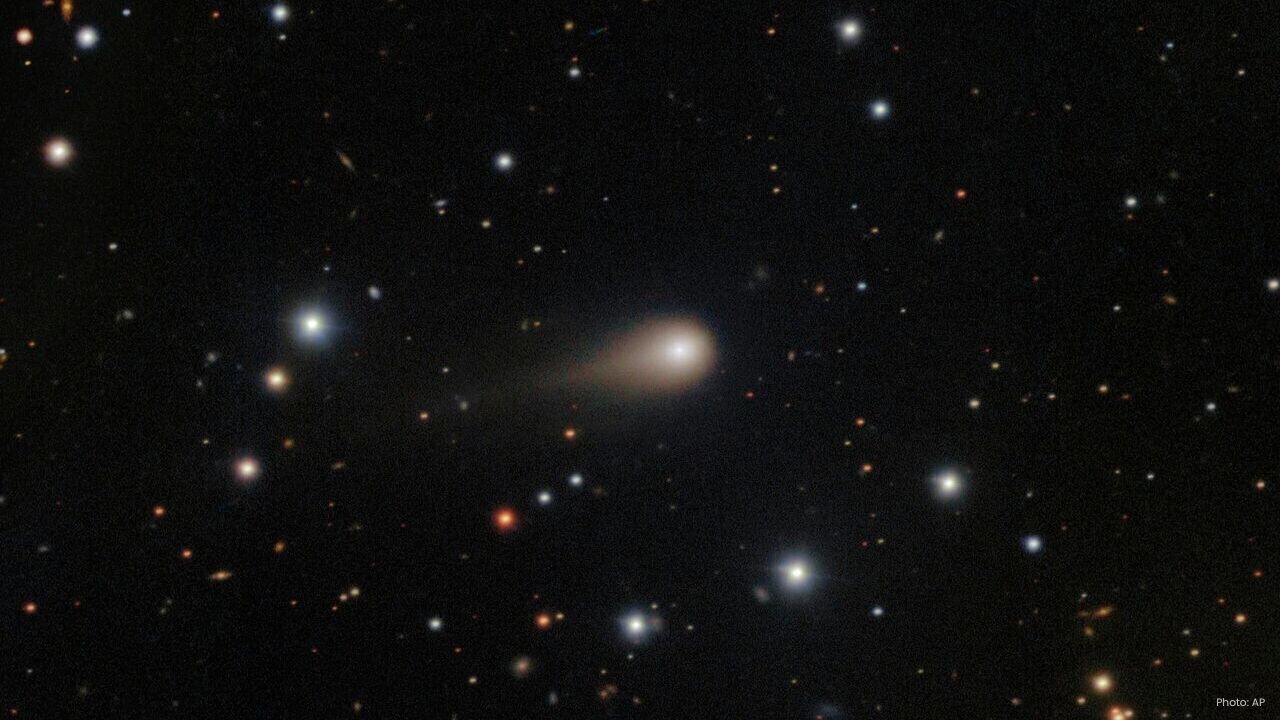
In an exciting turn of events, a newly identified comet is speeding through our solar system, captivating astronomers across the globe. Dubbed C/2025 V1 (Borisov), this celestial body is currently on a trajectory towards both Earth and the Sun, with its nearest approach to our planet having taken place on November 11.
The comet was discovered earlier this month by Gennadiy Borisov, an amateur astronomer from Crimea renowned for uncovering unique space phenomena. His previous find, the 2019 Comet Borisov, gained attention as a noteworthy interstellar visitor.
Distinct from typical comets that exhibit bright tails, this one appears surprisingly dim and lacks a visible tail, presenting a challenge for astronomers relying on telescopes. Its path is intriguingly tilted—approximately 113 degrees off the primary orbital plane of our solar system, hinting at a potentially unique origin.
While initial comparisons have been drawn with 3I/ATLAS, an interstellar object that incited speculation about extraterrestrial life in 2020, experts suggest that C/2025 V1 most likely originated from within our solar system. The comet’s approach is noteworthy but poses no threat, safely remaining about 103 million kilometers from Earth—almost 270 times farther than the Moon.
From November 2 to 5, observatories logged sightings, informing the Minor Planet Center (MPC), which monitors such celestial travelers. As the comet continues its path, it is set to make its closest approach to the Sun on November 16 before drifting back into the more remote areas of space.
Skywatchers eager to observe this rare phenomenon will need a high-quality telescope or binoculars. Even in the absence of a visible tail, the gentle journey of C/2025 V1 serves as a reminder that our solar system is anything but inactive—a bustling locale filled with ongoing surprises every year.