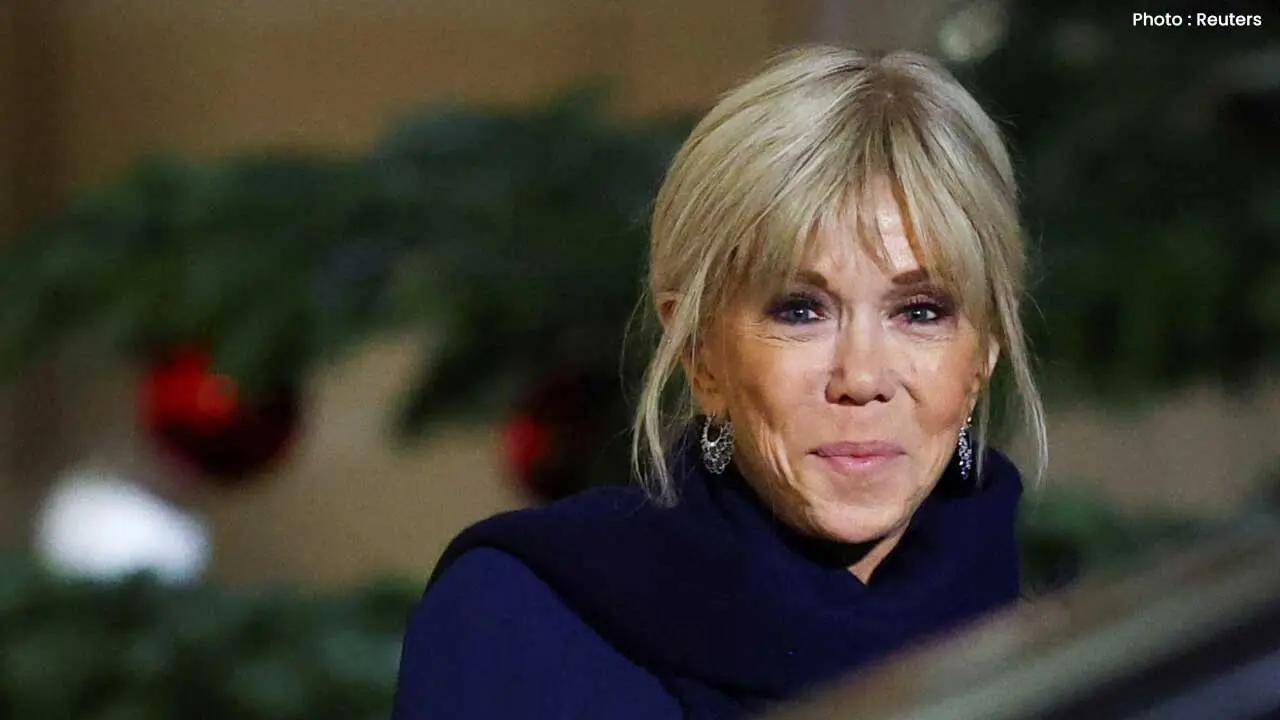
Brigitte Macron, France's First Lady, has issued an apology following comments regarding feminist activists that triggered intense backlash on social media.
During a press interaction on Monday, she conveyed regret for any distress her remarks may have caused to women affected by sexual violence. She noted that her comments were intended for a private setting and not meant for public scrutiny, yet she expressed her hesitation to fully retract her words. Macron emphasized her individuality beyond being the president’s spouse, allowing her space to voice opinions in more personal conversations.
The furor intensified following the release of a video where she referred to activists disrupting a comedy show featuring a French actor accused of rape but not formally charged. In the clip, she used a pejorative term for those who protested.
The activists protested by wearing masks resembling the actor’s face and chanting accusations against him. This incident has ignited a critical discussion in France concerning allegations of sexual assault, the right to protest, and the balance of free speech.
After the footage circulated online, the term coined by the First Lady rapidly gained traction on social media. Many activists utilized it as a banner for protest, prompting several prominent figures to criticize her language, emphasizing the impact of tone from someone in a significant public role.
Feminist collectives stated that the response from Brigitte Macron’s office was inadequate, asserting that a public apology is warranted. They contend that such language, regardless of context, is problematic when articulated by someone of her stature.
The actor faced accusations of rape in 2021, but the case was eventually dismissed by investigators, a ruling upheld in appeals. Nonetheless, the topic continues to be a source of division.
France has witnessed numerous significant sexual assault cases recently, keeping the dialogue around women's safety and justice at the forefront. This recent incident has once again sparked discussions about the responsibilities of public figures in addressing activists and victims, and where the divides between private opinion and public accountability exist.
Despite her apology, the debate persists, illustrating broader societal tensions in France concerning accountability, feminism, and the ongoing movement against sexual violence.