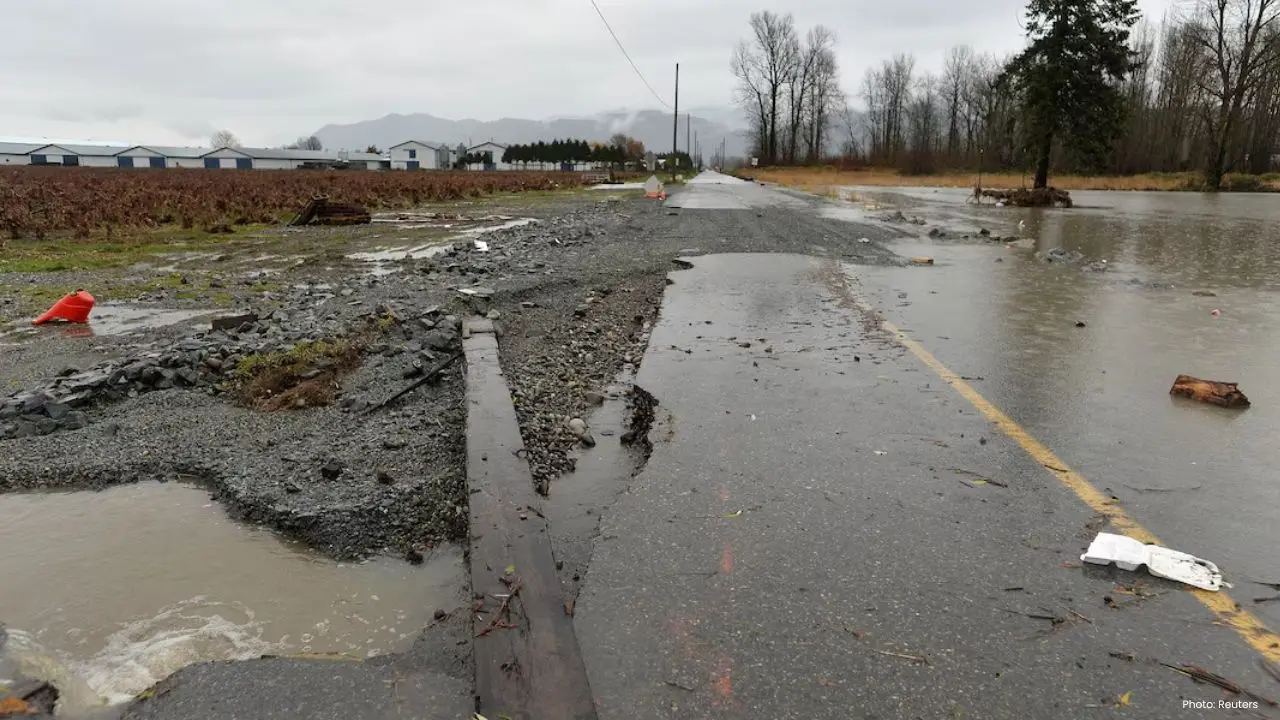
A powerful weather system sweeping across British Columbia’s South Coast on Monday disrupted daily life for tens of thousands of residents, cutting power, raising river levels, and reviving fears of flooding in communities still recovering from recent storms. Heavy rain, driven by warm air and strong winds, pushed rivers toward critical levels while saturating already waterlogged ground across the Fraser Valley, North Shore Mountains, and coastal regions.
Weather officials warned that intense rainfall, combined with rapid snowmelt at higher elevations, created a heightened risk of flooding. In several areas, rainfall rates surged as temperatures rose above freezing, accelerating runoff into creeks and rivers. Emergency officials cautioned that localized flooding could develop quickly, especially near rivers, streams, and low-lying farmland.
The Fraser Valley once again emerged as a major concern. Rivers feeding into the region rose sharply, prompting flood warnings and close monitoring by provincial authorities. The Seymour River on the North Shore climbed to levels rarely seen, while the Chilliwack River and surrounding tributaries threatened nearby properties. Officials warned residents living close to riverbanks to be prepared for sudden changes and to follow evacuation alerts if issued.
In Abbotsford, conditions showed cautious improvement after last week’s flooding, but the renewed rain slowed recovery efforts. Several evacuation orders were downgraded to alerts as waters receded, yet dozens of properties remained under full evacuation orders. Agricultural areas were among the hardest hit, with multiple farms reporting damage to barns and livestock facilities. Poultry farms were especially affected as floodwaters spread across fields and access roads.
Provincial officials acknowledged that this storm was forecast to be less intense than the previous one, but stressed that uncertainty remains high. With soils already saturated and river systems under strain, even moderate rainfall could trigger renewed flooding in vulnerable areas. Emergency teams continued to monitor conditions hour by hour.
The storm also caused widespread power outages. Strong winds and falling debris damaged electrical infrastructure across Vancouver Island and the Lower Mainland, leaving tens of thousands of homes and businesses without electricity. Repair crews were dispatched throughout the day, working in difficult conditions to restore service as safely and quickly as possible.
Transportation officials warned that travel conditions could change rapidly. Flooded roads, debris flows, and the risk of landslides led to warnings of possible short-notice highway closures. Drivers were urged to avoid flooded routes, allow extra travel time, and stay informed through official advisories.
As rain continued through the day before easing in the evening, authorities emphasized that the situation remains fluid. Residents were asked to stay alert, prepare emergency supplies, and follow guidance from local officials as British Columbia faces yet another test from extreme weather.