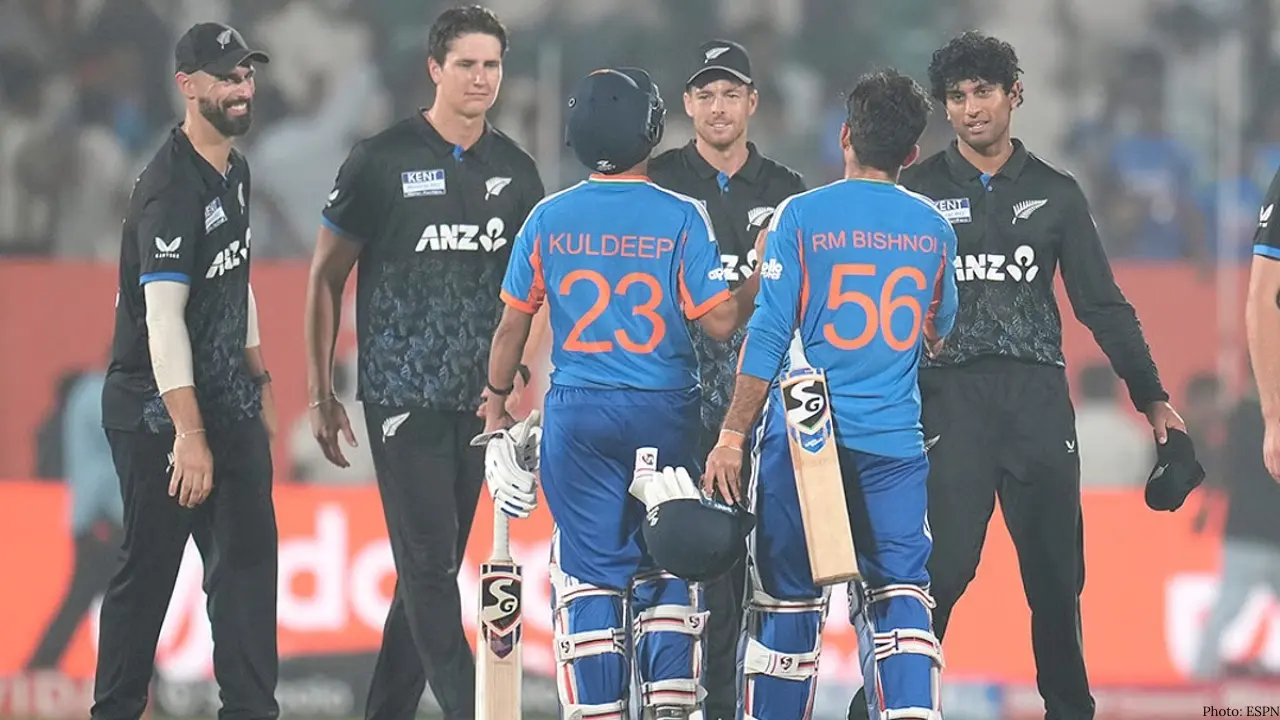
In an exciting fourth Twenty20 International (T20I) match in the New Zealand tour of India, the Black Caps prevailed over India by 50 runs at the ACA-VDCA Cricket Stadium in Visakhapatnam. This moment marked a crucial turn in the five-match series, showcasing New Zealand’s tenacity amidst India's ongoing lead. The game featured dramatic exchanges, tactical showdowns, and standout performances, shedding light on the shifting landscape of international T20 cricket.
Pre-Match Anticipation: Insights and Strategies
As the 4th T20I approached, excitement surged among fans and experts alike. India, commanding a 3-0 series lead, entered with confidence, desiring to wrap up the series. Conversely, New Zealand aimed to restore pride and gather momentum for the concluding match.
Upon winning the toss, India’s captain Suryakumar Yadav chose to field, believing in their batting strength to chase a target. This choice raised eyebrows, especially with Ishan Kishan's surprising omission from the lineup, igniting discussions prior to the match.
India's squad comprised seasoned players and dynamic talents like Abhishek Sharma, Sanju Samson, Shivam Dube, Hardik Pandya, and their captain. Meanwhile, New Zealand's lineup was formidable, featuring Mitchell Santner alongside aggressive hitters like Tim Seifert and Devon Conway.
New Zealand’s Innings: Setting a Strong Target
New Zealand, taking the first batting opportunity, showcased a formidable display designed to challenge India's bowling from the outset. Their innings combined aggression with strategic execution, setting a daunting total.
Dynamic Openers and Mid-Innings Flourish
Devon Conway initiated a well-calibrated innings, stabilizing early overs to build a solid foundation. Shortly, Tim Seifert then took charge, aggressively pushing the score with a swift fifty-plus, complemented by valuable contributions from the latter-order batsmen.
By halftime, New Zealand had positioned themselves favorably, with Seifert’s 62 off 36 balls demonstrating both flair and force, while Conway's steady 44 off 23 added stability to their total.
India’s Bowling Response
Led by Jasprit Bumrah, Kuldeep Yadav, and Arshdeep Singh, India encountered mixed results in their bowling endeavors. Although wickets were taken, they struggled to maintain a consistent grip on the match as New Zealand capitalized on their approach.
Bumrah had his challenges, leaking runs in crucial moments, while Kuldeep's spin delivered critical breakthroughs. Ultimately, New Zealand finished their innings at a strong 215 for 7, pushing India into a significant chase.
India’s Chase: Under Immense Pressure
Tasked with chasing 216, India faced an uphill battle from the outset as wickets fell swiftly.
Early Troubles for India
India's innings stumbled immediately with opener Abhishek Sharma dismissed on the first ball, unsettling their chase strategy. The subsequent loss of Suryakumar Yadav only added to the team's woes.
Efforts by Rinku and Hardik
Rinku Singh displayed determination, finding boundaries, but the required run rate surged. Hardik Pandya's aggressive innings ended prematurely, thrusting more pressure onto the middle order.
Shivam Dube Lights Up the Field
Shivam Dube stood out with a phenomenal 65 runs off just 23 balls, injecting excitement and a glimmer of hope for India. His blistering 15-ball fifty showcased extraordinary power-hitting, embodying the spirit required in high-stakes knocks.
Despite his brilliance, India ultimately fell short, getting bowled out for 165 in 18.4 overs, 50 runs shy of the target.
Fielding Highlights and Game-Changing Moments
Defensive efforts played a vital role in shaping the match:
• Mitchell Santner: Finished with figures of 3 for 26, crucially pressuring India’s climb.
• Jacob Duffy: Instrumental in dismissing key players, maintaining New Zealand's control.
• Hardik Pandya’s Fielding: A remarkable throw uplifted India’s spirit, demonstrating athletic ability.
Lessons and Observations
The clash in Visakhapatnam unveiled strategic takeaways for both teams:
New Zealand’s Composure
The Kiwis exhibited remarkable skill in managing pressure throughout the game, demonstrating effective strategy adaptation under fluctuating match conditions.
India's Intent vs. Structural Issues
While India’s aggressive talent is impressive, early outs exposed foundational flaws. The encounter underscored the necessity of a solid chase strategy, balancing risks with composure.
Crowd and Conditions
The ACA-VDCA stadium, a cherished venue for thrilling cricket, favored batting but remained a challenge for bowlers seeking breakthrough moments:
• The pitch rewarded bold stroke play while providing subtle bowling opportunities.
• External factors impacted strategy, particularly during middle overs.
The crowd’s enthusiasm fused an electrifying atmosphere, witnessing a contest of athletic prowess, skillful bowling, and dramatic moments typical of modern T20 cricket.
Future Series Implications
This win allowed New Zealand to edge closer in the series split to 3-1, rekindling their competitive spirit ahead of the final match. For India, this setback prompts reflection on their strategies as they adapt to the evolving dynamics of T20 games.
Conclusion
The riveting 4th T20I in Visakhapatnam showcased the excitement and unpredictability of Twenty20 cricket. With their remarkable performance, New Zealand overcame a determined Indian squad, while India’s chase, fueled by Dube's exploits, highlighted the narrow margins between triumph and defeat.
As the series advances, both teams will strive to refine their strategies, capitalize on momentum, and harness standout individual performances for the series finale.
Disclaimer: This article is for informational purposes only and does not constitute professional advice. The content reflects match events and analysis based on available reporting and is subject to interpretation.