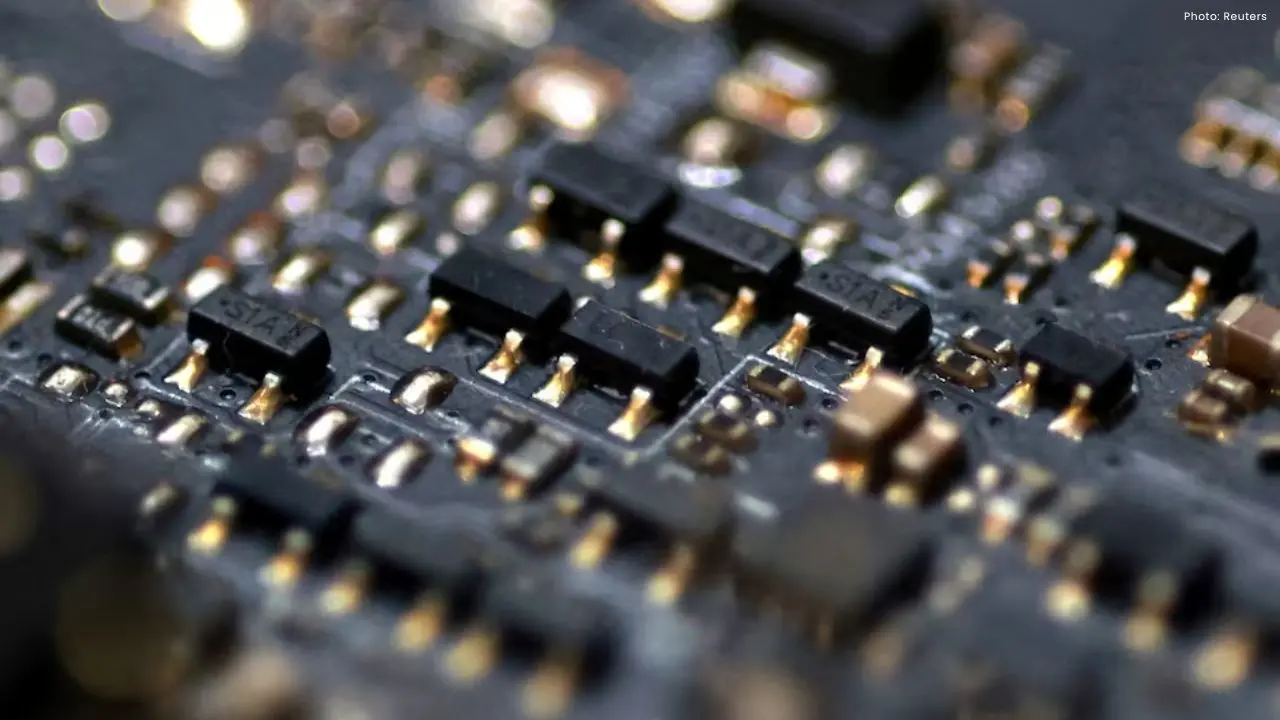
Taiwan has officially expressed its desire to become a close ally of the United States in the realm of artificial intelligence after securing a significant trade agreement that reduces tariffs and paves the way for increased investment. This move underscores Taiwan’s evolving role in the global tech landscape and emphasizes its significance to the American supply chain, particularly in high-end semiconductor production.
After finalizing the treaty, Taiwan’s Vice Premier Cheng Li-chiun remarked that the discussions were centered around reciprocal investments in advanced technology. He indicated that Taiwan is eager to collaborate more extensively with the U.S. moving forward, especially in the rapidly expanding artificial intelligence sector. These statements were made at a press conference in Washington, where he led the trade dialogues.
The agreement lowers tariffs on numerous Taiwanese exports and ushers in significant investments in the U.S. tech industry. The American government has been encouraging Taiwan, a major player in semiconductor manufacturing, to boost local production within the United States. These chip technologies are pivotal for AI infrastructures, data centers, and sophisticated electronics.
U.S. Commerce Secretary Howard Lutnick projected that Taiwanese enterprises are anticipated to invest approximately 250 billion dollars in sectors such as semiconductors, energy, and artificial intelligence across the United States. This amount includes a commitment of around 100 billion dollars from Taiwan Semiconductor Manufacturing Company, or TSMC. Taiwan is also offering support through additional credit to facilitate investments.
Cheng characterized the agreement as mutually advantageous. He emphasized that while investment initiatives will be driven by corporations, the government will not impose mandates. Moreover, he stated that Taiwanese businesses will continue to invest domestically. His objective is not to relocate Taiwan’s industry, but rather to broaden its scope while fortifying supply chains for both nations.
The deal also carries political implications, as China vehemently opposes enhanced relations between Taiwan and the United States, claiming Taiwan as its territory—an assertion that Taiwan vigorously contests. Even amidst this geopolitical tension, the U.S. stands as Taiwan’s foremost international ally and a prime supplier of defense hardware.
The Taiwanese stock market embraced the news positively, with the primary index reaching an all-time high, buoyed by robust earnings from TSMC and heightened investor confidence in the trade pact. Analysts in Taiwan interpret this agreement as an affirmation from Washington of Taiwan's crucial role in the global semiconductor landscape.
TSMC expressed enthusiasm about the potential for strengthened trading relations, citing sustained demand for advanced technologies. The company is committed to continued investments both domestically and internationally, contingent on market requirements and customer needs.
Pending endorsement from Taiwan’s legislature, where some opposition factions have voiced concerns regarding dependency on offshore production, the agreement promises to reinforce the Taiwan-U.S. supply chain for greater resilience over time.
Taiwanese leaders perceive this partnership as a demonstration of the island’s global significance. Despite its modest size, Taiwan positions itself as adaptable, pioneering, and vital to the world’s technological supply network. As the appetite for AI grows, Taiwan aspires to be at the forefront of molding its future alongside the United States.