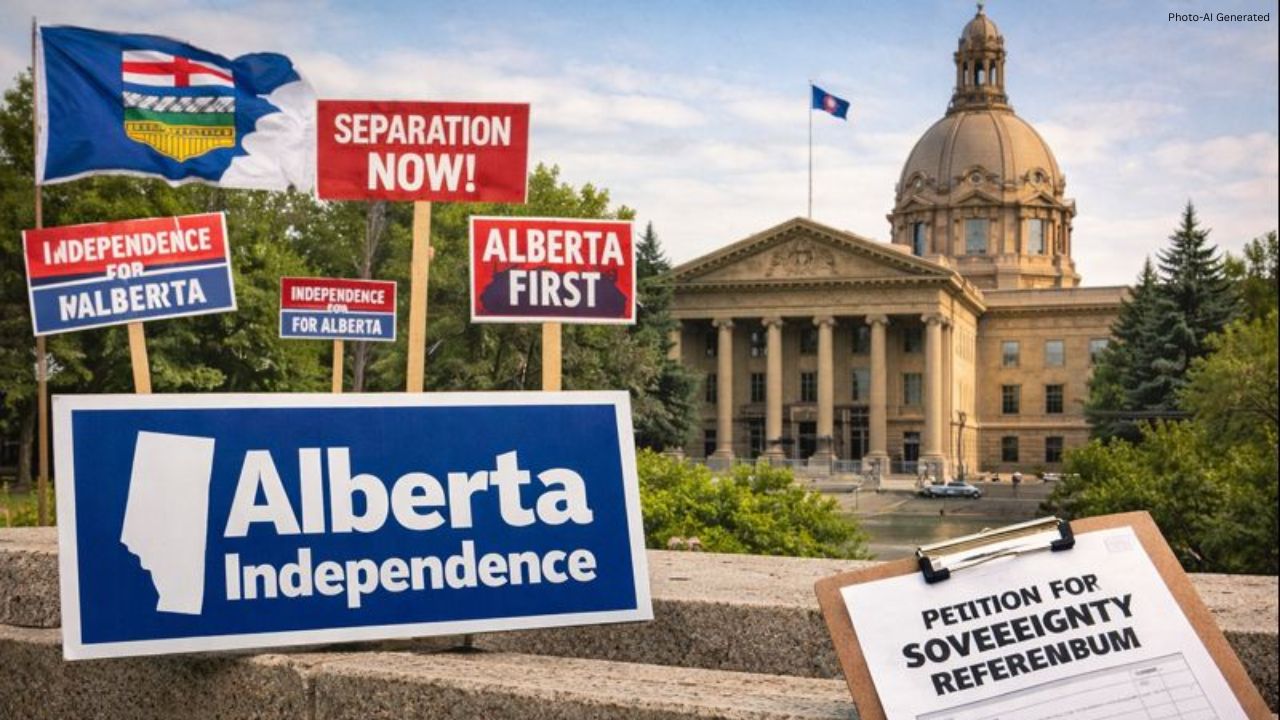
The issue of Alberta separatism has resurfaced in Canadian politics and is prompting questions about its connection to the Conservative Party of Canada (CPC) under leader Pierre Poilievre. While Poilievre has repeatedly rejected explicit support for Alberta leaving Canada, recent local political developments — including petitions calling for provincial sovereignty and comments from separatist activists — have sparked debate about how the party navigates regional discontent and constitutional tensions in the West.
A key flashpoint has been Alberta’s Citizen Initiative Act, which the United Conservative Party government in Edmonton amended in 2025. The changes made it easier to trigger referendums by lowering the number of signatures required and extending deadlines for petition drives. While the act does not explicitly endorse separatism, it has been used by groups pushing for increased provincial autonomy or even independence, raising concerns among political observers about how such motions might affect national unity.
Even as some separatist organisers claim support from within the Conservative movement — including assertions that certain Conservative politicians signed pro-sovereignty petitions — Poilievre has distanced himself and the federal party from calls for independence. In public statements, he has emphasised a focus on economic and democratic reform rather than constitutional secession, underscoring that the CPC’s platform remains committed to Canada’s federal structure.
Political analysts say that Alberta’s growing sense of alienation — fuelled by economic frustrations, disputes over energy policy, and perceptions of Western marginalisation — has created fertile ground for separatist sentiment. They note that separatist ideas have occasionally gained traction among grassroots activists and within local political discourse, but they argue that it would be a significant leap for such positions to become mainstream within the federal Conservative Party.
Opposition figures and constitutional experts have also weighed in on the conversation, warning that mainstream political parties must tread carefully when discussing sovereignty issues. They argue that any suggestion of breaking from Canada could have legal and economic ramifications far beyond regional politics, potentially affecting trade, investment, and national identity.
Separatist advocacy groups continue to circulate petitions and mobilise supporters, hoping to prompt a referendum on Alberta’s future. Meanwhile, national parties — including the Conservatives — are navigating how to respond to such movements without alienating moderate voters or undermining constitutional principles.
Poilievre’s approach, observers say, reflects a broader balancing act: acknowledging regional discontent and advocating for policy reforms while maintaining a clear commitment to keeping Canada united. The outcome of this balancing effort may influence voter sentiment in future elections, particularly in Western Canada, where debates over provincial rights and economic policy remain especially potent.