Photo: AP
NASA has found a new comet that has come from another star system into our solar system. Scientists spotted this comet using the Atlas telescope in Chile earlier this week. They confirmed that it is an interstellar comet, meaning it comes from outside our solar system.
This is only the third interstellar object ever seen passing through our solar system. Luckily, it is not dangerous to Earth.
Paul Chodas, a director at NASA, said that these types of objects travel for millions or even billions of years before entering another star system. He explained that scientists do not know exactly which star this comet came from because it has been travelling in space for so long.
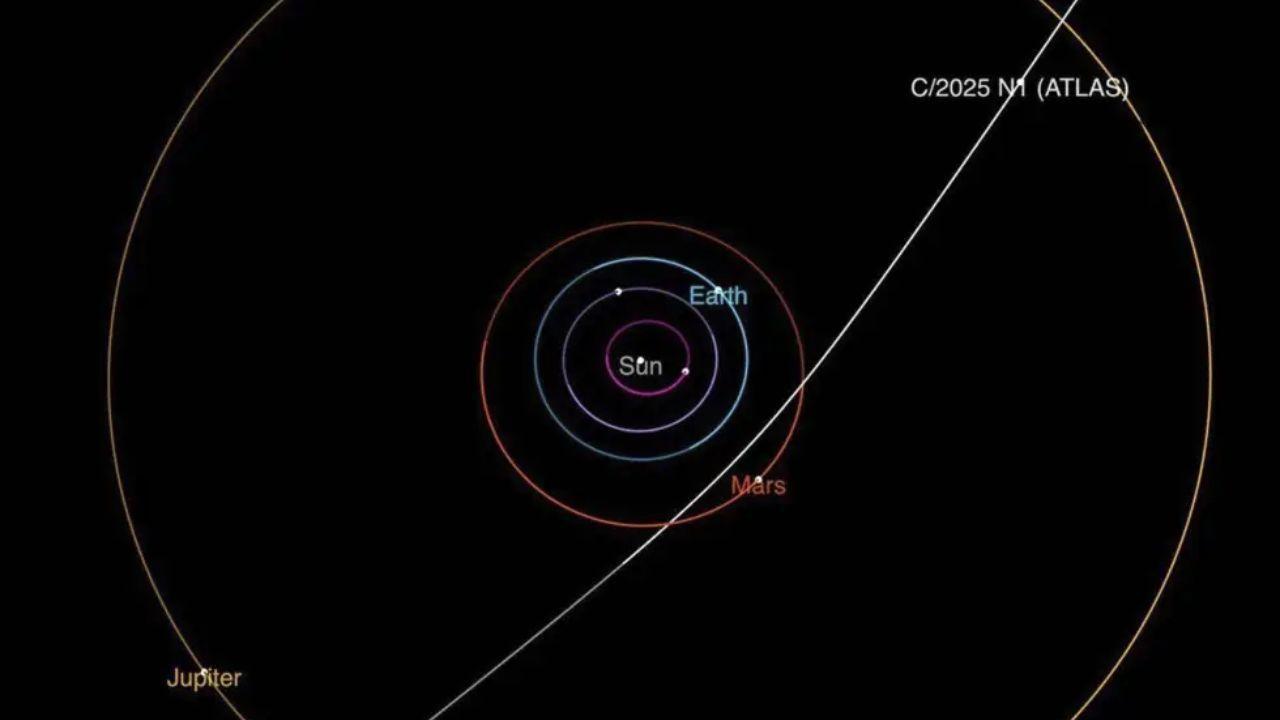
Right now, the comet is about 416 million miles (670 million kilometers) away from the sun, near Jupiter. It is moving very fast at about 37 miles (59 kilometers) per second and is heading towards the sun.
NASA said the comet will be closest to the sun in late October. At that time, it will travel between the orbits of Mars and Earth but will be closer to Mars. It will still be a safe distance away from us, around 150 million miles (240 million kilometers).
Astronomers all over the world are studying this comet, which has been named 3I/Atlas. They want to know its size and shape. Since its discovery on July 1, there have been over 100 observations. Reports show that it has a bright tail and a cloud of gas and dust around its center.
People with telescopes might be able to see this comet until September before it goes behind the sun. It will become visible again in December on the other side of the sun.
Scientists believe this comet is bigger than the other two interstellar objects seen before. It might be several miles (tens of kilometers) across. It is also coming in faster and from a different direction than the earlier interstellar visitors. Experts think its home star was somewhere closer to the center of our Milky Way galaxy.
The first interstellar object discovered was called Oumuamua, found in 2017. At first, it was called an asteroid, but later showed signs of being a comet. The second interstellar comet was named 21/Borisov, found in 2019 by an amateur astronomer in Crimea.
Paul Chodas said scientists had expected to find interstellar objects for many years, and now they are finally seeing them. He added that even though these visitors are natural and not artificial, it is still very exciting to see something coming from another solar system.