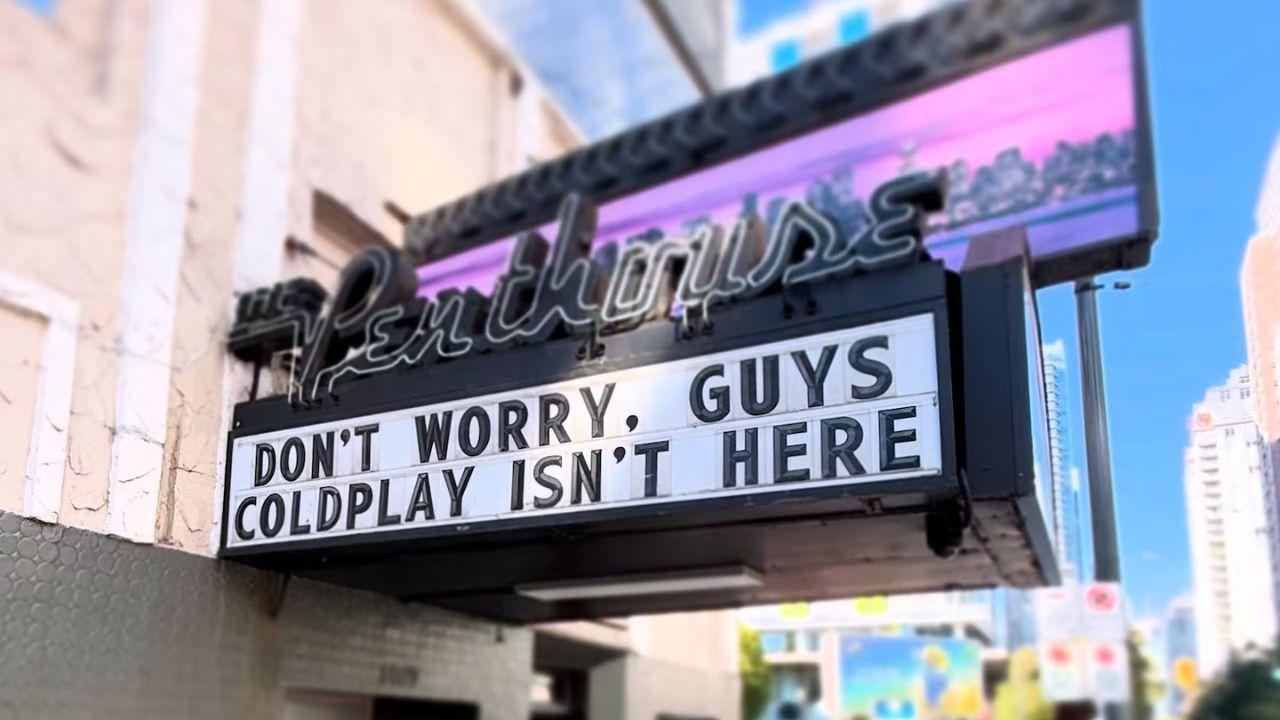
Photo:x.com/ThePenthouse604
A Coldplay Concert Turns Into a Corporate Meltdown
On the evening of July 16, 2025, a Coldplay concert at Gillette Stadium transformed from a musical celebration into an unlikely internet wildfire. What began as a light-hearted moment on the stadium’s infamous kiss-cam escalated into a sprawling social spectacle, one that would involve a billionaire tech CEO, a human resources executive, social media sleuths, corporate investigators, comedians, meme-makers, brand marketers, and even K-pop idols.
It started simply. The camera panned across the crowd. Faces lit up. Couples kissed. But when it focused on two VIP-section attendees—Andy Byron, the CEO of a multi-billion dollar tech company named Astronomer, and Kristin Cabot, his company’s Chief People Officer—things took a turn. Rather than play along, the two visibly recoiled. Byron ducked his head behind the railing; Cabot shielded her face. Chris Martin, Coldplay’s lead singer, laughed and said: “Either they’re having an affair or they’re just very shy.”
That comment, half-joke and half-accusation, would explode into one of the most shared, discussed, and dissected viral stories of the year.
The People Behind the Viral Glance
Andy Byron, 42, is a figure familiar to tech-watchers. The founder of Astronomer, a cloud-based AI company servicing enterprise logistics, he had graced the cover of multiple business magazines and spoken at major tech summits. A married father of three, Byron had cultivated a “visionary but grounded” public image—one that emphasized integrity and leadership. Kristin Cabot, 39, is Astronomer’s Chief People Officer. A Stanford-educated organizational psychologist, she joined the company three years ago and was known for reshaping the company's internal ethics charter.
That both executives were at the same concert wasn’t unusual. Astronomer, headquartered in Boston, routinely participated in major local events and often purchased executive VIP blocks for major stadium performances. But their awkward kiss-cam moment immediately raised eyebrows.
Social Media Sleuthing: Identification in Minutes
The incident might have faded quickly—one awkward moment among thousands—had it not been captured and shared on social media by a concertgoer named Grace Springer. Within minutes of uploading the video to TikTok and X (formerly Twitter), millions had viewed it. Viewers began dissecting every frame. Body language analysts jumped in. Was Byron panicking? Was Cabot embarrassed? Were they more than coworkers?
Internet sleuths moved rapidly. Byron was identified through facial recognition and previous public appearances. Cabot was recognized via LinkedIn and internal Astronomer videos. Once identities were matched, the assumptions began: Was this a clandestine relationship? Was it consensual? What did it say about power dynamics in the workplace?
From Joke to Judgment: The Internet Reacts
Memes proliferated. Captions riffed off Coldplay’s lyrics—“Nobody said it was easy” became a punchline. Other users posted supposed “leaked DMs,” fake apology letters, and even AI-generated versions of Byron and Cabot reenacting the scene in different locations: a church, a boardroom, a courtroom.
A subreddit formed within hours: r/ColdplayGate. Users cataloged every available photo, every potential timeline, and speculated endlessly. TikTok creators reenacted the moment in full costume. Stand-up comedians joked about it during live sets, and Twitter threads racked up hundreds of thousands of likes with jokes like: “Imagine building a billion-dollar company and getting undone by a camera and a Coldplay riff.”
Corporate Response: Astronomer in Crisis Mode
On July 17, Astronomer’s Board of Directors issued a formal statement: “We are aware of the situation involving two senior executives. Effective immediately, both individuals have been placed on administrative leave pending a comprehensive internal review.”
The statement went viral. Not for its clarity, but for its existence. Most companies tend to stay silent on viral gossip, but Astronomer was attempting a balancing act: silence could be seen as complicity, while over-response might confirm guilt.
By July 19, Byron had reportedly resigned. Though the Board did not confirm the nature of the relationship between Byron and Cabot, insiders shared that multiple HR complaints had previously been filed by employees alleging favoritism in executive decisions.
Kristin Cabot’s Role: Power, HR, and Ethics Collide
Cabot’s position as Chief People Officer made the situation especially volatile. She was the top authority on workplace ethics and conduct. If an inappropriate relationship had occurred between her and Byron, it not only violated company policy but undermined the foundation she had publicly reinforced.
Cabot, meanwhile, maintained a low profile. Her last public appearance had been during an internal webinar on workplace equity, just weeks prior. Multiple former employees, under condition of anonymity, shared screenshots of her internal Slack messages that now seemed ironic in retrospect—quotes about "transparency in leadership" and “building cultures of mutual respect.”
Coldplay’s Involvement: Art Imitating Chaos
Chris Martin’s quip—meant as a throwaway line—had unwittingly triggered a corporate firestorm. In the following concerts, Coldplay removed the kiss-cam segment entirely. At one show in Toronto, Martin addressed the audience: “We love our fans. But please, if the camera lands on you, don’t make international news.”
Their restraint earned praise. Fans felt Coldplay had acted gracefully. But it also sparked a new round of memes: concert-goers printing “WE’RE JUST FRIENDS” signs and waving them during the camera pans.
Kiss-Cam Culture: A Relic Under Review
The incident sparked debate around the kiss-cam itself. For years, stadiums had used the feature as light entertainment. But critics argued it often forced unwanted intimacy on attendees. Some argued that if the ColdplayGate couple had in fact been coworkers or acquaintances, the kiss-cam placed them in an impossible situation—perform intimacy or face ridicule.
Major League Baseball teams like the Philadelphia Phillies and Seattle Mariners responded with satire. They included mascots holding “THAT’S MY WIFE” signs and made jokes before introducing their kiss-cams. Others began phasing out the segment entirely.
Brands Join the Fray
As is common in the attention economy, brands saw an opportunity. Tesla posted on X: “Autopilot doesn’t judge your love life. Our AI minds its own business.” Netflix promoted a “Cheater's Choice” collection of films. StubHub quipped: “Thinking of taking your coworker to a show? Maybe rethink your seats.”
It wasn’t just big brands. Smaller indie developers created parody games. Jonathan Mann’s pixelated app “Coldplay Canoodlers” allowed players to locate the couple hidden among thousands of concertgoers. The game topped downloads on iOS within 24 hours.
Global Celebrities React
K-pop stars like BTS’s Jin and BLACKPINK’s Rosé humorously recreated the moment during their own concerts. Pop star Olivia Rodrigo posted a TikTok with a skit about “accidentally being someone’s HR scandal.” Country singer Morgan Wallen joked during a set: “I don’t condone cheating… anymore.”
The moment had become a cultural benchmark: a shorthand for scandal, voyeurism, and workplace tension.
Workplace Culture Under the Microscope
Business outlets used the scandal to reignite discussions on workplace conduct. Forbes ran an op-ed on “The Kiss-Cam and the Boardroom,” while the Harvard Business Review published a piece analyzing how workplace relationships, when exposed publicly, jeopardize institutional trust.
Questions lingered. Should corporate leaders face public shaming for private moments? What happens when workplace romance—consensual or not—enters public discourse?
Legal Implications: Power Dynamics and HR Oversight
Though no lawsuits had been filed, employment lawyers speculated that the company might face legal exposure. If it could be shown that Cabot’s HR oversight was compromised or that other employees were adversely affected, there could be grounds for action.
Internal policies around fraternization were now being re-examined across Silicon Valley. Multiple tech companies began requiring dual disclosures for inter-office relationships, particularly those involving executives and HR.
Psychological Toll: Public Shaming in the Viral Era
The mental health implications for both Byron and Cabot are unknown, but experts were quick to weigh in. Clinical psychologist Dr. Lillian Hart said in interviews: “Public shame—especially when it's rapid and global—can lead to PTSD-like symptoms.”
Both individuals went offline. Their social media accounts were deactivated. Byron’s home reportedly saw increased media presence, prompting neighbors to erect a privacy fence.
Parallel Incidents in History
The ColdplayGate saga echoed earlier scandals like the 2019 McDonald’s CEO ousting or Jeff Zucker’s resignation from CNN. In all cases, relationships that blurred personal and professional lines created turmoil.
But none matched the sheer absurdity and meme power of this one: a kiss-cam, a Coldplay lyric, a stadium crowd, and an entire internet ready to turn it into content.
Ethical Takeaways and Cultural Commentary
Was this justice or voyeurism? Did it hold power to account or just fuel internet cruelty? The line between transparency and tabloidism blurred once again.
Public relations expert Daniel Lin noted: “This is the era of the accidental scandal. You don’t need a leak. You just need a moment—and a camera.”
Final Thoughts: The Legacy of a Glance
What began as an awkward 5-second clip became a societal mirror. It exposed the fragility of public images, the complexity of workplace ethics, the hunger of the meme economy, and the strange joy people take in witnessing the fall of the powerful.
In the end, ColdplayGate wasn’t just about a man and a woman on a stadium screen. It was about visibility, power, accountability—and how nothing, not even a quiet night out at a concert, is truly private anymore.