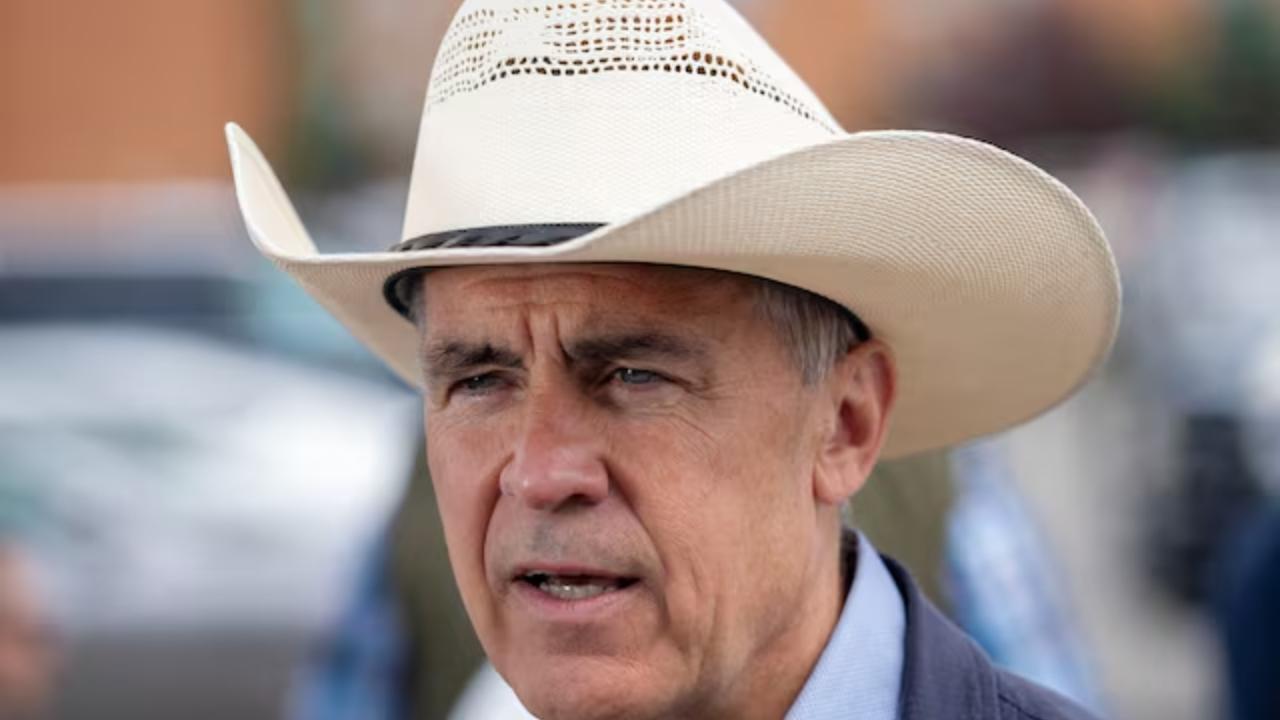
Photo: Reuters
Prime Minister Mark Carney has confirmed that a new oil pipeline proposal in Canada is now “highly likely” to gain attention, with the potential to advance to federal "national interest" status. Speaking during a weekend interview at the Calgary Stampede, he emphasized that while the federal government supports the project, it will not impose it—private-sector leadership is required to bring it forward.
Carney made clear that Ottawa is prepared to designate such a pipeline under its recently passed fast-track infrastructure law, signaling a commitment to expedited review. However, he stressed that the initiative must come from the private sector, not from a top-down government mandate. "It would be up to industry to present a case," he said, "we want this, we want that." He also endorsed a proposed C$16.5-billion carbon capture system for Alberta’s oil sands to qualify under the same national priority framework.
Under Carney’s leadership, Canada has passed legislation designed to fast-track major infrastructure deemed essential to economic and strategic goals. The new law allows for rapid approval of projects labeled “in the national interest,” including pipelines and mineral developments, though it has faced pushback from Indigenous groups and environmental advocates concerned about consultation and climate implications. Still, if the pipeline gains proponent support, it could be slotted into this special category for a faster regulatory process.
The proposal under discussion envisions a crude oil pipeline from Alberta to British Columbia’s Pacific coast, likely to serve terminals at Kitimat or Prince Rupert. Such an export corridor would diversify Canada’s markets beyond the United States, where approximately 90% of Canadian crude is currently exported. With growing uncertainty around U.S. trade and tariff policies, particularly following President Trump's fluctuating rhetoric toward Canada, alternative markets in Asia and Europe are becoming more appealing.
Carney’s announcement aligns with a broader push from western provincial leaders who have long urged Ottawa to break the U.S. dominance in Canada’s energy trade. Alberta’s Premier Danielle Smith has actively championed a “grand bargain” that links new pipeline capacity with carbon capture investments, aiming to curb emissions without sacrificing market access. Mass-scale carbon sequestration initiatives aim to offset the emissions from oil sands production, thereby mitigating environmental concerns tied to fossil-fuel exports.
Industry response remains cautiously optimistic. While many oil and pipeline companies express interest in projects with strong federal backing and expedited approval, several have not formally committed to new builds. High costs, regulatory risk, and uncertainty over Indigenous and provincial support continue to deter investment. Carney acknowledged this hesitancy, stressing that policy certainty and clarity are essential before companies will take the lead.
Not everyone in government is aligned. Some cabinet ministers, such as Steven Guilbeault, have suggested existing pipeline capacity should be maximized before building new ones—citing underutilization of the Trans Mountain Expansion line. But provincial leaders in Saskatchewan, Alberta, and parts of Atlantic Canada are pushing the federal government to accelerate new projects quickly.
Carney appears to be aiming for a middle ground: accelerating approvals while seeking a consensus across provinces and Indigenous Communities. Although he insisted projects will not proceed without broad buy-in, critics remain wary that fast-track legislation may override meaningful consultation. Indigenous leaders continue to advocate for more robust engagement and accommodation than the current framework allows.
This stance marks a pragmatic shift in Canada’s energy policy. Carney campaigned on balancing climate goals with economic expansion and trading diversification. His support for new pipelines, combined with his backing of carbon capture and fast-track arrangements, positions Canada as ready to leverage its energy resources—if industry steps up with viable proposals.
Now that Ottawa has laid the groundwork, the next phase begins. Private-sector proponents must emerge with detailed proposals that include routes, technical design, environmental safeguards, and community engagement strategies. If that happens soon, pipeline advocates may secure a role in the government’s national infrastructure priority list—potentially accelerating approval timelines and reinforcing Canada’s energy security strategy.
As the country navigates geopolitical uncertainty, Carney’s emphasis on diversification and infrastructure readiness may represent a turning point. The next critical questions lie in whether industry will deliver, communities will consent, and policymakers will balance economic ambition with environmental and social responsibility.