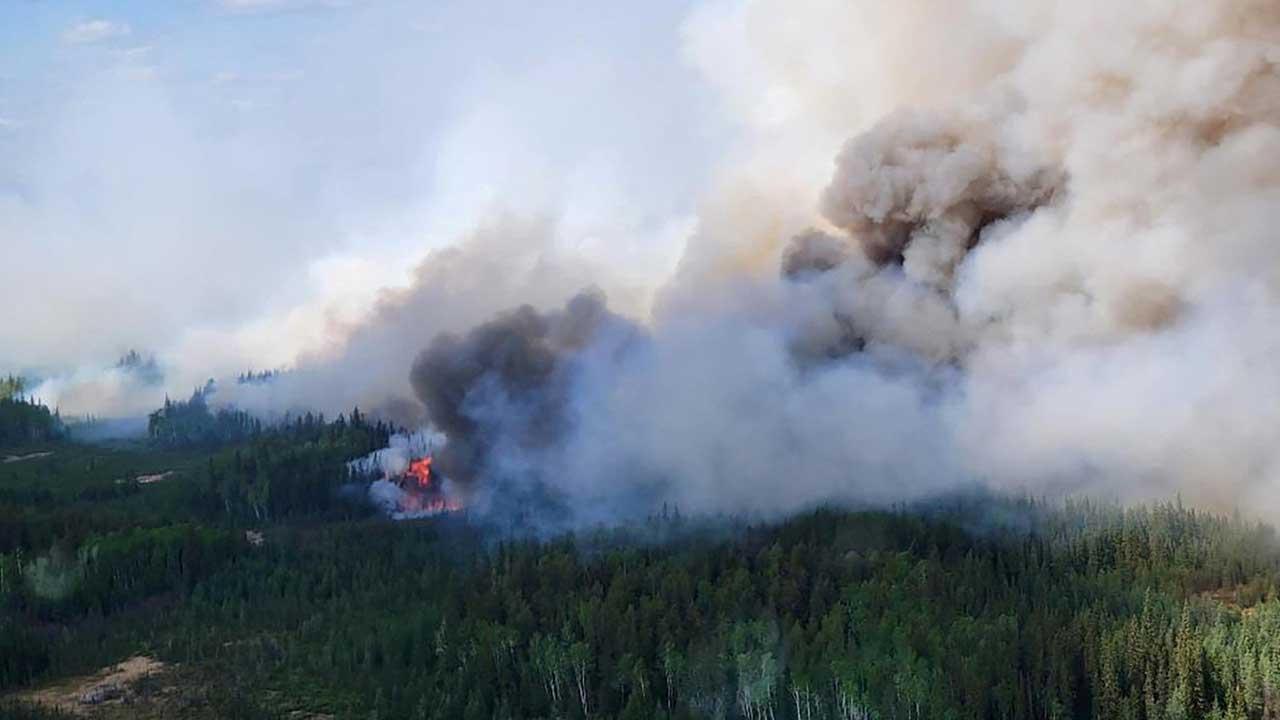
Photo : Reuters
Wildfire Smoke from Western Canada Causes Health Crisis in Toronto and U.S. States
Smoke from hundreds of uncontrolled wildfires in Western Canada has spread far beyond its origin, blanketing much of central and eastern Canada and reaching the upper Midwest in the United States. This vast cloud of smoke is causing hazardous air quality conditions, prompting health warnings and travel disruptions, and reigniting debates about climate change and forest management.
Smoke Covers Toronto and Other Major Cities
Over the past weekend, Toronto, Canada’s largest city, was shrouded in a thick haze caused by wildfire smoke. By Monday morning, skies were visibly grey and smoky, and residents woke to warnings from Environment Canada, the national weather and climate agency. According to IQAir, a global air monitoring platform, Toronto ranked among the top five cities with the worst air quality in the world at that time.
Environment Canada issued an air quality alert covering a wide area of Ontario, including Toronto and nearby cities. Saskatoon, the largest city in Saskatchewan, also received similar alerts. Authorities advised people, especially children, the elderly, and those with pre-existing health conditions, to stay indoors and limit outdoor physical activity.
Impact on Health and Daily Life
Experts warned that inhaling wildfire smoke can lead to serious respiratory and cardiovascular problems. The particles in the smoke, known as PM2.5, are small enough to enter the lungs and bloodstream, triggering asthma attacks, difficulty breathing, and even heart issues. Many hospitals in the affected regions reported an increase in respiratory-related emergencies.
Ian Hubbard, a meteorologist with Environment Canada, explained that while smoke in the upper atmosphere is less harmful, it becomes dangerous when pushed toward the earth's surface. This is exactly what happened in Ontario and other parts of Canada.
Toronto's air is expected to slightly improve overnight into Tuesday, but high temperatures above 30°C (86°F) will persist, worsening conditions for many. Heat combined with poor air quality poses a dual threat, especially for vulnerable populations.
Manitoba: Facing the Worst Fire Season in 30 Years
While Canada’s wildfire season overall is less severe than 2023’s record-breaking year, some areas are facing their worst conditions in decades. Manitoba, located in central Canada, is experiencing one of its most destructive fire seasons in the past 30 years, according to provincial authorities.
Wab Kinew, the Premier of Manitoba, declared a state of emergency for the second time this year. The first emergency declaration was in May. These declarations allow faster deployment of emergency personnel and equipment and enable forced evacuations when necessary.
In May, two people lost their lives in a wildfire near the town of Cranberry Portage, northeast of Winnipeg. Over 30,000 people have been forced from their homes since the season began. Helicopters and other aircraft have been working around the clock to evacuate people from remote and fire-threatened communities.
Smoke Forecast and Spread to U.S.
The National Oceanic and Atmospheric Administration (NOAA) in the U.S. released smoke forecasts indicating that heavy smoke is expected to linger over parts of Canada and the U.S. Midwest. The smoke was especially thick in parts of Minnesota, Wisconsin, northern Pennsylvania, and western New York.
The models used to predict the movement of smoke are complex and can sometimes underestimate the density due to cloud cover or weather interference. However, maps based on satellite data showed that smoke was widespread and dense over large portions of North America.
In both Canada and the U.S., residents have been advised to avoid outdoor activities, especially during the early morning and late afternoon hours when pollution levels are highest. Schools, sporting events, and public gatherings have been cancelled in some areas.
Political Tensions and Forest Management Debate
The smoke crisis has also led to rising tensions between the U.S. and Canada. Last week, six Republican lawmakers from Wisconsin and Minnesota sent a formal letter to the Canadian government blaming it for failing to manage its forests properly. Congressman Tom Tiffany of Wisconsin even posted a video on social media, showing a smoky sky over a lake and criticizing Canada’s handling of the fires.
“Canada owes us answers for its forest management failures,” he wrote in his post, reflecting a sentiment shared by others who are frustrated by the cross-border impacts of the fires.
However, Canadian officials have responded by explaining that many of the fires are started by lightning strikes in remote wilderness areas that are not regularly monitored or managed. These regions are difficult to reach, and suppression efforts often focus on protecting lives and infrastructure rather than extinguishing every fire.
Looking Ahead: What Can Be Done?
The increasing number and intensity of wildfires in Canada have raised concerns about the role of climate change. Rising global temperatures, extended droughts, and dry vegetation create the perfect conditions for wildfires to ignite and spread rapidly. Experts warn that unless long-term action is taken to combat climate change and invest in better forest management, these fire events will become more frequent and more dangerous.
In the short term, authorities are urging people to stay informed about air quality levels in their area. Websites and apps such as AirNow, IQAir, and Environment Canada provide real-time updates and forecasts. Residents should stay indoors when air quality is poor, use air purifiers if available, and wear N95 masks if they must go outside.
Governments at all levels are working together to fight the fires and protect the public, but experts stress that prevention is just as important. Investment in early detection systems, controlled burns, and emergency response training will be key in the future.
Canada’s ongoing wildfire crisis has once again highlighted the urgent need for climate action, better preparedness, and international cooperation. As smoke continues to darken the skies over Toronto and drift into the United States, millions are reminded of how quickly environmental challenges can become health emergencies.
The hope is that this crisis leads to serious conversations and decisions that will prevent such disasters in the future. Until then, public awareness, safety measures, and smart policies remain the best defense against the growing threat of wildfires.