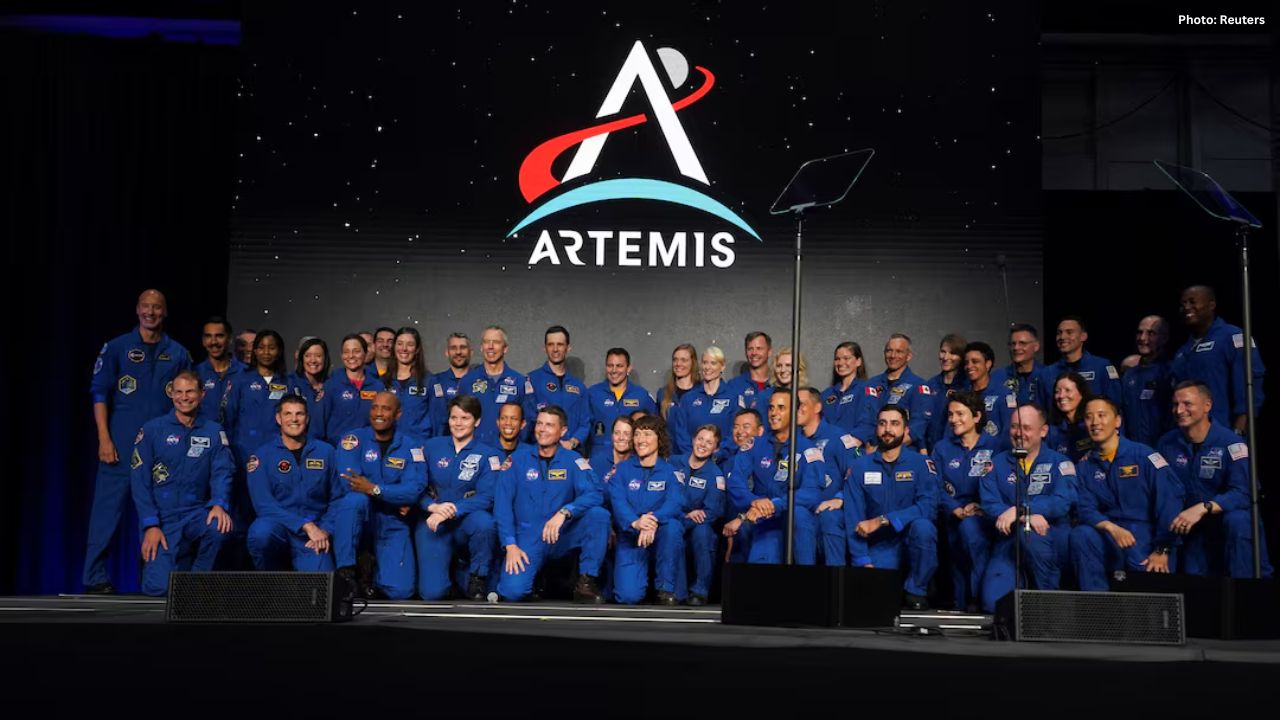
The crew of NASA’s Artemis II mission has safely returned to Earth following a successful lunar flyby, marking a major milestone in the United States’ renewed efforts to send astronauts back to the Moon. The mission — the first crewed flight in NASA’s Artemis program — saw astronauts orbit the Moon, test systems critical for future lunar landings, and demonstrate capabilities needed for extended human exploration beyond Earth.
Launched from NASA’s Kennedy Space Center in Florida, Artemis II carried a multinational crew aboard the Orion spacecraft on a trajectory that looped around the Moon before heading back to Earth for a planned splashdown in the Pacific Ocean. The mission’s objectives included validating life-support systems, evaluating spacecraft performance in deep space conditions and enhancing navigation and communication protocols that will be essential for Artemis III — the mission slated to land astronauts on the lunar surface.
NASA Administrator Bill Nelson hailed the safe return as a “triumphant moment” for the agency and international partners, noting that Artemis II lays the groundwork for sustainable lunar exploration. “This mission has shown we can safely send humans farther into space than we have in over half a century,” he said, emphasising the collaborative nature of the Artemis program.
The Artemis II crew conducted scientific observations during their lunar approach, capturing imagery and data that will be used to inform future mission planning. Although the flight did not land on the Moon, its successful completion reinforces confidence in NASA’s deep space exploration architecture, particularly the performance of the Space Launch System (SLS) rocket and Orion crew capsule.
Artemis II also included international participants from NASA’s partner agencies, reflecting a growing global coalition for lunar exploration and scientific achievement. These collaborations are expected to play an important role in subsequent missions, including engagements with commercial and research objectives on the lunar surface and in lunar orbit.
Public interest in Artemis II was strong, with millions tuning in to watch key mission milestones and live coverage from mission control. Social media and public forums were filled with discussion about the astronauts’ journey, scientific findings and what the mission’s success means for future interplanetary exploration — including potential crewed missions to Mars.
With Artemis II now complete, NASA and its partners will focus on preparing Artemis III, which aims to land the next set of astronauts near the Moon’s south pole. Engineers and mission planners will analyse Artemis II data, refine systems and address challenges identified during the mission in order to ensure Artemis III’s readiness.
The Artemis program represents the most ambitious human space exploration effort in decades, designed not only to return humans to the Moon but also to establish a sustainable presence and advance scientific understanding of Earth, the Moon and deep space environments.