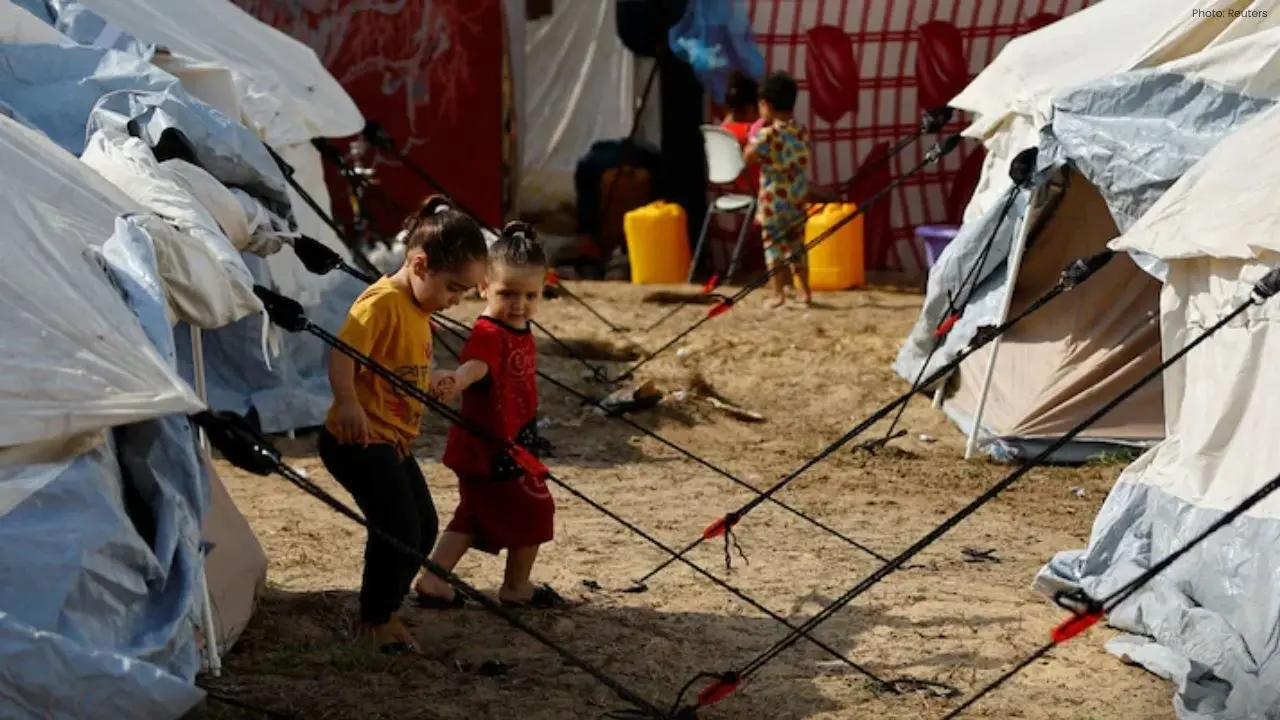
Relentless winter rain and falling temperatures have plunged Gaza’s fragile tent camps into crisis, as a powerful storm flooded shelters, destroyed food supplies, and left thousands of displaced families battling cold, disease, and despair.
In camps across Khan Younis and along Gaza’s coast, rainwater poured through worn-out tents, turning dirt pathways into rivers of mud. Families woke to mattresses floating in brown water, clothes soaked beyond use, and children shivering through the night. Open sewage and piles of garbage overflowed, worsening already dangerous living conditions.
“We were drowned inside the tent,” said Um Salman Abu Qenas, a displaced mother sheltering in Khan Younis. “Everything we had is ruined. We had no way to sleep.”
Aid workers say the storm has laid bare how the ceasefire has failed to translate into meaningful relief on the ground. While fighting has paused, the flow of shelter materials, winter supplies, and sanitation equipment remains far below what is needed for Gaza’s nearly entirely displaced population.
The United Nations Relief and Works Agency warned that overcrowded, cold, and unsanitary conditions dramatically increase the risk of illness, especially for children, the elderly, and the sick. With limited medical access and poor shelter, even seasonal weather has become life-threatening.
In the Muwasi area, Sabreen Qudeeh described waking to rain dripping from the tent roof while floodwater seeped in from outside. “My daughters were crying all night,” she said, pointing to soaked blankets and ruined bedding.
Emergency services reported thousands of distress calls as tents collapsed or flooded. In Gaza City, several bomb-damaged buildings partially gave way under the weight of rain, prompting warnings for residents to stay away from unstable structures.
Inside the camps, families desperately tried to bail out water using buckets and plastic containers. Aliaa Bahtiti said her young son spent the night sleeping in water. “He was freezing by morning,” she said. “We can’t afford food, blankets, or dry clothes.”
Humanitarian groups estimate that only a fraction of the hundreds of thousands of tents and winterized shelters required have entered Gaza since the ceasefire began. Many of the tents that have arrived lack proper insulation, offering little protection against cold and rain. Local aid organizations also report shortages of water pumps and heavy machinery needed to drain flooded areas and clear rubble.
With Gaza’s homes largely destroyed and infrastructure shattered by months of war, winter storms are compounding the humanitarian emergency. Aid agencies warn that without a sharp increase in unrestricted humanitarian access, more families could face preventable illness, displacement, and loss as harsh weather continues.