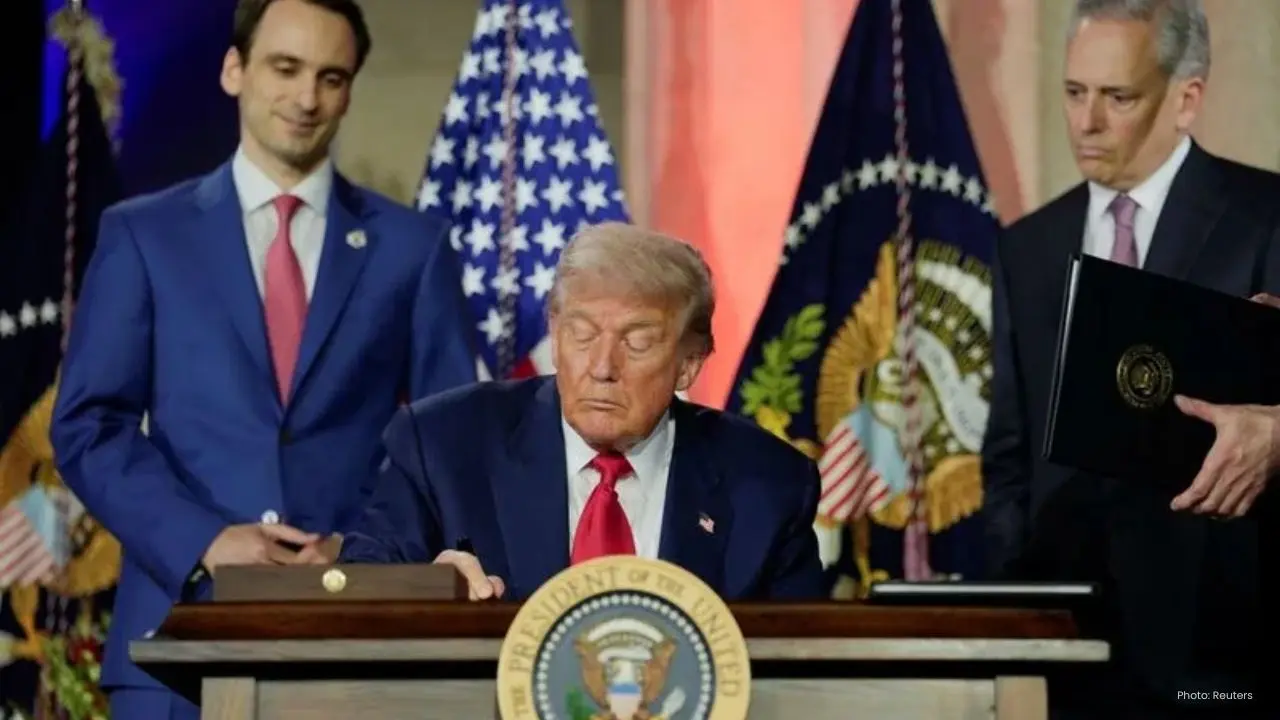
In a reflection of the escalating conflict between federal control and state legislation, the White House has decided to postpone a draft executive order designed to supercede state regulations on artificial intelligence (AI). This proposal, which emerged in reports on Friday, intended to empower the federal government to contest state AI laws through legal challenges and potential federal fund restrictions.
The draft order was seen as a bold effort to establish consistent guidelines for AI governance, which supporters argue is vital for fostering innovation. Leaders in AI have consistently maintained that a fragmented system of state laws fosters confusion and hinders technological advancement across various sectors, including healthcare and self-driving vehicles.
Documents examined by Reuters indicated that the order would have assigned the Attorney General the responsibility of creating an “AI Litigation Task Force.” This group would have been dedicated to contesting state-level regulations citing unconstitutional interference with interstate commerce or clashes with standing federal laws.
While this federal strategy could have simplified AI regulation, it was likely to encounter substantial pushback from states eager to maintain their regulatory autonomy. Experts highlight that overriding state laws in areas typically governed by local jurisdictions presents a contentious legal challenge, often leading to extended litigation.
The White House has yet to issue a public statement regarding the draft order, raising questions about whether it will be modified or reintroduced later. The choice to suspend the initiative illustrates the fragile equilibrium policymakers strive to achieve: advancing AI innovation without alienating states that are becoming increasingly proactive in technology governance.