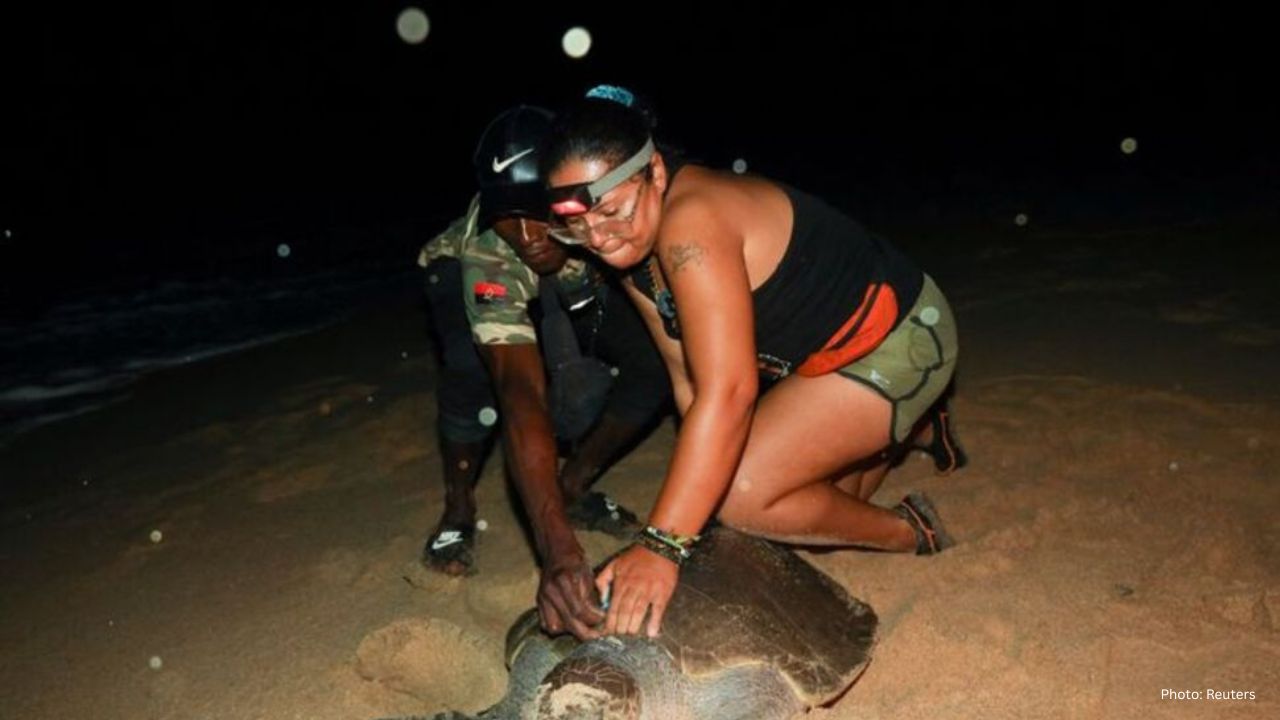
In Angola's serene Hojiua village, a remarkable shift is happening. Local residents who once hunted sea turtles for sustenance are now their devoted protectors. Joaquim Avelino Fragoso, a 45-year-old father of seven, recalls a time when he would kill these turtles for their meat. Now, he dedicates his days to patrolling the Longa estuary, ensuring the safety of these vulnerable creatures.
Fragoso expresses his newfound joy as he watches turtles emerge from the sea to nest on the beach. This transformation stemmed from the Kitabanga Project, a significant conservation initiative aimed at training local residents to protect sea turtles along Angola’s expansive 1,600 km coastline.
Over 70 villagers have joined this vital program, collectively safeguarding approximately 25,000 turtle nests, which is crucial for the survival of these endangered species.
All five species of eastern Atlantic sea turtles—ranging from the olive ridley to the giant leatherback—are present in Angolan waters, with many classified as vulnerable, endangered, or critically endangered by the International Union for Conservation of Nature (IUCN). The soft, caramel sands of Longa Beach serve as essential nesting habitats.
Funded by private entities and managed by the Kissama Foundation in partnership with Angola's oldest university, Universidade Agostinho Neto, the project aims not only to safeguard turtles but also to empower local communities with new skills and economic opportunities.
The local tradition of hunting turtles persisted due to the dire poverty faced by many villagers, with turtle meat being a vital source of income. Conservation advocate Debora Carvalho, the regional coordinator of the Kitabanga Project, emphasizes that changing mindsets requires more than just urging locals to stop hunting—it necessitates providing tangible economic incentives through training and education.
Initially resistant, many express indifference toward conservation. However, as they recognize that protecting wildlife can create job opportunities, bolster tourism, and enhance their environment, they begin to envision a brighter future. Carvalho and her team illustrate how conservation directly benefits their lives.
Fragoso embodies this transformation, understanding that harming turtles jeopardizes future generations. “We must protect them for a more plentiful tomorrow,” he declares proudly.
The success witnessed in Hojiua is inspiring conservationists nationwide. A community once defined by hunting has evolved into a bastion for one of the ocean’s most ancient species. Their initiative demonstrates that with proper support, even the most threatened wildlife can be conserved, allowing those who protect them to forge better futures.