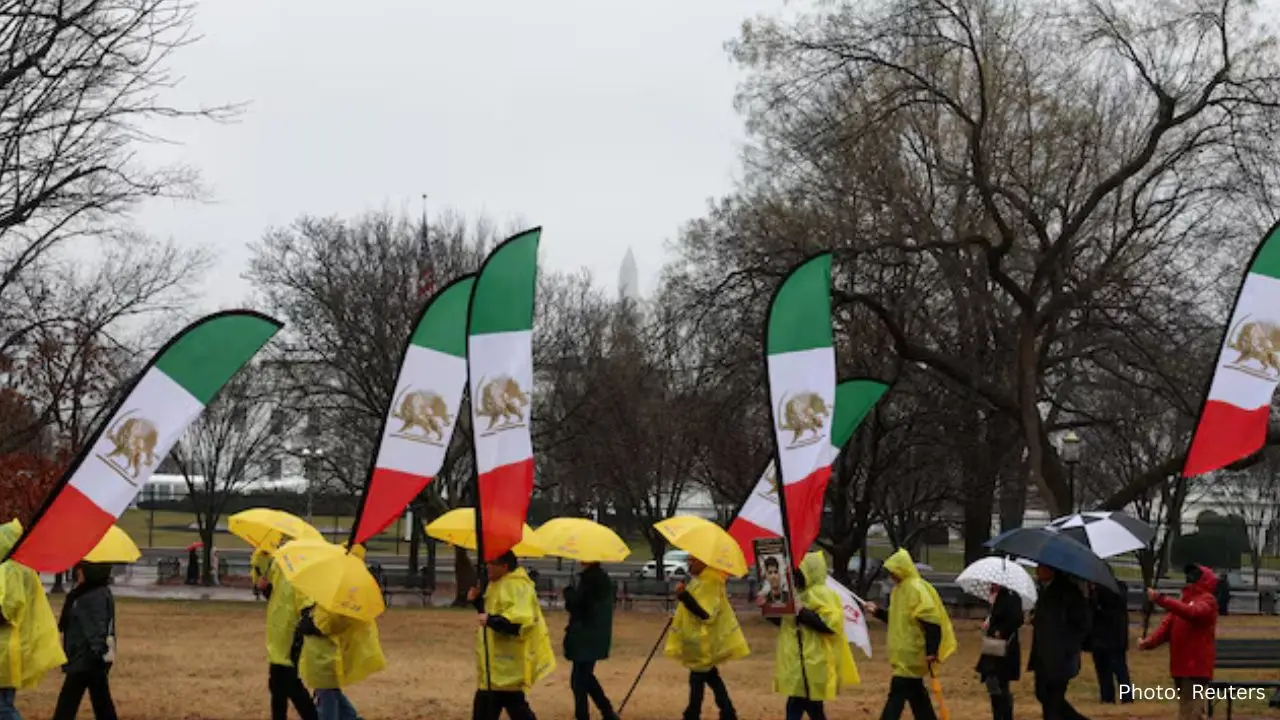
As widespread protests against the Iranian government intensify, discussions are heating up in the United States regarding the appropriate response. Although President Donald Trump has indicated that military action remains a possibility, several senators from both parties are advocating for a more cautious approach, expressing concerns that such measures could backfire.
Iran is witnessing one of the largest protest movements in recent memory. Leaders in Tehran attribute the unrest to terrorism and vow to protect their regime. President Trump has hinted at potential U.S. intervention plans, although details remain unclear.
This past Sunday, two prominent U.S. senators publicly advocated against hasty military action. Republican Senator Rand Paul warned that bombing Iran may not yield the anticipated results, suggesting such moves could fortify the Iranian government by redirecting public anger towards a foreign antagonist.
Democratic Senator Mark Warner echoed these sentiments, emphasizing that military strikes could inadvertently solidify domestic opposition against the U.S. in ways that the Iranian regime has struggled to achieve itself. He reminded the public of the historical repercussions of U.S. involvement in Iran's 1953 coup, which fostered long-standing instability and ultimately the ascent of the current Islamic Republic.
Warner stressed the importance of diplomatic measures, advocating for a collaborative approach among allies to influence Iran without exacerbating the situation.
Reports indicate that military and diplomatic officials are poised to brief President Trump on various strategies, including cyber operations and military options. In response, Iran has cautioned that any attack would provoke retaliation against U.S. military installations, raising the specter of a wider conflict.
Conversely, not all lawmakers align with this cautious perspective. Republican Senator Lindsey Graham has taken a more aggressive stance, urging robust support for Iranian protesters and advocating for direct threats against the Iranian leadership to halt violence against civilians and instigate change.
Adding complexity to the scenario, Reza Pahlavi, son of Iran's former ruler, has stated his willingness to return to Iran to help facilitate a democratic transition. From his base in the U.S., he has asserted that Iranians deserve the opportunity to elect their leaders without intimidation.
This ongoing debate sheds light on recurring challenges in U.S. foreign policy. While military action can deliver swift results, it often carries significant risks and long-term ramifications. History demonstrates that foreign intervention in Iran has not consistently led to stability or democratic governance.
Simultaneously, inaction presents potential hazards, especially in the face of domestic violence and oppression. The pressing question for the U.S. is how to advocate for human rights and democratic ideals without converting a national conflict into international warfare.
The perspectives shared by senators across the aisle reveal an understanding of these complexities. As the crisis in Iran unfolds, it will be crucial to approach the situation with astute judgment, global collaboration, and respect for the aspirations of the Iranian populace.
The forthcoming days are likely to influence U.S. policy toward Iran for years to come. Leaders' choices between restraint and confrontation will result in consequences that extend well beyond the region.