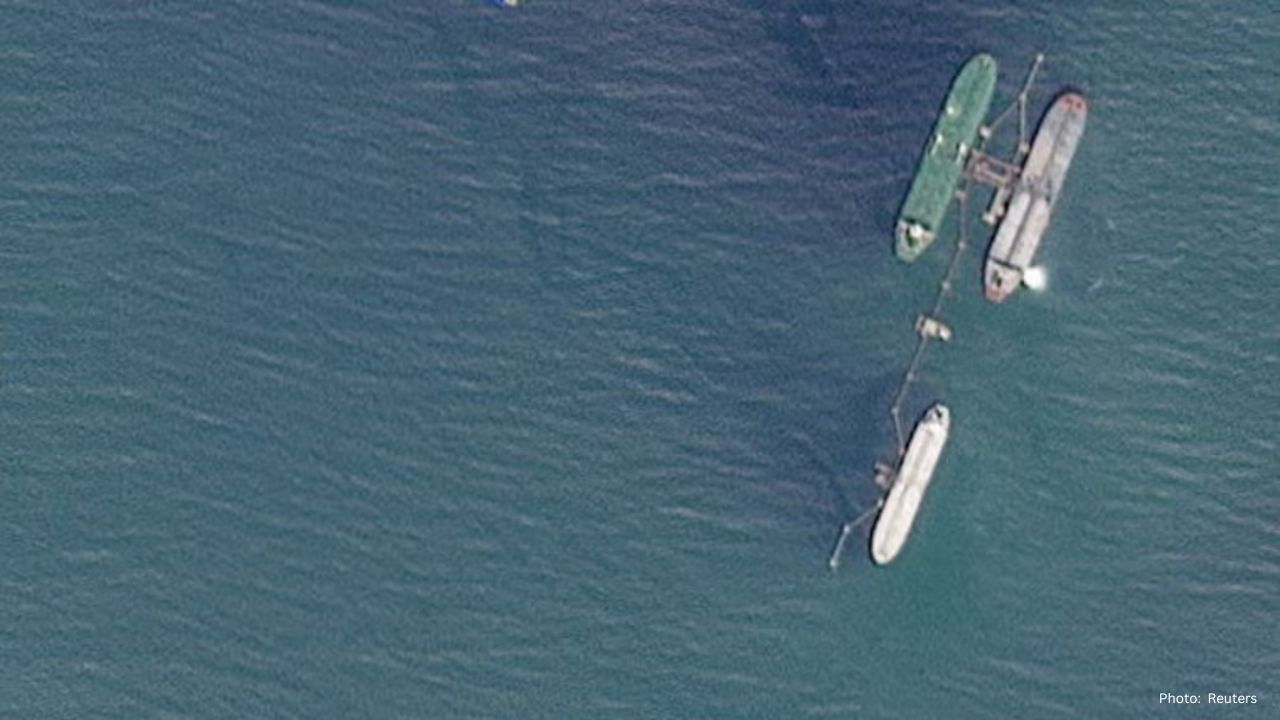
The United States has executed the capture of a massive oil tanker close to the Venezuelan coast just before the expiration of a court-approved warrant. Newly released court documents indicate that the operation involved the vessel named M/T Skipper on December 10, which was the final date outlined in the warrant issued by a U.S. judge.
This warrant, sanctioned on November 26 by U.S. Magistrate Judge Zia Faruqui, authorized seizure until December 10. This operation marks a significant moment, as it’s the first instance of the U.S. confiscating Venezuelan oil under sanctions that have been in force since 2019.
The M/T Skipper had recently departed from Venezuela’s principal oil port of Jose after loading approximately 1.8 million barrels of Merey heavy crude, which is crucial for the country's exports. According to U.S. authorities, this tanker was involved in transporting oil connected to both Venezuela and Iran, two nations facing heavy sanctions from Washington.
U.S. officials indicate that this seizure is part of a broader intent to enforce sanctions and dismantle what they characterize as illegal oil trading networks. FBI Director Kash Patel stated that this move highlights the commitment to hold the Venezuelan and Iranian governments accountable for breaching international regulations.
Satellite imagery and shipping data later validated the tanker’s position near Venezuela shortly before the seizure. While the warrant has been disclosed, the accompanying legal documentation that explains the rationale behind the seizure remains mostly undisclosed. The judge noted that some documents will remain sealed for the time being, likely for security and enforcement reasons.
The Venezuelan government has vehemently denounced the seizure, labeling it as an unlawful act and another instance of U.S. hostility. This development has exacerbated the already strained relationship between Washington and Caracas, which has been marred by sanctions, political strife, and allegations of illicit activities in recent years.
According to Reuters, it has been suggested that the U.S. may be gearing up to intercept additional vessels carrying Venezuelan oil in the future. This hints that the M/T Skipper seizure could be part of a larger strategy aimed at tightening the pressure on Venezuela’s oil exports.
This operation follows several recent U.S. missions in the area, including attacks on ships suspected of drug trafficking. Such actions have drawn scrutiny from some U.S. lawmakers and legal experts, who have raised concerns regarding the legal boundaries of these initiatives and the potential for escalation.
Former President Donald Trump has frequently mentioned the possibility of escalated actions against Venezuela, including military intervention. The United States has also boosted its military presence around the southern Caribbean, heightening fears of a potential direct confrontation.
From an editorial viewpoint, the timing of the seizure is noteworthy. Taking action just before the warrant's deadline illustrates the calculated nature of the operation. Nevertheless, it raises pertinent questions about transparency, legal regulation, and the longer-term consequences of enforcing sanctions through forceful maritime actions.
While the U.S. asserts that such operations are necessary to uphold international law and weaken sanctioned nations, critics caution that these moves may destabilize the region further and raise the chances of conflict. For the everyday citizens of Venezuela, stricter oil enforcement could exacerbate economic difficulties by severing one of the country's few remaining revenue streams.
As tensions mirror an upward trajectory, the capture of the M/T Skipper symbolizes a bold message: Washington is willing to intensify sanctions enforcement, even as diplomatic avenues between the two nations grow increasingly limited.