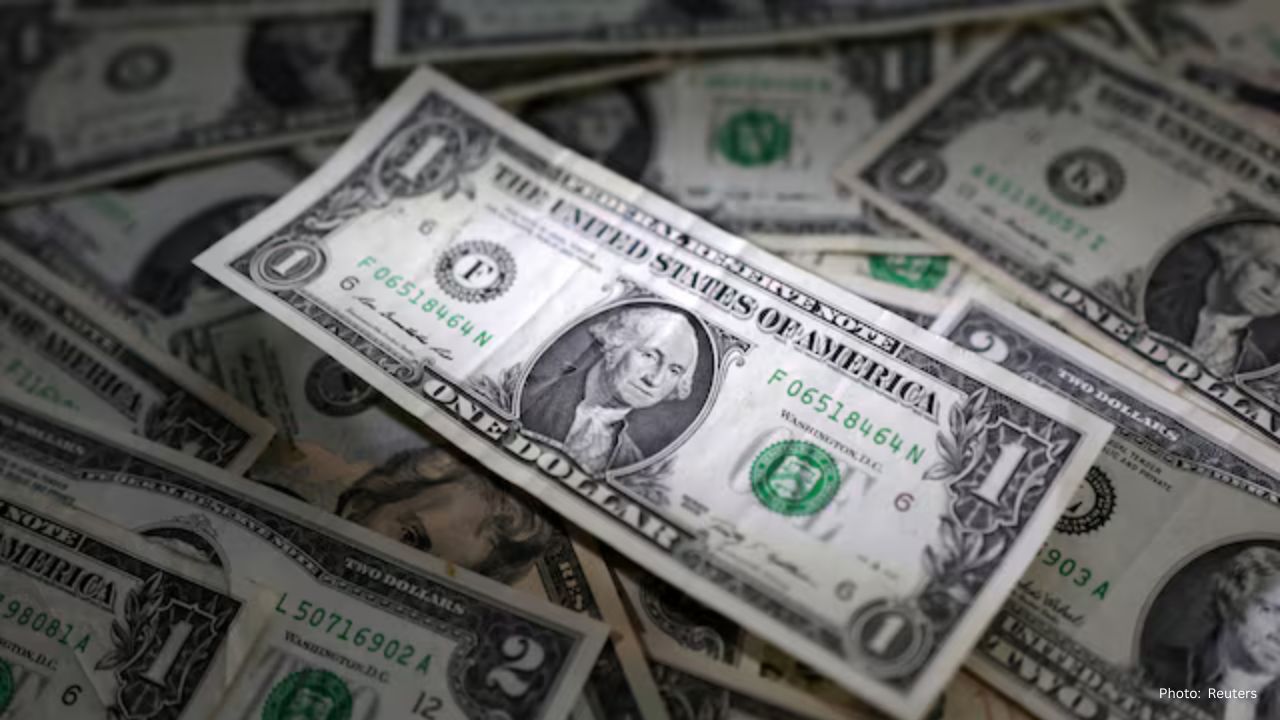
The U.S. dollar decreased for the second consecutive day in Asian markets as initial anxieties surrounding the recent U.S. military actions in Venezuela began to lessen. Investors are now prioritizing U.S. economic figures and insights from Federal Reserve officials indicating potential rate cuts in the future.
The dollar index, which gauges the strength of the greenback against a selection of six major currencies, fell by 0.2 percent to 98.216, continuing a trend following four days of gains. Currency analysts suggest that reduced geopolitical tensions in Venezuela have decreased the demand for safe-haven assets such as the dollar.
During the weekend, U.S. military forces unexpectedly detained former Venezuelan President Nicolas Maduro. He later appeared in a New York court where he pleaded not guilty to narcotics charges. Although this incident initially stirred market volatility, investors have since redirected their focus toward domestic economic trends in the U.S.
The dollar dipped slightly against the Japanese yen, trading at 156.255 yen. In contrast, commodity-related currencies like the Australian and New Zealand dollars showed strength, with the Australian dollar reaching a weekly high of $0.6724 driven by record copper prices. The New Zealand dollar rose by 0.2 percent, settling at $0.5798.
Analysts point out that the gains made by the dollar on Monday were short-lived. U.S. manufacturing activity reported a 14-month low in December, signaling slower economic growth. This information, along with dovish remarks from Minneapolis Federal Reserve President Neel Kashkari, has heightened speculation that the Fed may maintain or even reduce interest rates soon.
Kashkari warned that risks looming over the U.S. labor market could warrant future policy adjustments. Consequently, futures markets currently reflect an 82.8 percent probability that rates will remain steady during the Fed's upcoming meeting later this month.
The dollar also weakened against the Chinese yuan, now trading at 6.9769, while the euro increased slightly to $1.1737. The British pound gained ground, rising to $1.3562. In the world of cryptocurrencies, bitcoin dipped by 0.3 percent to $93,772, and ether decreased by 0.4 percent to $3,225.
Overall, the decline of the U.S. dollar illustrates a market balancing act between geopolitical events and economic fundamentals. While sudden international developments such as the Maduro incident can trigger short-term fluctuations, investors are increasingly leaning towards U.S. economic metrics and guidance from the central bank in their decision-making process.
The recent market movements suggest that the greenback could remain under pressure in the immediate future, particularly if U.S. economic growth shows continued signs of sluggishness alongside rising expectations for Fed rate cuts.