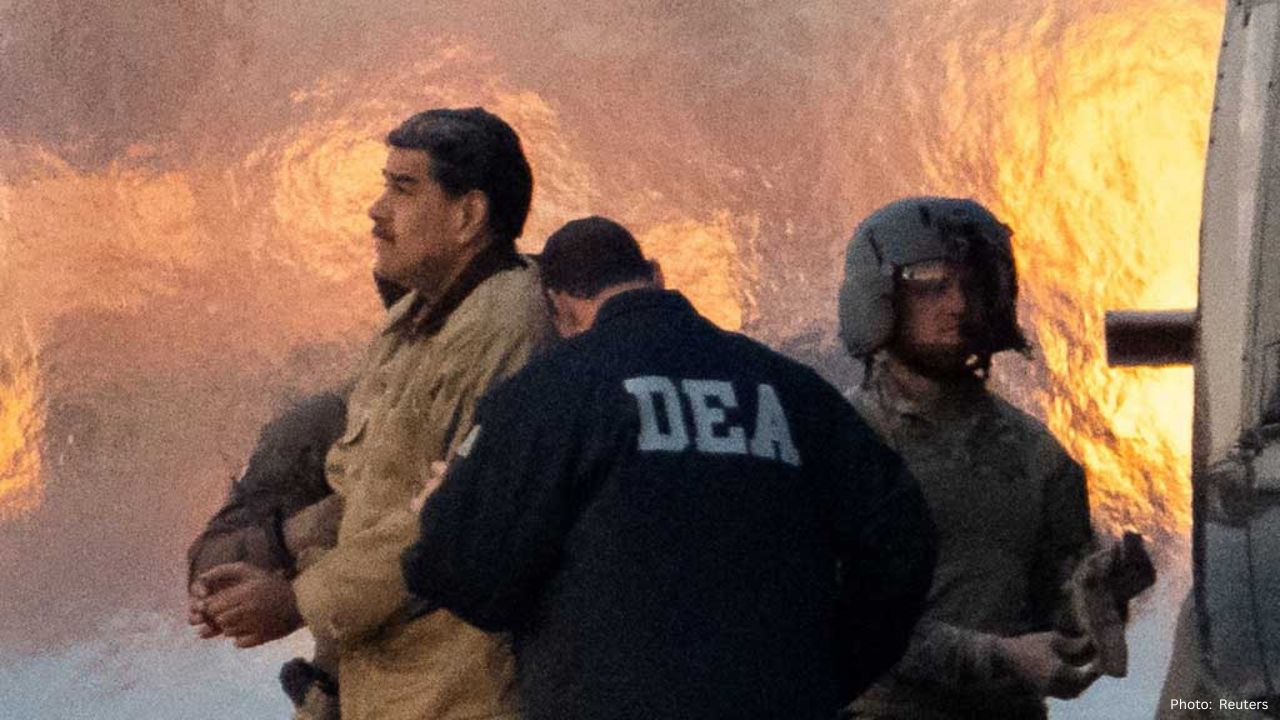
The United States' detention of Venezuelan President Nicolas Maduro has sparked significant global outcry, putting pressure on China's diplomatic approach. This event raises important questions regarding international law, national sovereignty, and the limits of global power interventions without United Nations endorsement.
Reports indicate that US forces apprehended Maduro in Venezuela and extradited him to New York on drug-related charges. Footage showing Maduro blindfolded and restrained alarmed numerous nations. In court, he pleaded not guilty, immediately igniting a debate over the legality of the US’s actions at the United Nations Security Council.
China swiftly condemned the US move. Chinese officials criticized the United States for its perceived disregard of international law. Foreign Minister Wang Yi asserted that no nation has the authority to act as the world’s police or judge, emphasizing the need to respect each country's sovereignty under international regulations.
China adheres to a longstanding non-intervention policy, opposing external military or political meddling in sovereign affairs without UN approval. This incident poses a direct challenge to that principle, compelling China to demonstrate its capacity to uphold its stance on an international scale.
The issue was formally presented to the UN Security Council following a request for an emergency session from Colombia, backed by China and Russia. During discussions, China expressed its astonishment and vehement opposition to the US’s actions, cautioning that military incursions into political matters often yield increased instability rather than resolution. The UN Secretary-General also highlighted the potential peril such actions pose for future global relations.
Experts suggest that China is in a pivotal position to influence global sentiment against the US decision. Although military or direct economic support for Venezuela may be lacking, China can still leverage its diplomatic clout to assemble a coalition of developing nations to amplify pressure through international channels.
The context is particularly delicate as Venezuela is among China’s key allies in Latin America. Their alliance has flourished over the years, bolstered by former leader Hugo Chavez's efforts to enhance ties with Beijing. Maduro's continued partnership involved extensive Chinese investments in Venezuela's oil sector and infrastructure projects, particularly in light of Western sanctions detrimental to the Venezuelan economy.
This relationship has also been mutually beneficial, with Venezuela backing China’s broader global objectives and often aligning with Beijing's political stances on numerous issues. The capture of Maduro extends beyond mere legal ramifications, representing a significant blow to China’s reputation as a protective ally.
Concerns have arisen among other Latin American nations that have recently strengthened ties with China, as many had engaged in cooperative security initiatives with the belief that these relationships protected them from foreign intervention. Now, questions may emerge regarding whether China can genuinely safeguard its partners amidst unilateral actions by more powerful nations like the US.
Chinese President Xi Jinping has called for all nations to uphold international law and adhere to UN mandates, urging major powers to demonstrate responsible behavior, albeit avoiding direct mentions of the United States. This stance exemplifies China’s strategy of balancing firm rhetoric with diplomatic tact.
Meanwhile, the US continues to adopt a strong stance toward other countries in the region, such as Colombia, Mexico, and Cuba, intensifying concerns that military force might once again be prioritized over diplomacy in foreign policy.
The Maduro incident represents a significant trial for China, testing its assertion that global challenges can be addressed without resorting to force or yielding to Western hegemony. How China reacts over the coming weeks, particularly within the United Nations, will inform its standing as a global leader committed to maintaining international norms.
The implications of Maduro's capture transcend the confines of Venezuela, reigniting crucial discussions about power dynamics, legality, and equity in international politics. As global scrutiny intensifies, the ramifications might redefine how states engage when international standards are tested.