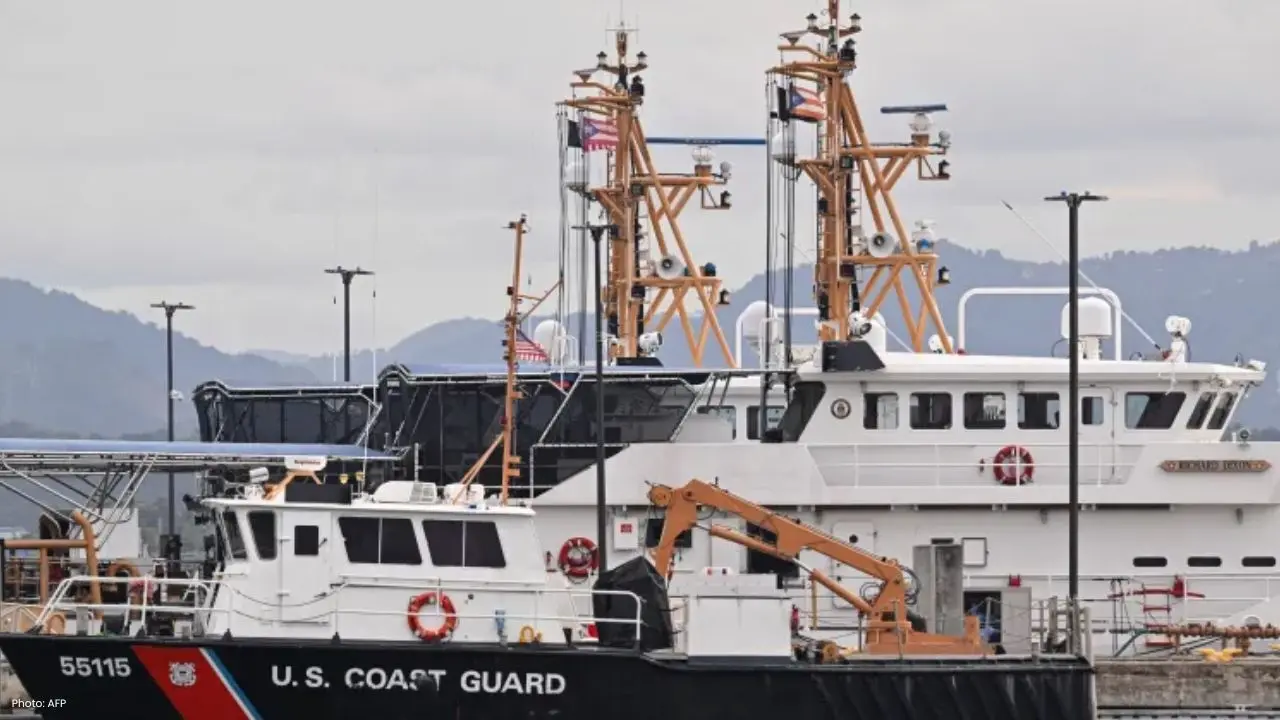
The United States Coast Guard has concluded its search for survivors following US military strikes on boats in the eastern Pacific Ocean, heightening concerns regarding legal liability and human rights repercussions stemming from these operations.
In a formal statement released on Friday, the Coast Guard indicated that the search operations spanned three days, covering approximately 400 nautical miles to the southwest of the Mexico–Guatemala border. Despite over 65 hours of search efforts, no survivors were reported.
Reports suggested that adverse weather conditions hampered the search, with wave heights reaching nine feet and gusts of nearly 40 knots, severely restricting visibility and hindering rescue operations.
Earlier in the week, US military's Southern Command reported targeting three boats traveling together in the eastern Pacific. Military personnel confirmed that three fatalities occurred on one vessel, while individuals aboard the two other boats reportedly jumped overboard before their crafts were struck and sank. Another strike resulted in two additional deaths, although officials did not clarify the specific location of this incident.
The military characterized the boats as involved in drug trafficking; however, no evidence was made public to support these claims.
With these recent events, the total number of confirmed military strikes on maritime vessels has escalated to 33 since early September, resulting in at least 115 fatalities, according to data from the Trump administration.
The Coast Guard did not indicate how many individuals might have been in the water at the time of the search. Military officials stated that the Coast Guard was alerted promptly, as no US naval vessels were close by. Aircraft were dispatched from California, and nearby vessels were asked to assist if able.
The strikes have faced significant backlash from human rights organizations and experts in international law, who warn that such operations may constitute extrajudicial killings without judicial oversight or due process. Legal analysts have raised concerns that these actions might breach international maritime and humanitarian laws.
The Trump administration justified the strikes, labeling the targets as “narcoterrorists” allegedly utilizing drug trafficking to endanger US national security.
Public attention surged following a prior strike in the Caribbean, which seemingly hit survivors of an earlier attack, prompting questions regarding compliance with military engagement protocols and laws governing armed conflict.
Historical cases indicate that some individuals have managed to survive such attacks. In late October, the Mexican Navy stopped a rescue mission after four days. In another case, two survivors extracted from a submerged vessel in the Caribbean were returned to Ecuador and Colombia, with one subsequently released by Ecuadorian authorities due to insufficient evidence linking him to criminal activities.
Most US naval operations in the maritime sphere have been concentrated in waters surrounding Venezuela, as Washington amplifies economic sanctions, escalates military presence in the area, and enforces restrictions on Venezuelan oil shipments.
Venezuelan President Nicolás Maduro has accused the United States of trying to destabilize his government and seize control over the nation’s oil resources. Nonetheless, he has displayed a more accommodating stance recently, signaling a willingness to engage in discussions with Washington to tackle drug trafficking issues.