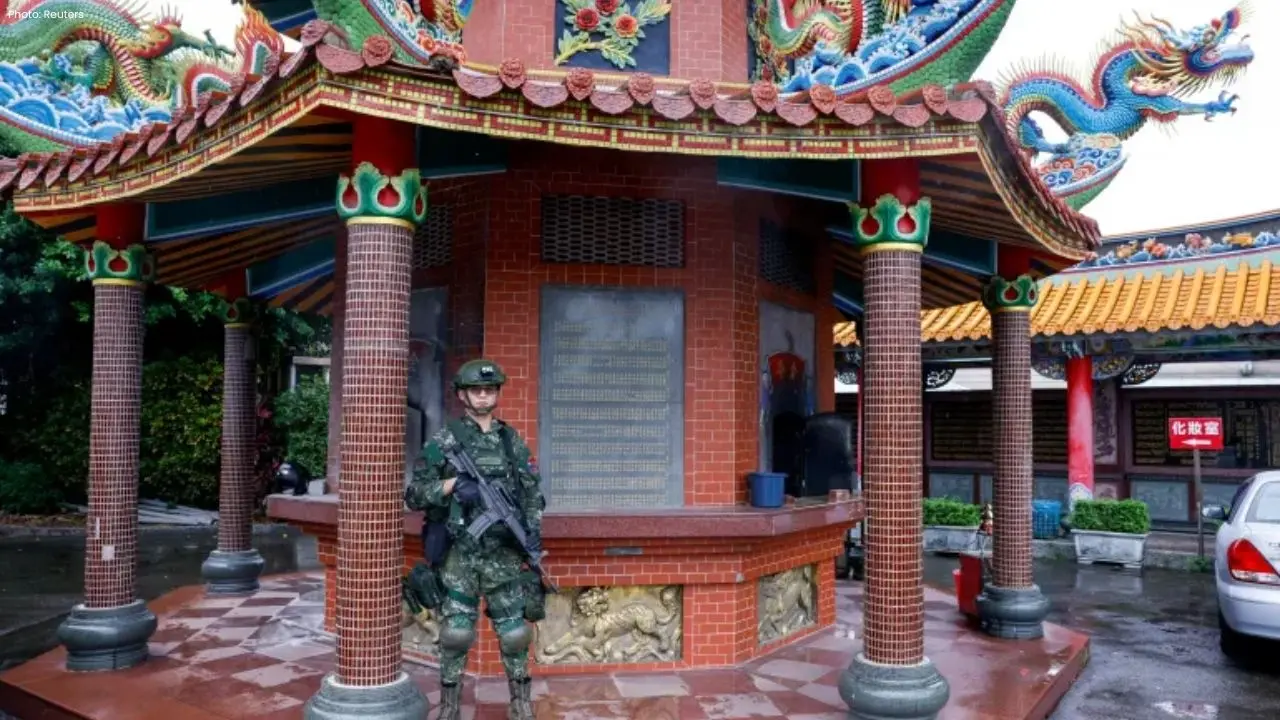
The United States has approved a landmark $11.1 billion arms sale to Taiwan, one of the largest weapons packages ever authorised for the self-governed island. The decision highlights Washington’s growing focus on strengthening Taiwan’s defence amid rising regional tensions.
The wide-ranging package includes advanced military equipment designed to enhance Taiwan’s deterrence and defensive capabilities. Among the most significant items are 82 High Mobility Artillery Rocket Systems (HIMARS) and 420 Army Tactical Missile Systems (ATACMS), together valued at more than $4 billion. These systems are intended to improve long-range strike capacity and protection against aerial threats.
Also included are 60 self-propelled howitzer artillery systems and associated equipment worth over $4 billion, along with drones valued at more than $1 billion. Additional components of the deal feature military software exceeding $1 billion, Javelin and TOW anti-tank missiles worth more than $700 million, helicopter spare parts priced at $96 million, and refurbishment kits for Harpoon missiles costing $91 million.
Officials said the arms sales support efforts to modernise Taiwan’s armed forces and help maintain a credible defensive posture. The package is aimed at strengthening deterrence while contributing to stability in the Indo-Pacific region.
Taiwan welcomed the approval, calling it a key step in reinforcing its self-defence capabilities. Leaders stressed the importance of defence reforms and building broader societal resilience to ensure long-term security.
China strongly criticised the move, reiterating its opposition to military cooperation related to Taiwan. Beijing maintains that Taiwan is part of its territory and warned that such actions could further destabilise regional relations.
The approval follows Taiwan’s recent announcement of a $40 billion supplementary defence budget covering 2026 to 2033, underlining its commitment to national security.
The decision is expected to add fresh strain to relations between the United States and China, with Taiwan remaining a central issue in the evolving geopolitical rivalry in the region.