Photo:AP
A Veteran’s Harrowing Ordeal
On July 10, 2025, George Retes, a 25-year-old U.S. Army veteran and security guard at a cannabis farm in Camarillo, California, was caught in a sweeping immigration enforcement operation. Despite clearly identifying himself as a U.S. citizen, he was violently pulled from his vehicle—subjected to tear gas and pepper spray—and held in a detention center for three days. Retes alleges that he was never informed of any charges, denied access to legal counsel or contact with his family, and barred from basic needs like showering or changing his clothes. His story has ignited widespread criticism of immigration enforcement practices that seemingly disregard individual constitutional protections.
Mistaken Identity and Forceful Arrest
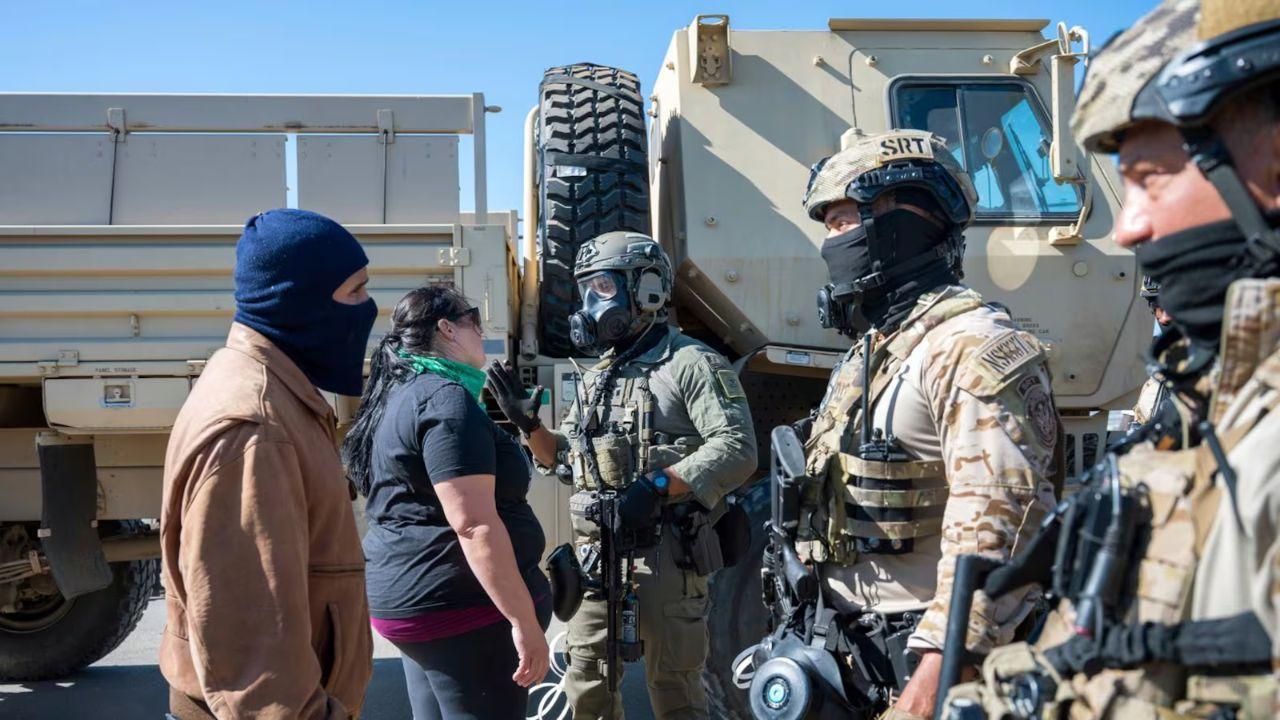
The arrest occurred in the early hours of the morning during a chaotic ICE operation targeting undocumented workers on cannabis farms. Retes had just finished his night shift and was exiting the premises when heavily armed officers stopped his car. Despite showing his military ID and driver’s license, he was ordered out of the vehicle at gunpoint. As he tried to comply, officers used tear gas and pepper spray to subdue him. He was dragged to the ground, pinned under several officers, and restrained—despite not resisting arrest. The excessive use of force against someone actively cooperating has become one of the most criticized aspects of the raid.
Detention Without Due Process
Retes was transported to a federal holding facility in downtown Los Angeles, where he was placed in solitary confinement and reportedly placed under suicide watch. He says he was denied basic human rights—no calls, no showers, no change of clothing—and was forced to sleep on a thin mat in a cold cell with fluorescent lights on 24/7. Officers failed to explain his charges or the reason for his detainment. He only learned of the nature of the raid after overhearing guards talking about mass arrests. He also wasn’t allowed to contact legal aid or family members, missing his daughter’s fifth birthday while detained.
Release Without Charges or Explanation
Three days after his arrest, Retes was unceremoniously released. No apology, no explanation, and no formal charges were presented. He was dropped off at a public transit station in downtown Los Angeles with no money and no way to get home. ICE later admitted he was “detained in error,” but no disciplinary action was taken against the agents involved. The Department of Homeland Security confirmed his U.S. citizenship post-factum but has offered no public comment on the mistakes made during the operation.
Context: A Controversial Immigration Raid
The raid was part of a larger federal initiative to crack down on undocumented labor in the agricultural sector. Over 360 individuals were taken into custody across Ventura County, most of them Latino workers employed by cannabis producers. Four U.S. citizens, including Retes and a university academic, were mistakenly arrested. The operation was heavily criticized for its aggressive tactics and racial profiling. One farmworker died during the operation after falling from a greenhouse roof while attempting to flee agents.
National and Local Backlash
Public response was swift and critical. California Governor Gavin Newsom issued a statement condemning the raid, stating it instilled fear and mistrust in immigrant and Latino communities. Civil rights organizations demanded an immediate halt to similar operations until stricter identity verification protocols were implemented. Veterans’ groups also condemned the incident, calling it a disgraceful violation of the rights of someone who had served their country honorably.
Legal Implications and Future Litigation
Retes is now preparing to file a civil rights lawsuit against the federal government for wrongful arrest, use of excessive force, and illegal detainment. His legal team argues that the raid violated his Fourth and Fourteenth Amendment rights, including unlawful search and seizure and denial of due process. If successful, his case could set a precedent for holding ICE accountable for the unlawful detention of U.S. citizens. His legal team is also seeking compensation for physical and emotional trauma, as well as punitive damages against individual agents involved.
Wider Pattern of Wrongful Detentions
This is not an isolated case. Since 2017, hundreds of U.S. citizens have reportedly been wrongfully detained during immigration raids due to flawed databases, outdated records, and insufficient verification processes. A 2023 watchdog report highlighted systemic issues in ICE’s arrest protocols, showing that up to 2% of all detainees may actually be citizens. This has prompted calls for better coordination between federal databases and local law enforcement agencies.
The Human Toll
For Retes, the incident has left deep emotional scars. He suffers from anxiety, sleep disturbances, and recurring nightmares. “I served this country, and they treated me like I was nothing,” he said during a recent press conference. He is undergoing therapy and has joined a veteran support group to cope with the trauma. His family remains shaken. His mother said, “I thought he was dead. I couldn’t get ahold of him, and no one would tell me where he was.”
Advocacy and Political Response
Several lawmakers, including Congresswoman Alexandria Ocasio-Cortez and Senator Alex Padilla, have called for a congressional inquiry into the raid. Proposed legislation is now in the works to create stronger protections for citizens during ICE operations, including mandatory identity confirmation before detainment, a citizen hotline, and penalties for wrongful arrests.
Military and Veterans Organizations Speak Out
Veterans groups like the American Legion and Iraq and Afghanistan Veterans of America (IAVA) have issued statements of solidarity, demanding justice for Retes and systemic reforms. “No one who has worn the uniform should be treated this way,” said IAVA’s CEO. There are also calls for the Pentagon to liaise with DHS to ensure veterans in vulnerable communities are safeguarded during immigration enforcement.
Civil Rights at Risk
Retes’ case underscores a broader concern: the erosion of civil liberties under the guise of national security. The U.S. Constitution guarantees rights to all citizens regardless of ethnicity, appearance, or occupation. Critics argue that recent enforcement strategies risk turning the U.S. into a police state, where due process is sacrificed for optics and political gain.
Ongoing Investigations and Next Steps
The DHS Inspector General has launched an internal investigation into the operation. Meanwhile, the U.S. Attorney’s Office in California is reviewing all arrests made during the raid. Civil liberties organizations like the ACLU and Human Rights Watch are preparing amicus briefs in support of Retes’ lawsuit. The outcome of these efforts could shape federal enforcement policy for years to come.
Conclusion: A Cautionary Tale for All Americans
The wrongful arrest and abuse suffered by George Retes is a chilling reminder that no one is immune from the excesses of unchecked authority—not even those who have served the country with honor. His story resonates across the nation as a warning that fundamental rights must never be compromised, especially in the name of security. As legal proceedings unfold and policy reforms are debated, his experience may ultimately become a turning point in America’s ongoing struggle to balance enforcement with liberty.