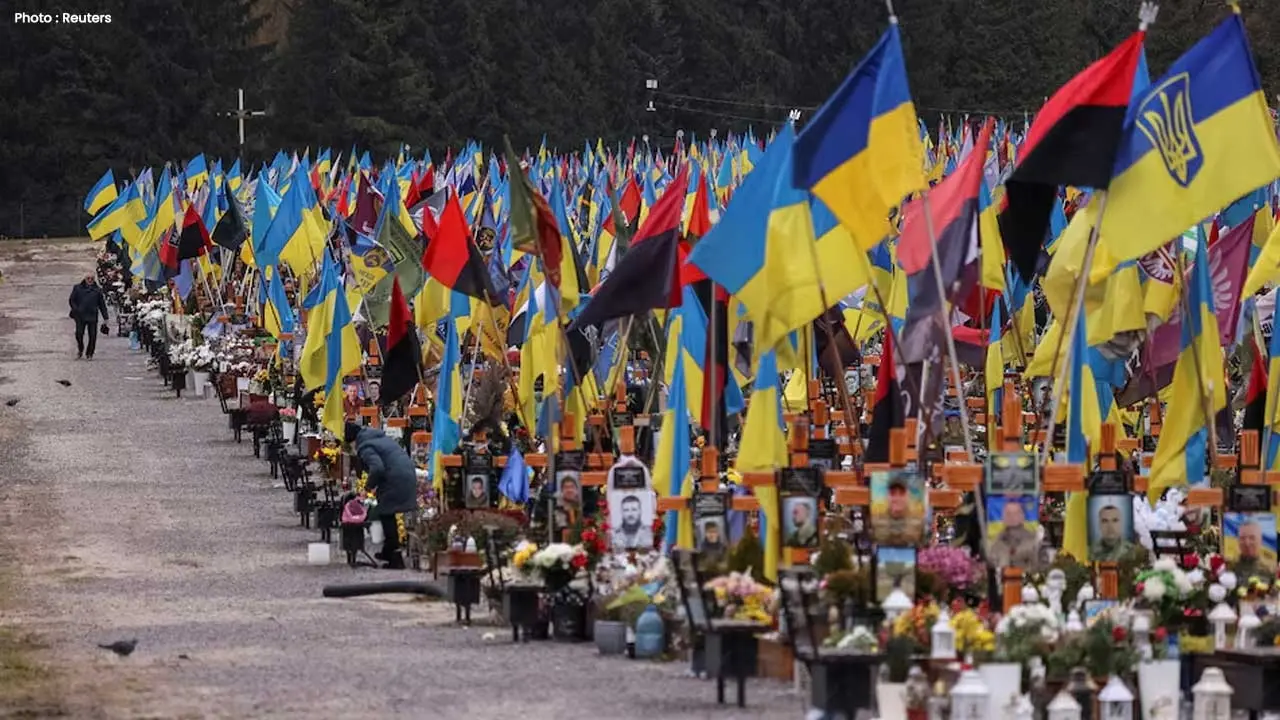
Lviv: At her son’s grave in Lviv's serene outskirts, Olya Kachmaryk embodies a mother's sorrow. Her son, a soldier, lost his life in the ongoing war with Russia. As the conflict stretches into another year, she yearns for a U.S.-sponsored peace initiative that could halt the ongoing violence, even if it requires Ukraine to relinquish some of the lands her son valiantly defended.
Kachmaryk, like others who grieve, faces a heart-wrenching dilemma between her patriotic sentiments and the pressing need for peace. The relentless fighting seems untenable, particularly as Russian troops extend their reach across the eastern front. “The more they advance, the more territory they'll seek,” she murmurs softly while placing fresh petals at her son's resting place.
The proposal for peace has stirred profound discussions among Ukrainians. Some regard it as a bitter concession, yet others perceive it as the sole practical method to safeguard future generations from further calamity. Residents in western Ukraine, distanced from the battlegrounds but severely impacted by loss, assert that any initiative aimed at peace should be given due consideration.
As hostilities heighten in the east, hopes surrounding the U.S.-endorsed peace plan grow. Families like Kachmaryk’s are optimistic that international pressure and diplomatic negotiations will yield positive results. For them, achieving peace—flawed as it might be—represents a safeguard against further sons, brothers, and husbands being buried throughout Ukraine.
Olya’s grief reflects that of countless Ukrainian families who have endured immense sacrifices. Their plea is straightforward: a durable peace that halts the bloodshed, safeguards lives, and minimizes future losses—despite the difficult choices ahead.