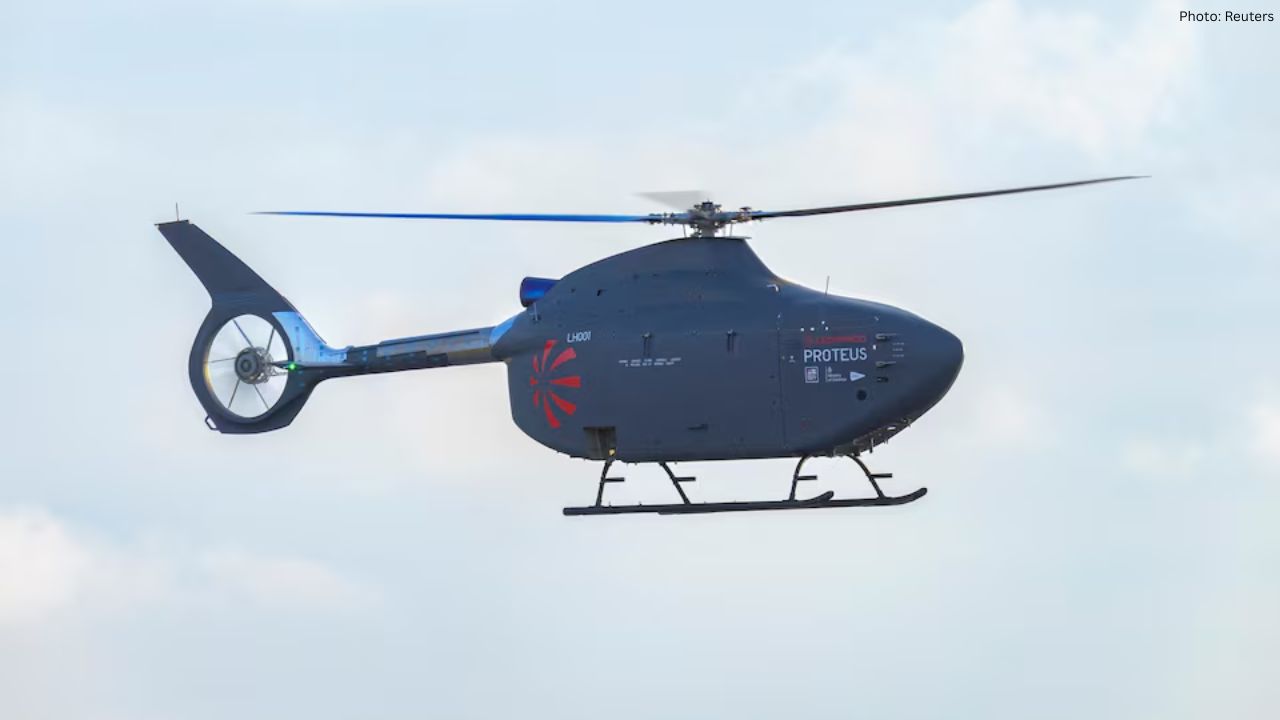
The United Kingdom’s Royal Navy has launched a new uncrewed helicopter system designed to enhance surveillance and counter emerging threats in the North Atlantic, the UK Ministry of Defence said on Friday. The deployment marks a significant step forward in autonomous military aviation capabilities.
Unveiled as part of the Royal Navy’s broader maritime modernization strategy, the autonomous helicopter — often described as a crewless aircraft system (UAS) — will operate from naval vessels to extend the fleet’s reach for reconnaissance, intelligence gathering, and threat detection. The system is expected to help monitor vast ocean areas more effectively, particularly in response to increasing strategic competition in the North Atlantic region.
The initiative falls under a £1.3 billion investment programme that seeks to bolster the Royal Navy’s technological edge and adaptability in the face of evolving security challenges. Officials have emphasised that integrating autonomous systems enhances operational flexibility and force projection without additional risk to personnel.
The newly introduced crewless helicopter is equipped with advanced sensors and communication systems, enabling it to support maritime patrol missions, assist in anti-submarine warfare scenarios and improve situational awareness in congested or contested waters. Its autonomous capabilities also allow for extended flight durations beyond what crewed platforms typically achieve.
Defence analysts say that innovations like the crewless helicopter reflect a shift in naval strategy, where unmanned technologies are increasingly used alongside traditional platforms to counter sophisticated threats. In the North Atlantic, such threats include undersea challenges and increased activity by foreign naval forces, which have heightened the need for persistent maritime monitoring.
Officials noted that the system will undergo further testing and integration exercises before full operational deployment. The Royal Navy remains committed to advancing autonomous and remotely piloted systems as part of a wider effort to modernize the United Kingdom’s defence posture and maintain superiority in maritime domains.