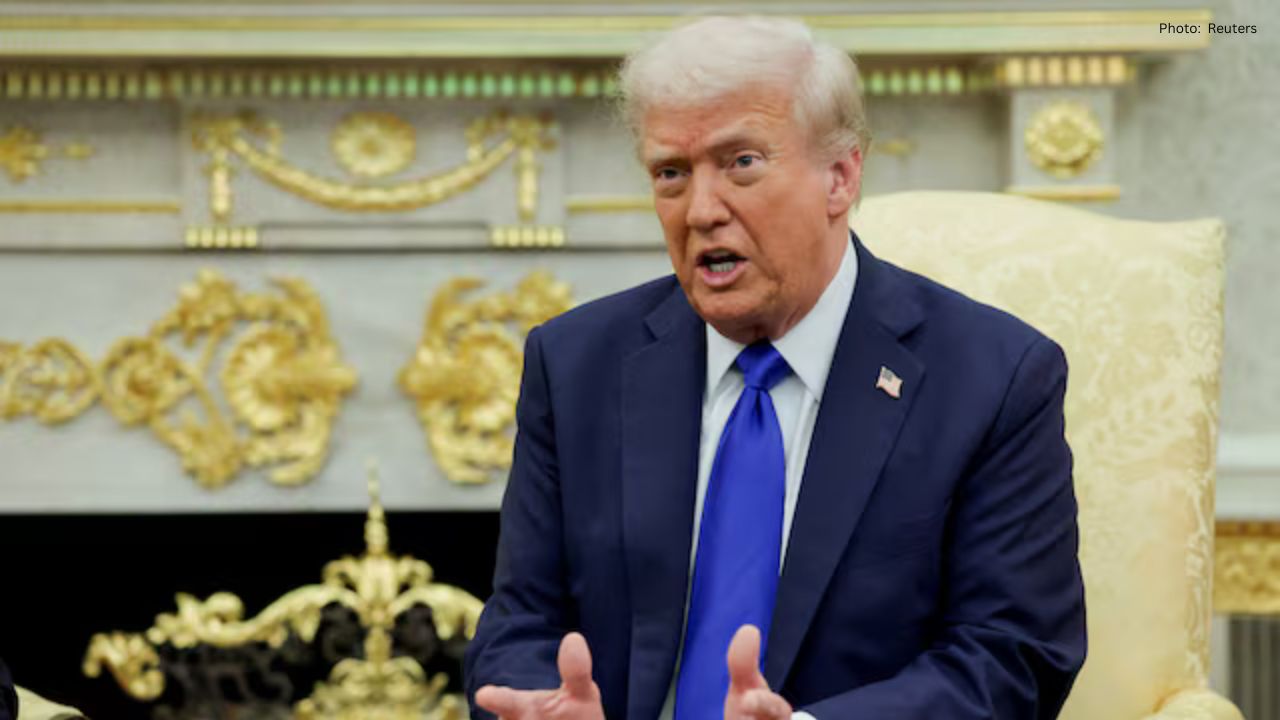
President Donald Trump’s bid to modify Indiana's congressional districts has entered a decisive phase. The Indiana Senate is slated to vote on Thursday regarding a new political map that could solidify Republican dominance in the U.S. House of Representatives. Yet, the final outcome remains uncertain despite Trump's strong advocacy.
With Republicans holding a significant 40–10 majority in the Indiana Senate, some Republican senators have expressed clear reservations about the proposed mid-decade redistricting initiative. This type of mid-decade map alteration is quite rare. Senate leader Rodric Bray has also voiced concerns, creating real doubt given the Republican caucus can only lose 15 votes.
This map, previously approved by the Indiana House, is expected to enable Republicans to secure all nine U.S. House seats in the upcoming midterm elections. This would represent a notable victory for Trump, who seeks to maintain Republican control over Congress. The new district plan notably weakens two Democrat-held seats by dividing Indianapolis into four districts, thereby diluting Democratic voting influence.
Trump has aggressively pushed this proposal forward, warning Republican senators of potential endorsements for challengers who might resist backing the new map. This pressure illuminates the significance of this issue for him as part of his broader strategy. Initially, Bray hesitated to put the vote on the agenda due to lack of support, but after continued urgency, he agreed to convene the Senate for discussion.
Typically, redistricting occurs once every decade, coinciding with new U.S. Census data. However, Trump has initiated a new trend by urging Republican-led Texas to alter their map ahead of schedule. This Texas map specifically targeted several Democratic representatives, sparking a series of similar efforts nationwide.
In California, responding Democratic leaders crafted a new map aiming to flip five Republican seats, which voters approved in November. Meanwhile, states across the spectrum, both Republican and Democratic, are adjusting their political landscapes in similar ways.
However, this momentum has not been without friction. In Indiana and Kansas, redistricting attempts have met with pushback from within the ruling party. In Maryland, Democratic members are similarly at odds about advancing a new map.
The ongoing indecision in Indiana underscores the political strife entwined with redrawing district lines. For certain legislators, the struggle revolves around party strength, while for others, it emphasizes fairness, stability, and minimizing turmoil mid-decade.
As Indiana's Senate vote looms, it remains to be seen if Trump's influence can sway the internal doubts amongst his own party. A failed plan would mark a significant defeat for his efforts to remold congressional maps across the nation. Conversely, if successful, it could bolster Republican leverage in Washington and escalate national contention over redistricting.
While Indiana senators gear up for the vote, it’s evident that the discourse transcends mere boundaries on a map; it is about the future political equilibrium in the United States.