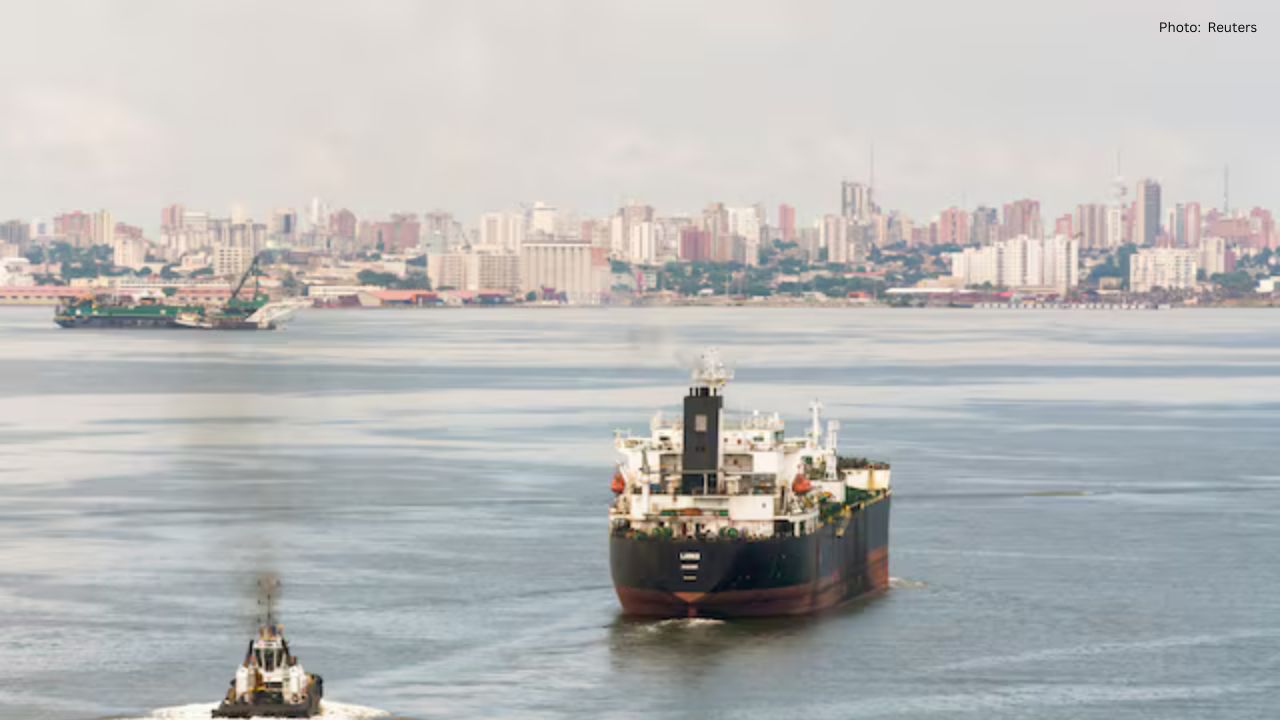
President Donald Trump has enacted a blockade against all sanctioned oil tankers that enter and exit Venezuela. This decision significantly intensifies the pressure on President Nicolas Maduro’s regime, directly affecting Venezuela’s principal revenue source: oil.
The global energy markets reacted swiftly, with oil prices surging over 1% as traders expressed concerns about potential reductions in oil supply from Venezuela. Even the anticipation of disruption was enough to elevate prices, underscoring how attentively markets respond to the political scenarios in key oil-producing nations.
In his comments, Trump condemned Venezuela’s leadership for alleged infractions including terrorism and drug trafficking, deeming the Maduro government a foreign terrorist entity and sanctioning a “total and complete blockade” on sanctioned oil vessels.
Venezuela's government vehemently opposed the blockade, calling it an unreasonable and perilous threat. President Maduro accused the United States of attempting to take control of Venezuela’s vast oil reserves—the largest globally—through military means.
The implementation details of the blockade remain uncertain, specifically regarding whether the U.S. Navy or Coast Guard will intercept vessels in international waters. However, the U.S. has bolstered its military presence near Venezuela, dispatching numerous troops and several naval ships, including an aircraft carrier, to the vicinity.
Last week, U.S. authorities detained a sanctioned oil tanker close to Venezuela's shoreline. Consequently, many vessels filled with crude oil have opted to remain in Venezuelan waters rather than risk interception, leading to a notable decline in Venezuela’s oil exports.
A recent cyberattack on the country’s state-owned oil firm, PDVSA, has further complicated the scenario, impeding its operations. The combination of declining exports and operational setbacks is exacerbating the nation’s economic difficulties.
Experts predict that rising oil prices stem primarily from the prevailing uncertainty. While numerous vessels working near Venezuela face U.S. sanctions, others remain unaffected. Some companies, like U.S.-based Chevron, continue to transport Venezuelan oil under special permits. Traders are closely monitoring the situation for any potential expansion of the blockade.
China emerges as the largest importer of Venezuelan oil, representing about 4% of its total imports. If Venezuelan exports diminish by nearly a million barrels daily and aren’t compensated by other sources, a sharp increase in oil prices is anticipated. Analysts speculate prices might escalate by $5 to $8 per barrel.
Legal experts have voiced serious concerns regarding the implications of such a blockade under international law, typically regarded as acts of war. While U.S. presidents possess extensive authority, scholars caution that this maneuver poses complex legal dilemmas at both national and global levels.
Criticism has arisen from U.S. legislators, who argue that this action risks pulling the country into conflict without Congressional approval. These cautionary statements highlight an increasing anxiety about the potential for escalation.
Beyond the political and economic ramifications, the human impact could be dire. Stricter oil export regulations may further inflame inflation and poverty within Venezuela, prompting more individuals to flee the nation in pursuit of safety and employment.
Trump's blockade initiative signifies a pivotal change in U.S.-Venezuela relations. It remains to be seen whether this will catalyze negotiations, inflict deeper economic suffering, or lead to outright conflict. What is unequivocal is that this decision has heightened global anxiety and introduced new uncertainties into already vulnerable energy markets.