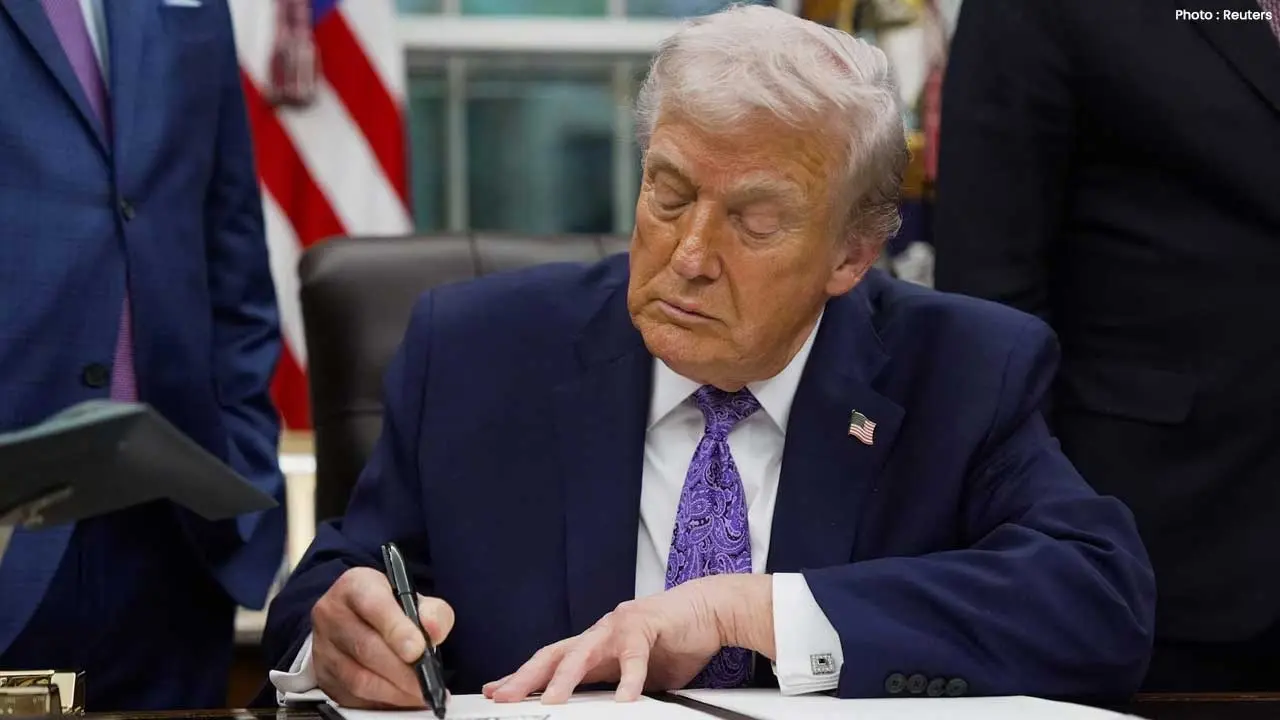
On Thursday, U.S. President Donald Trump revealed his intention to sign a pivotal executive order that will establish a uniform national standard for artificial intelligence regulations. This initiative is designed to halt the escalating trend of individual states enacting their own AI laws, a situation Trump argues could lead to confusion and mismatched rules nationwide.
During a press briefing with key advisors, including Treasury Secretary Scott Bessent, Trump highlighted the necessity for a singular governing body to oversee and approve AI policies. “We seek to create one central source of approval,” he stated, noting his administration's objective to streamline AI governance and provide clarity for businesses and tech developers across the country.
This forthcoming executive order emerges as AI technology undergoes rapid changes, with states increasingly pondering their own regulations affecting various sectors, such as finance, healthcare, education, and security. Trump's approach aims to foster a cohesive federal strategy, alleviating legal uncertainties and establishing clear protocols for AI usage in the United States.
Experts in law and industry believe that a centralized framework for AI could encourage innovation while ensuring public safety and ethical practices. Trump's announcement reaffirms his administration's commitment to spearheading AI policy formation at a national scale, balancing technological growth with necessary regulatory measures.
Analysts suggest that this executive order could significantly impact technology firms, startups, and investors, potentially replacing a fragmented selection of state laws with a cohesive federal standard. This shift is expected to simplify compliance and mitigate the risks associated with conflicting regulations.
Trump's initiative responds to the escalating global discourse on technology governance and the urgency for coherent policy frameworks to manage the swift evolution of AI. His focus on a “central source of approval” indicates a strategic move to maintain U.S. superiority in the AI landscape while ensuring accountability and oversight.