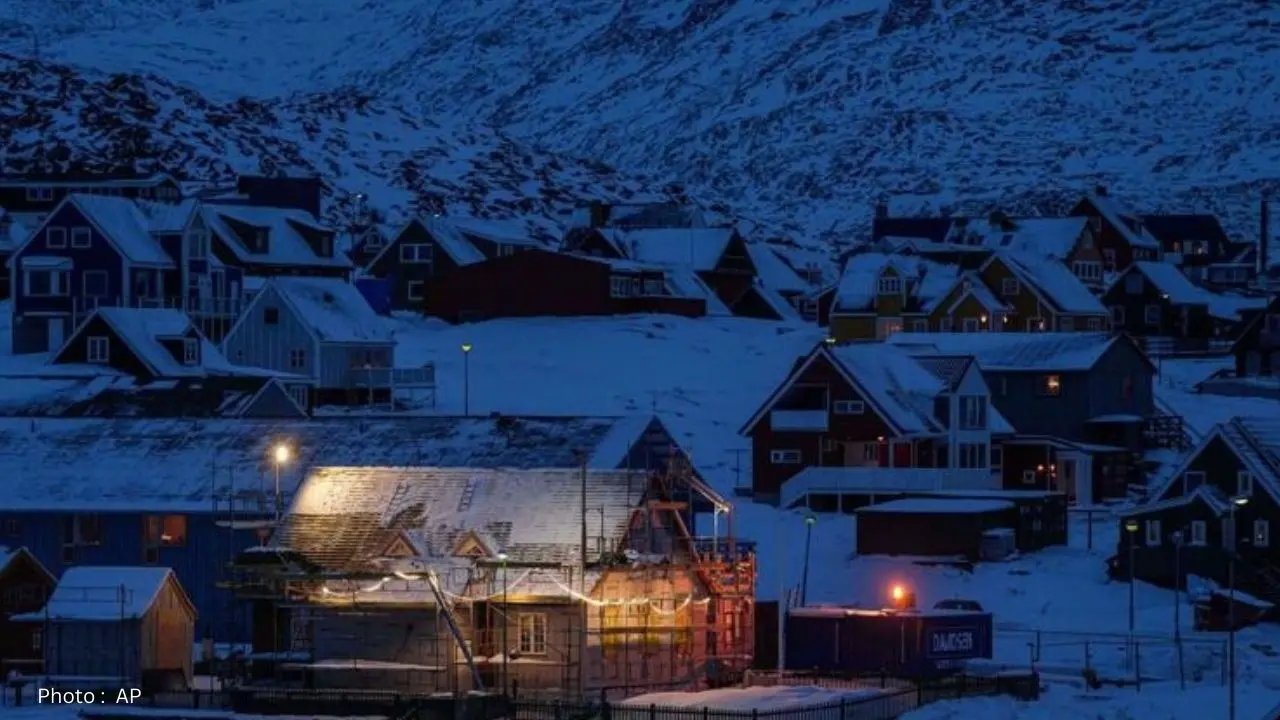
President Donald Trump has reiterated strong opinions regarding Greenland, declaring that any outcome short of full U.S. ownership is unacceptable. His remarks have heightened tensions with Greenland, Denmark, and other NATO partners.
Greenland, a vast Arctic island, operates as a self-governing territory under Denmark. While having its local administration, Denmark oversees defense and foreign policy. For years, the people of Greenland have affirmed that their land is not up for sale and that their future should be determined by themselves.
Trump asserted that the U.S. requires Greenland for national security considerations. He emphasized the island’s strategic importance and warned that rival powers, like Russia and China, could seek to extend their influence in the area. He added that NATO's strength would increase if Greenland was under American control. These comments came just before U.S. Vice President JD Vance was set to engage with leaders from Denmark and Greenland in Washington.
In Nuuk, the capital of Greenland, many residents have expressed anxiety and frustration. Numerous voices stated their desire to remain separate from the U.S. and felt threatened by the aggressive tone used. Local students and community members echoed the sentiment that Greenland is not for sale, urging U.S. officials to honor their wishes.
Greenland’s Prime Minister, Jens-Frederik Nielsen, made it clear that if forced to choose, the island would align with Denmark, NATO, and the EU. His statement depicted a strong sense of allegiance to Denmark and other allies in the West. Trump dismissed Nielsen’s remarks, intensifying concerns over mutual respect and diplomacy.
As climate change causes Arctic ice to melt, Greenland’s importance has surged. This transformation could create new shipping routes and facilitate access to valuable minerals essential for contemporary technologies. While Trump emphasizes security, many experts and local residents question this perspective, suggesting that the U.S. already possesses military bases in Greenland and could enhance them with Denmark’s consent if necessary.
Some Greenlanders suspect that the true interests lie in natural resources rather than security concerns. Residents note that encounters with Russian or Chinese vessels are rare and feel that the threats have been overstated. To them, Trump's remarks appear more like intimidation than a safeguard.
Throughout Europe, allies of the U.S. have reacted with alarm. French officials criticized what they termed pressure tactics against a NATO ally. In response, France has declared its intention to establish a consulate in Greenland, demonstrating support for the island and its citizens. Denmark’s European allies have also conveyed that Greenland belongs solely to its people.
In the U.S., anxieties are on the rise as well. Lawmakers from both sides of the aisle are proposing measures to prevent any attempt to seize control of Greenland without the consent of Denmark, Greenland, and NATO. Many American leaders argue that using force against an ally would undermine trust and hinder global collaboration.
This matter underscores a broader issue concerning respect among allies. Greenlanders appreciate the advantages they receive as part of Denmark, including comprehensive health care, education, and social services. They worry about losing these benefits if any changes to their status occur without their agreement.
The ongoing debate over Greenland transcends mere territorial issues. It embodies the principles of democracy, mutual respect, and peaceful international relations. As discussions progress, the clear message from the people of Greenland remains: they desire their future to be determined through dialogue rather than demands.