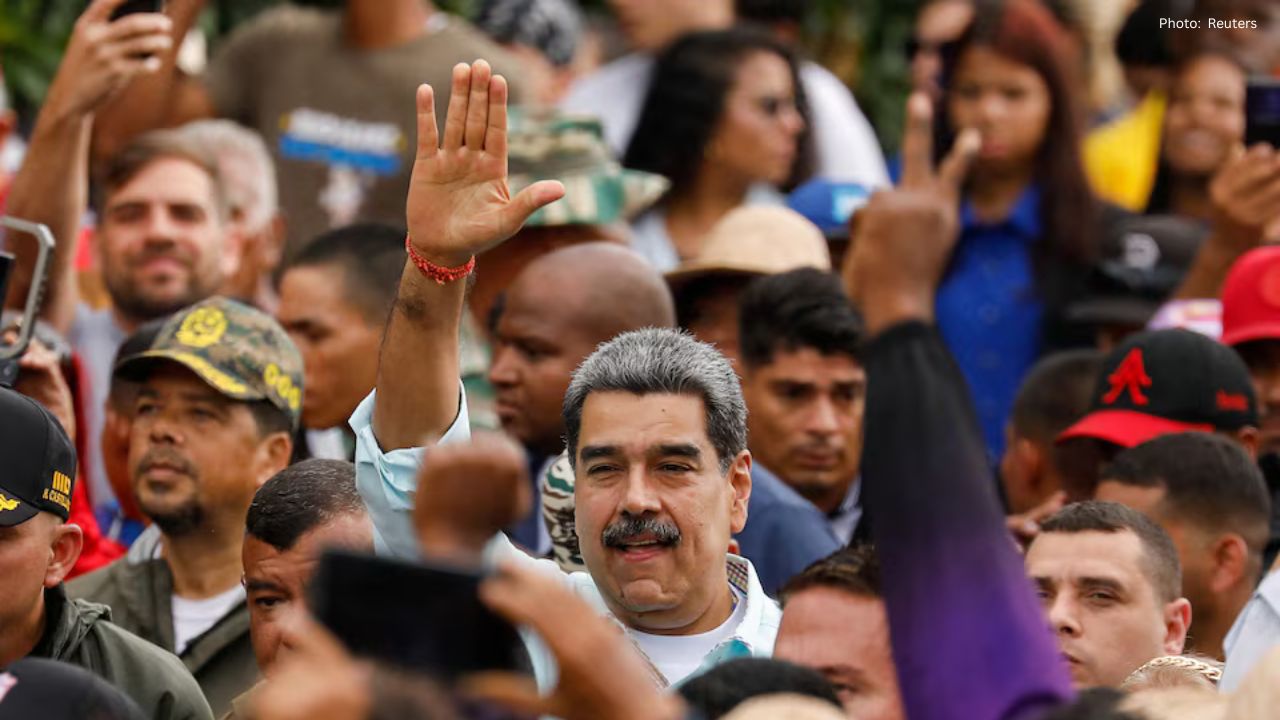
In a stern announcement, U.S. President Donald Trump has conveyed that Venezuelan President Nicolas Maduro should consider leaving his position, referring to it as “smart”. Trump made this statement while addressing the media in Palm Beach, Florida, as the U.S. amplifies its military, political, and economic pressure on Venezuela.
While Trump indicated that the choice lies with Maduro, he emphasized that resisting U.S. demands could lead to severe repercussions. Though he stopped short of stating that the ousting of Maduro is the principal aim of U.S. policy, his remarks reflect a belief in Washington that Venezuela would fare better without its current administration.
Recently, the U.S. has escalated its military activity near Venezuela, executing multiple strikes on vessels allegedly involved in drug trafficking in the Pacific Ocean and the Caribbean. U.S. officials assert that these actions are designed to curb illegal drugs from entering the country, although reports suggest that over 100 individuals have lost their lives in these operations, raising alarms about escalating violence in the vicinity.
Oil has emerged as another central issue. Trump mentioned that the U.S. has confiscated oil linked to Venezuela, with plans to either sell it, hold it, or add it to America’s strategic reserves. Earlier, Trump declared a blockade against oil tankers under sanctions attempting to enter or leave Venezuela. Over the past weekend, the U.S. Coast Guard intercepted another oil tanker close to Venezuelan waters, underscoring a surge in such operations.
These measures significantly impact Venezuela's economy, which heavily relies on oil exports. Years of sanctions coupled with economic mismanagement and inflation have resulted in widespread shortages of food, medicine, and basic services. Many analysts warn that escalating pressure could further deteriorate the humanitarian crisis.
During the same event, Trump criticized Colombian President Gustavo Petro, accusing him of being uncooperative with the U.S. and linking Colombia to drug production affecting American cities. His comments reflect rising tensions between Washington and neighboring leaders opposing U.S. policies regarding Venezuela.
In response, Venezuelan President Nicolas Maduro remarked that global leaders should prioritize their internal challenges rather than interfering in foreign affairs. While avoiding a direct mention of Trump, Maduro indicated that he would remind the U.S. president about respecting each nation's sovereignty.
Trump's remarks suggest that the U.S. is unlikely to ease its tough stance towards Venezuela anytime in the near future. While Washington maintains that its actions are aimed at enhancing security and combating illegal activities, the increased pressure raises risks of conflict and instability across Latin America. The next few weeks will reveal whether a path of dialogue or confrontation will dominate the U.S.-Venezuela relationship.