Ailsa Craig, a secluded island situated 10 miles (16 kilometers) off Scotland’s southwest coast, is pivotal for the Winter Olympics as the exclusive provider of the granite used in curling stones.
Kays Curling, headquartered in Mauchline near Ayr, holds the unique license to extract granite from this island. Since curling became an official Olympic sport in 1924 at Chamonix, Kays has delivered these essential stones, continuing this legacy since the sport’s return at the Nagano Games in 1998. According to co-owner Jim English, their stones have likely contributed to every medal won since then.
Jim English regularly inspects Ailsa Craig for granite quality, looking for any cracks or surface imperfections. The island possesses two distinct types of granite — common green, used for the main part of the stone, and blue hone, which provides durability and water resistance for the sliding surface. These properties make the granite perfect for the game, where stones face rigorous impacts and extreme cold without breaking.
Geologists suggest that the microgranite found on Ailsa Craig originated from volcanic activity millions of years ago, allowing it to absorb energy upon impact. In contrast, the blue hone ensures a consistently smooth slide on the ice. Experts have affirmed this particular granite type’s uniqueness, with no equivalents elsewhere on the planet.
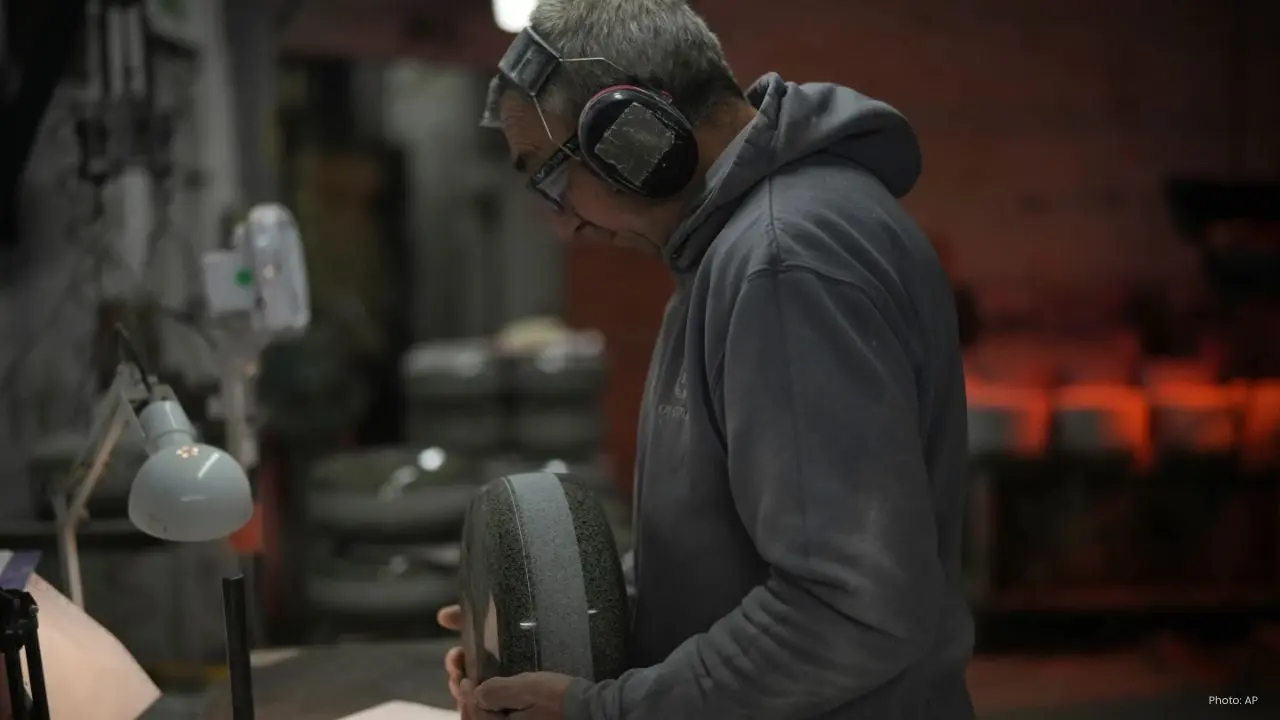
Harvesting techniques differ; common green granite typically breaks off and can weigh up to 10 tons, while blue hone requires careful extraction using gas charges to create smaller pieces under two tons. After extraction, these stones are shipped to Girvan Harbour, shaped into circular forms, and processed by Kays. Completed stones weigh around 42 pounds (19 kilograms). The cost of a single-insert stone is £704 ($930), a double-insert model runs £750 ($990), and a set of 16 double-insert stones goes for £12,000 ($15,860).
Environmental considerations are paramount, as the island is home to large gannet populations and gray seals. Precautions are taken to keep rodents at bay, with traps set to protect the local ecosystem.
The global interest in curling continues to grow. Kays produces between 1,800 and 2,000 stones each year, with Canada leading in demand. There's increasing interest from countries like China, Japan, and South Korea, especially after the recent Beijing Winter Olympics. Unexpected markets, including Qatar and Antarctica, have also sought these stones, integrating curling into exclusive luxury travel offerings.
As the Milan Cortina Winter Games approach, the unforgettable granite from Ailsa Craig will be once more integral to Olympic curling, cementing the island’s significant legacy in this beloved sport.