Bangladesh has ramped up security in Dhaka following the assassination of a young political figure, igniting fresh disturbances and heightening worries about public safety as the nation prepares for impending elections.
In a significant show of force, police and paramilitary units were mobilized on Saturday ahead of the funeral for Sharif Osman Hadi, a 32-year-old student leader and election hopeful. His tragic death incited protests, anger, and violent incidents targeting media offices and cultural sites across the country.
Hadi played a pivotal role in a student-led initiative that culminated in the ousting of long-standing Prime Minister Sheikh Hasina in August 2024. He was shot in the head by masked assailants while launching his election bid in Dhaka. After being airlifted to Singapore for medical treatment, he succumbed to his injuries six days later.
This shocking incident has unsettled the nation at a critical juncture, as a new parliamentary election is slated for February 12, a pivotal moment many hope will restore stability after nearly two years of turmoil.
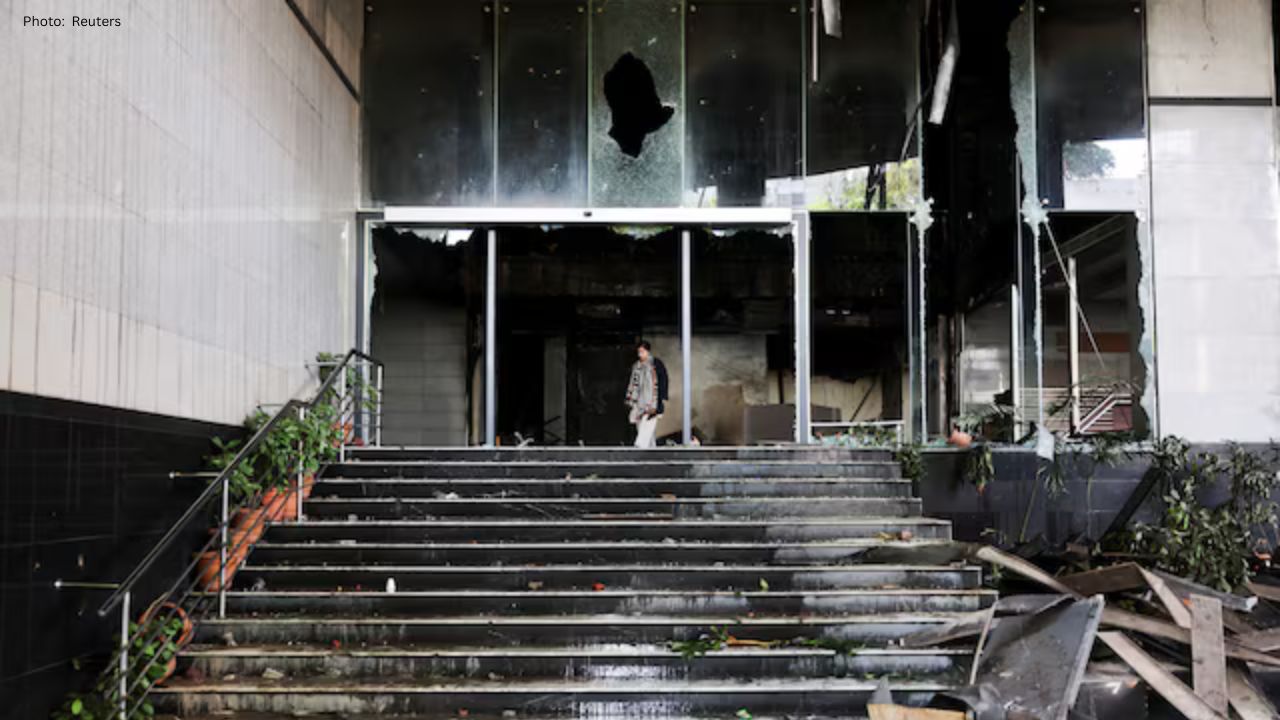
In the wake of Hadi's passing, violence has surged instead of subsiding. Angry crowds targeted and torched media facilities, political websites, and cultural organizations. Notably, the Daily Star’s building in Dhaka, a prominent newspaper, suffered extensive damage due to vandalism. Demonstrators also raided the office of Udichi Shilpigosthi, a recognized cultural group known for its progressive stance.
The interim government, led by Nobel Peace Prize laureate Muhammad Yunus, declared a day of mourning for Hadi. It called for public rejection of mob violence, emphasizing that unrest could jeopardize the integrity of Bangladesh’s democratic transition. Officials warned that fringe elements are attempting to exploit widespread anger to incite chaos.
Human rights organizations have vocally condemned the violence. Human Rights Watch labeled Hadi's murder a “horrific act” and urged the government to swiftly restore order. They also highlighted that attacks on media outlets threaten free expression.
Amnesty International has demanded a thorough and transparent investigation into Hadi’s murder and the subsequent violence. The organization stressed the necessity to protect journalists and activists, especially with national elections on the horizon.
According to global press freedom ratings, Bangladesh ranks low, sitting at 149th out of 180 countries in the World Press Freedom Index. Rights advocates are concerned that ongoing assaults on journalists will further diminish civic space and silence dissenting voices.
The turmoil has extended beyond Dhaka, with protests targeting the Indian Assistant High Commission in Chittagong, reflecting a rising anti-India sentiment after Sheikh Hasina sought refuge in New Delhi following her ousting. This situation has added a geopolitical layer to the unfolding crisis.
Meanwhile, Hasina’s Awami League, barred from the upcoming election, has cautioned against potential unrest. Analysts worry that ongoing violence and political strife could disrupt the vote or undermine its legitimacy.
Bangladesh now faces a crucial moment. The assassination of Sharif Osman Hadi transcends a mere criminal case; it tests the state's ability to safeguard its citizens, uphold freedom of speech, and ensure a peaceful electoral process.
As the nation grieves the loss of a promising leader, many are left pondering this pressing question: can justice and harmony be achieved before escalating violence plunges the country deeper into turmoil?