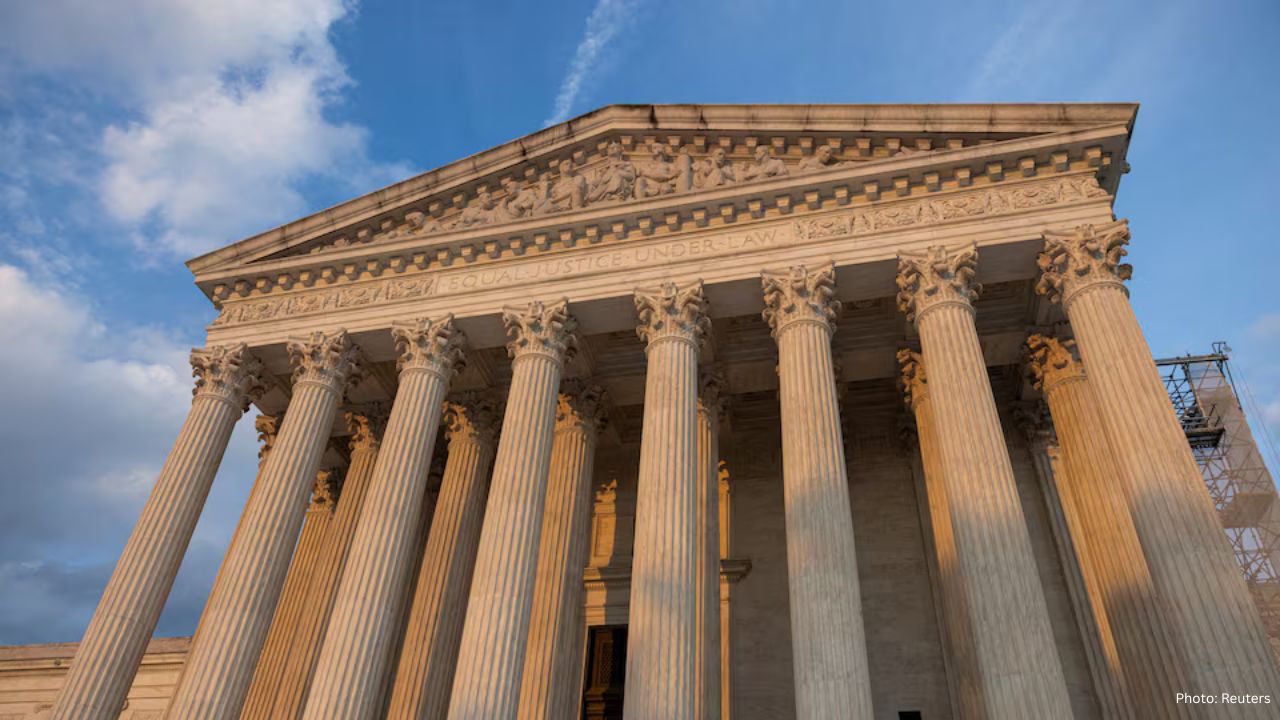
The United States Supreme Court has agreed to deliberate on a landmark case that may transform the interpretation of birthright citizenship in the nation. Central to this discussion is the 14th Amendment, which has historically ensured citizenship for anyone born on U.S. soil since the late 19th century. The Court will assess the legality of President Donald Trump’s mandate aimed at limiting this right.
This case originated from an executive order that President Trump issued immediately upon his inauguration on January 20. The directive instructed federal agencies not to confer citizenship upon infants born in the U.S. if their parents lack American citizenship or green card status. This initiative was part of a broader strategy aiming to minimize both legal and illegal immigration.
Lower courts swiftly intervened, ruling that the order contradicted constitutional provisions and a federal statute safeguarding birthright citizenship. Families concerned about losing citizenship stood up against the administration through lawsuits, resulting in favorable judgments. The government has since appealed, leading to this critical Supreme Court review. The justices are set to hear arguments during this term, with a ruling anticipated by the end of June.
Originally created post-Civil War to ensure civil rights, the 14th Amendment asserts that anyone born in the United States is a citizen, thus including children of immigrants regardless of their parents' citizenship status.
The Trump administration contends that this broad interpretation is erroneous, asserting that 'subject to the jurisdiction' implies that only children of those with legal, permanent connections to the U.S. should acquire citizenship. According to the administration, temporary visitors, students, and undocumented individuals do not fit this criterion.
Proponents of the order argue that birthright citizenship fosters illegal immigration and encourages 'birth tourism,' where expectant mothers come to the U.S. solely to ensure their children gain citizenship. They advocate for changes to bolster national security and prevent the exploitation of immigration regulations.
On the other hand, challengers maintain that the Constitution’s intent is unequivocal, referencing the Supreme Court's decisive ruling in 1898 in the Wong Kim Ark case, which upheld that children born in the U.S. to non-citizen parents are citizens. A 1952 federal law reinforces this principle as well. Civil rights organizations assert that executive orders cannot overturn constitutional mandates.
This contentious case has ignited widespread debate across the nation. Immigration has become one of the most divisive issues during Trump's administration, with critics arguing that policies disproportionately target specific demographics and violate established values. Supporters, however, claim that a stricter framework is necessary to regulate citizenship comprehensively.
This marks not the first time birthright citizenship has been scrutinized by the Supreme Court during Trump’s presidency. Early this year, the Court determined that federal judges had diminished authority to challenge nationwide policies, although it refrained from addressing the fundamental issue of citizenship rights, which is now under judicial review.
The current proceedings carry significant implications, potentially reshaping the definition of American citizenship. A ruling that favors the administration may drastically shift over a century of constitutional understanding, whereas a decision against could reinforce the longstanding principle that all children born in the U.S. are equal under the rule of law.
As deliberations approach, families nationwide are left anticipating clarity. The outcome will not only influence immigrants but also resonate significantly within the broader scope of American identity. It now lies with the Supreme Court to determine the extent to which a president may constrain a right that has been integral to the nation since the Civil War.