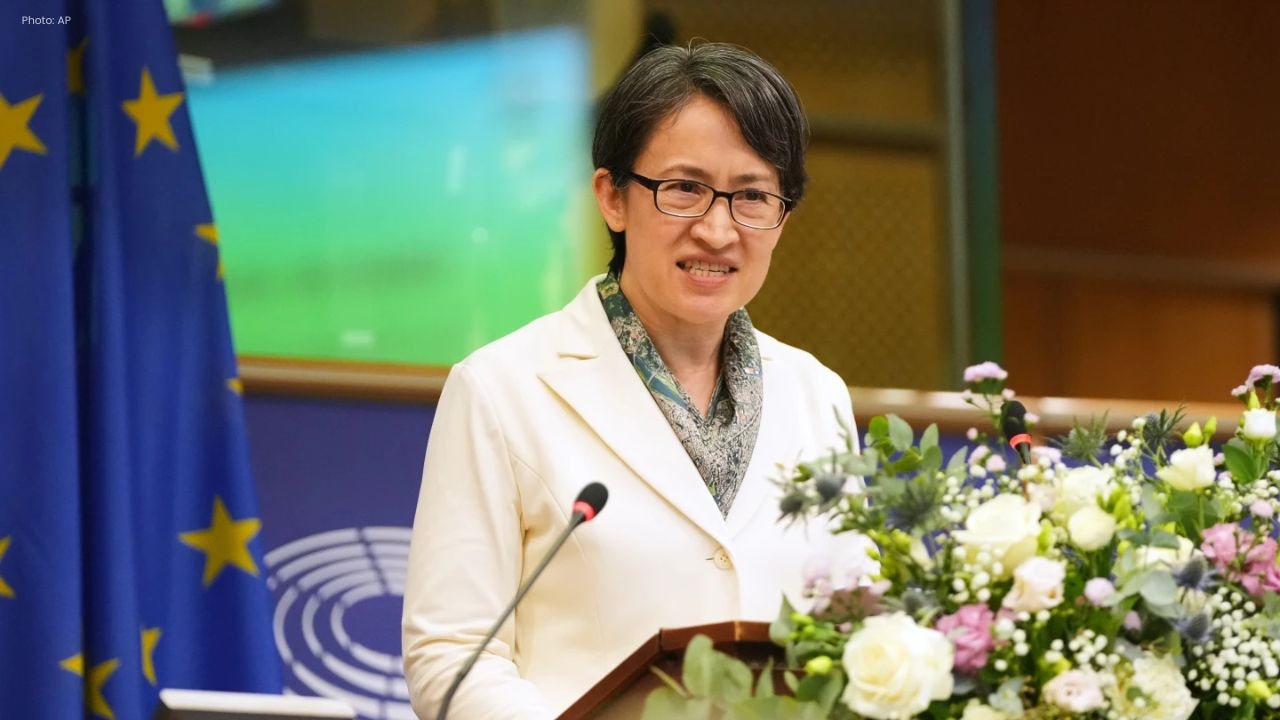
Taiwan’s Vice President Bi-Khim Hsiao made a notable plea to European lawmakers on Friday, calling for the European Union to enhance security and trade alliances with the self-governing island. During a conference focused on China in Brussels, Hsiao underscored the importance of safeguarding democracy against increasing pressures from China.
“Stability in the Taiwan Strait is crucial for global peace and economic integrity,” Hsiao remarked, stressing that any unilateral attempts to alter the status quo through force would lead to severe international fallout. Her comments were made to approximately 50 lawmakers from various nations, including Germany and Spain.
Despite the absence of formal diplomatic ties between Taiwan and the EU, the Vice President urged European states to work on secure supply networks and innovative technologies like artificial intelligence, emphasizing Taiwan’s pivotal role in the semiconductor and electronics sectors. She also drew comparisons between the cyber threats Taiwan faces and the hybrid risks observed in Europe following Russia’s aggression towards Ukraine.
China reacted vehemently to Hsiao’s visit, denouncing the European Parliament for permitting her address. In a statement, Beijing labeled the meeting a breach of the “One China” policy and cautioned Europe against sending positive signals to “separatist forces.” China has long regarded Taiwan as part of its territory and has consistently conducted military exercises near the island in recent times.
In response to growing threats, Taiwan is enhancing its defense capabilities, with President Lai Ching-te pledging to increase air defense resources and raise defense expenditures to 5 percent of GDP by 2030. Hsiao’s visit illustrates Taiwan’s continuous efforts to sustain international relations despite security challenges, including previous attempts by Chinese agents to intimidate Taiwanese officials abroad.
Experts note that amid escalating US-China rivalry, stronger collaboration between the EU and Taiwan might bolster global technology supply chains and reinforce democratic principles in the region, without unnecessarily heightening tensions.