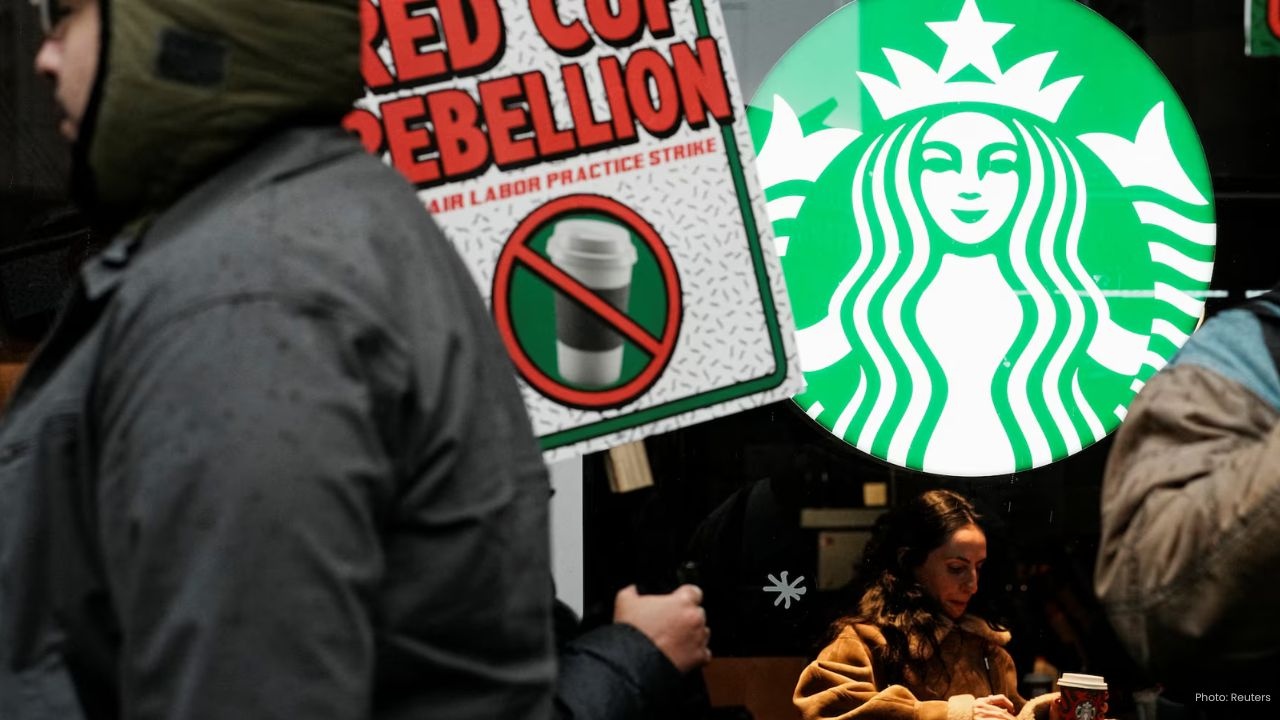
In a notable act of labor protest, baristas from 65 unionized Starbucks stores throughout the US have initiated a strike, demanding improved wages, staffing levels, and resolution to ongoing labor disputes. This walkout, organized by Starbucks Workers United, coincided with the busy Red Cup Day, leading to widespread media and social media coverage.
Union Advocates for Justice
The union, established four years ago, has won elections in over 600 Starbucks establishments, representing approximately 5% of the company-operated stores in the US. More than 1,000 baristas in 40+ cities are involved in this unfair labor practice strike. Union leaders are vocal about the need to address stalled contract negotiations, particularly concerning wages, shift scheduling, and staffing issues.
“We are risking everything—our jobs and our financial stability,” said Dachi Spoltore, a barista striking in Pittsburgh. “This is no game for us, even if it is for Starbucks.”
Concerns Over Staffing and Policies
Baristas have expressed frustration over prolonged hours and heavy workloads, often operating with inadequate staff. Rami Saied, a union member from Brooklyn, shared experiences of 30-minute delays in drink orders due to lack of support, while shift supervisor Kaari Harsila highlighted tensions arising from new policies that limit bathroom and water access for non-paying customers.
“Staffing is crucial,” commented Ms. Saied. “We’re putting in back-breaking efforts, which strips us of our dignity.”
Corporate Reaction and Recent Initiatives
Starbucks has attempted to downplay the strike's significance, claiming it affects less than 1% of its national locations and the majority remain operational. Under CEO Brian Niccol’s “Back to Starbucks” plan, the company has rolled out a $500 million investment strategy focused on enhancing staffing and training, which includes improvements like cozier seating and a revamp of store policies.
Despite a reported 1% growth in global same-store sales last month, the US market demonstrated stagnation. Starbucks argues that increased pay demands from the union could impact both operations and customer satisfaction, asserting that employees already receive attractive wages and benefits, averaging about $30 per hour.
Negotiation Stalemate
Contract negotiations, which took off last year, have stalled on critical economic points. Although a mediator was introduced earlier this year, disagreements persist over wage increments, staffing requirements, and numerous pending unfair labor practice allegations. A union-proposed pay increase for the first year was dismissed, with claims of insufficient adjustment for inflation and healthcare costs.
Rising Tensions Ahead
Experts suggest that while the strike is limited in its immediate reach, it might create a heightened level of scrutiny for Starbucks, particularly amid rising consumer dissatisfaction regarding pricing and managerial shifts. With the likelihood of extending the strike to more locations, both the company and the union must navigate growing expectations to resolve issues before further disruptions tarnish the brand's image and holiday sales momentum.