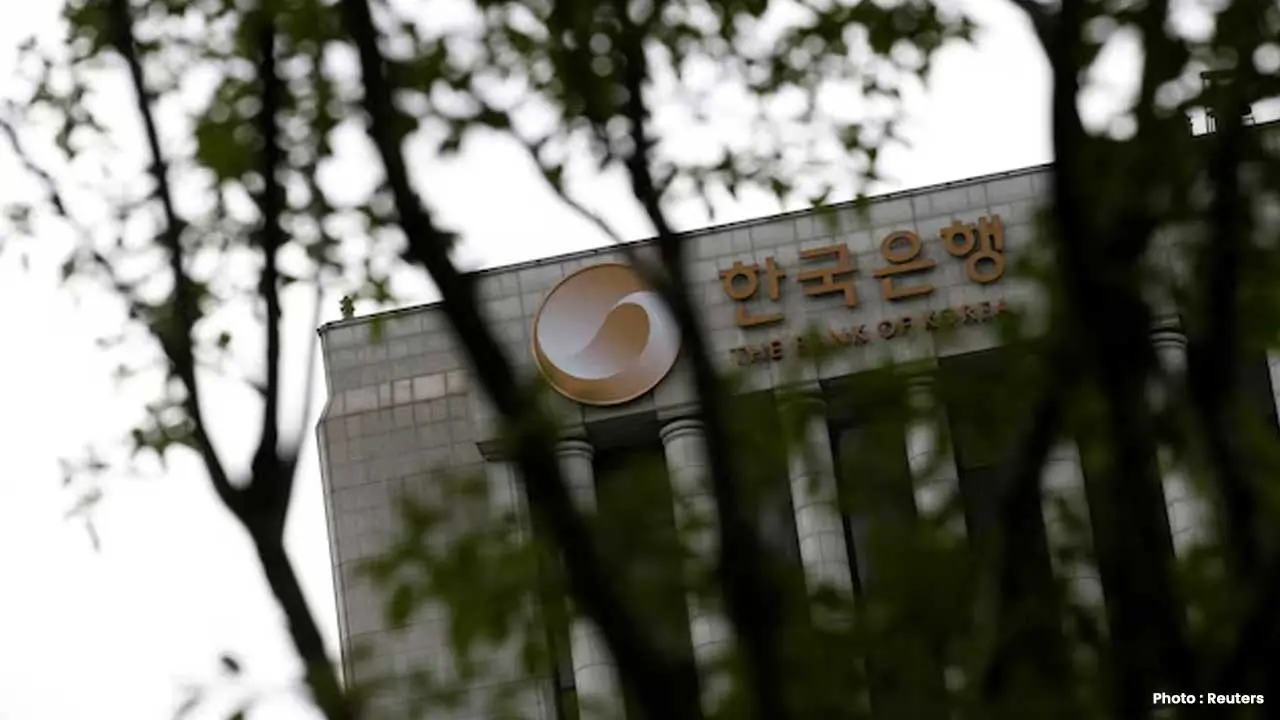
South Korea’s central bank has decided to maintain its interest rates for the fourth time in a row, indicating it might be nearing the end of its current cycle of rate cuts. On Thursday, the Bank of Korea (BOK) confirmed that the benchmark interest rate would stay at 2.50%, aligning with market predictions.
In its latest economic assessment, the BOK revised its growth and inflation projections for 2025, raising them to 1.0% and 2.1% respectively. A significant change in their statement was the removal of references to a continued “rate cut stance,” now opting for the phrase, “the Board will decide whether and when to implement any further Base Rate cuts.” This marks a shift towards a more cautious stance amid concerns about a weakening Korean won.
Governor Rhee Chang-yong expressed worries about the depreciating currency, suggesting that this could lead to rising prices. He remarked, “Firms reliant on domestic consumption may encounter difficulties, though the overall effect on the economy remains uncertain.”
The South Korean economy faces various complexities. Although domestic spending is on the rise, the weak currency restricts the central bank's capacity to promote growth without triggering inflationary pressures. Analysts lean towards the idea that the next potential rate cut might occur in the first quarter of 2026, rather than occurring later this year. Several policymakers are cautious about any further easing, pointing to rising housing prices in Seoul and broader financial stability concerns.
Ahn Jae-kyun, an economist at Korea Investment Securities, commented, “While it’s challenging to entirely dismiss the possibility of further easing, the chances of additional rate cuts appear slim for now. Rates are anticipated to remain steady in the immediate term.” He further emphasized that it’s premature to consider rate increases, especially with hints of a potential economic downturn in the second quarter of the upcoming year.
During this quarter, the Korean won has sharply declined, falling nearly 4% against the US dollar and ranking as the second-worst performing currency in Asia, following the Japanese yen. The government has been in discussions with major financial stakeholders, including the National Pension Service and exporters, to seek methods to stabilize the dollar-won exchange rate, although no concrete measures have yet been introduced.
Looking to the future, the BOK anticipates that South Korea’s economy will achieve a growth rate of 1.8% in 2026, while headline inflation is expected to hold steady at 2.1%. This underscores the delicate balance the central bank has to strike between fostering growth and managing inflation.