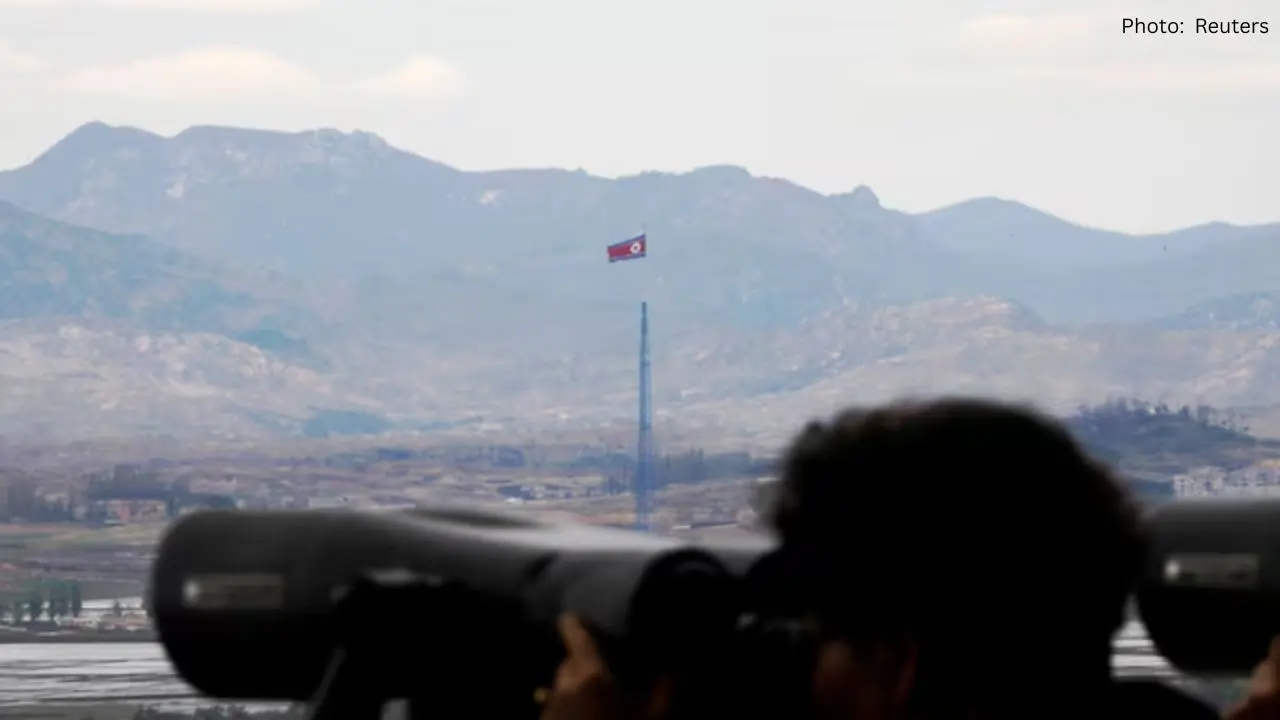
In response to North Korea's assertion that its airspace has been breached by drones, South Korea has commenced a formal inquiry. This development intensifies the ongoing security concerns in the Korean Peninsula, a region historically marked by conflict and distrust.
The Ministry of Defence in South Korea stated that the investigation aims to determine whether civilian operators may have flown drones into North Korean territory. Officials emphasized that uncovering the truth is vital for national security.
President Lee Jae Myung has committed to a swift and impartial investigation, warning that if civilians are found culpable for crossing the border, it would be deemed a serious offense that could endanger regional peace.
North Korean officials accused South Korea of engaging in “provocative actions” by allegedly deploying drones into their airspace. They claimed to have downed the drones and shared parts of the vehicles along with aerial images purportedly captured by them.
However, South Korea's military firmly refuted these claims, stating that it does not operate the specific model cited by North Korea and had no drones in operation on the date mentioned. They also declared there was no intent to instigate any confrontation with the North.
The Defence Ministry also indicated a willingness to engage in a joint investigation with North Korea to clear up the matter, though there has been no formal proposal as of yet. Past overtures for dialogue from South Korea have often gone unanswered by Pyongyang.
This situation arises amidst already strained relations between the two Koreas, with North Korea being armed with nuclear capabilities. Even minor incidents can escalate into significant geopolitical tensions.
Compounding these issues, former South Korean President Yoon Suk Yeol appeared in court on Monday facing accusations related to attempts to provoke North Korea in 2024, linked to his alleged desire to instate martial law. His trial also involves charges of insurrection connected to these efforts.
The drone dispute illustrates a larger issue in contemporary security: the potential misuse of drones. The accessibility and ease of operation of such technology complicate governmental control over its use, raising concerns about accountability and national safety.
From an editorial standpoint, South Korea's resolve to conduct a thorough investigation is commendable. In matters involving national defenses and territorial integrity, clear and verified information is essential. Unsubstantiated claims can exacerbate fears and escalate tensions unnecessarily.
Simultaneously, it is crucial to maintain lines of communication between the two Koreas. While deep-seated mistrust persists, dialogue and transparency are fundamental in preventing miscommunications from evolving into conflict.
This incident underscores the precarious nature of peace on the Korean Peninsula, where even a single drone occurrence can trigger widespread alarm. Observers will closely monitor the results of South Korea's investigation, as its implications resonate beyond the two Koreas to the global community.