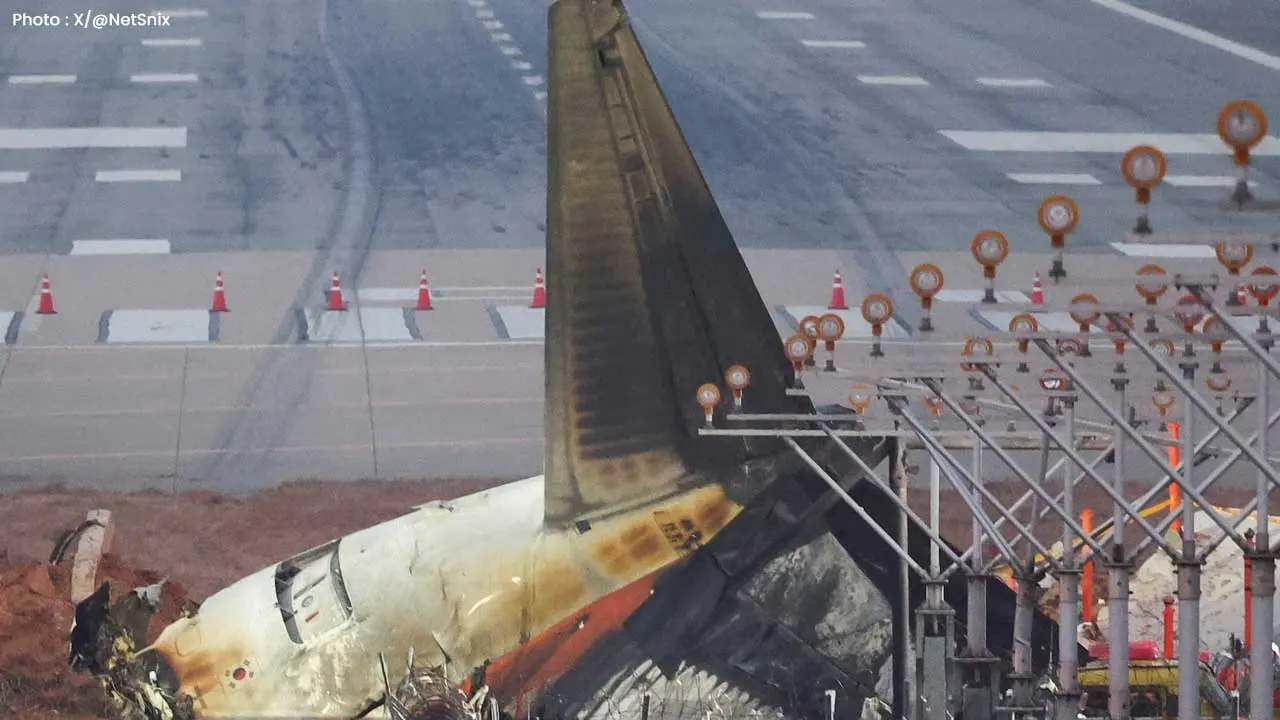
In a significant development, South Korea's parliament has authorized an independent investigation into the tragic Jeju Air crash that occurred in December 2024. This initiative was agreed upon on Monday as part of a fresh legislative bill aimed at uncovering the complete truth behind this national tragedy.
Registered as the deadliest aviation accident in South Korea's history, the crash resulted in the loss of 179 lives, with only two survivors from the flight.
An independent 18-member panel of lawmakers will spearhead this investigation, tasked with determining what went wrong and whether previous inquiries obscured critical errors.
The panel will thoroughly examine multiple factors that could have contributed to the Jeju Air accident, including bird strikes, engine malfunctions, and the safety conditions of the airport runway.
The incident involved a Jeju Air Boeing 737-800 during its landing attempt at Muan airport, where it was forced to land without its landing gear deployed. Tragically, the aircraft overshot the runway and collided with a raised structure, catching fire and resulting in catastrophic fatalities.
Initial findings from a government accident board indicated that both engines were struck by birds. However, a subsequent update raised alarms when it emerged that the left engine had been turned off, despite being less damaged than the right, potentially affecting the aircraft’s performance.
Experts have also expressed concerns regarding the structure at the runway's end, indicating that it failed to comply with international safety regulations designed to mitigate crash impacts.
The new investigation will examine allegations that government entities may have concealed or downplayed critical findings regarding the Jeju Air tragedy.
Although the official investigation has yet to release a conclusive report, safety analysts emphasize that aviation accidents are frequently caused by a combination of factors rather than a singular issue.
Lawmakers underscore the necessity of this new inquiry to ensure comprehensive understanding, rectify safety deficiencies, and prevent similar catastrophes from occurring in the future.