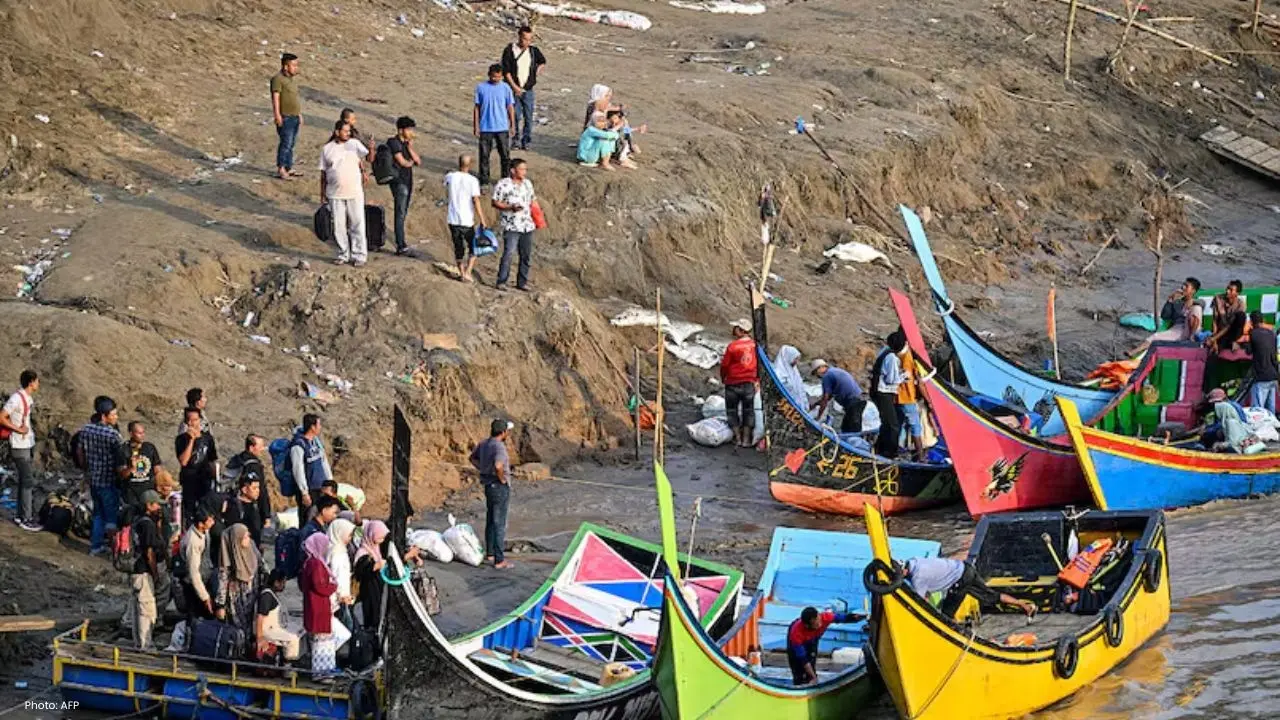
A wave of powerful cyclones driven by unusually warm ocean waters has unleashed one of the deadliest climate disasters South Asia has seen in years, with more than 1,600 lives lost and millions of people forced to flee their homes across Malaysia, Sri Lanka and Thailand. Scientists studying the event say the storms were dramatically intensified by rising global temperatures, which caused the atmosphere to hold far more moisture than normal.
The weather systems developed slowly over the northern Indian Ocean, building up heat and humidity before slamming into densely populated regions. What should have been routine monsoon rain turned into days of relentless downpours, triggering landslides that wiped out entire neighbourhoods and floods that swallowed villages in minutes. Many communities received alerts but had little understanding of how severe the storms would become, as powerful cyclones are uncommon near the equator.
In Sri Lanka, survivors described waking up to the sound of the ground collapsing beneath them, while rescue teams continued searching for dozens still missing under thick mud. Some areas saw water levels rise so suddenly that people on second floors were trapped with no escape route. Emergency crews struggled to reach remote pockets after bridges, highways and power lines were ripped apart by the torrents.
Scientists involved in the post-storm analysis say that without the additional heating caused by decades of fossil fuel emissions, the cyclones would have been far weaker. Preliminary findings suggest the likelihood of this level of extreme rainfall has increased significantly, turning what was once a rare event into something the region may face much more often.
Environmental degradation worsened the situation. Hills stripped of trees collapsed easily under the weight of water, and expanding towns built across natural drainage routes suffered the most destruction. Hundreds of thousands of structures were damaged or destroyed, and key water networks were contaminated, leaving relief agencies racing to restore clean supplies.
Early economic assessments estimate several billion dollars in losses across the affected countries, with Sri Lanka alone facing damage equivalent to a large share of its annual national income. Officials and climate experts warn that the disaster is a preview of what unchecked warming could bring, urging governments to overhaul early-warning systems, strengthen infrastructure and prepare communities for a future where extreme storms hit more frequently and with far greater power.