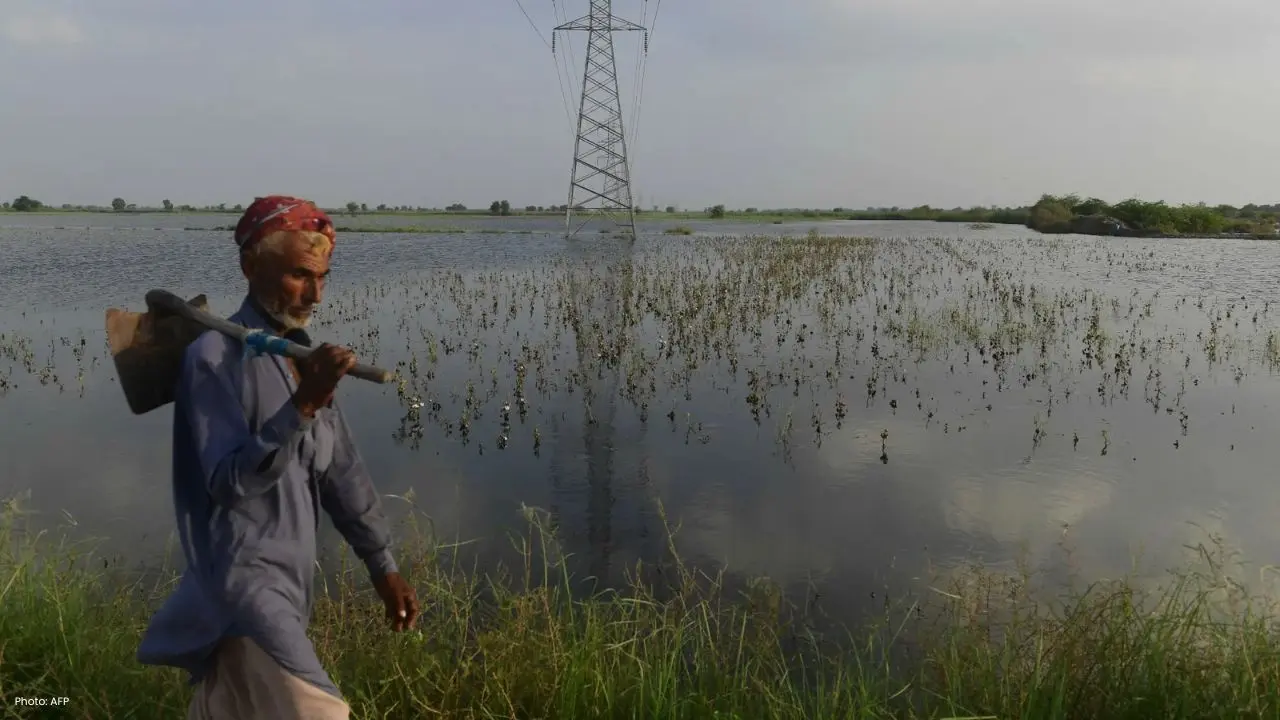
Sindh farmers, including Hamza Khan Kalhoro, Abdul Hafeez Khoso, and Abdul Khaliq Leghari, convened a press conference to announce their intent to initiate a climate accountability lawsuit in Germany. The case is directed at two prominent corporations, RWE and Heidelberg Materials, which rank among the foremost CO2 emitters globally. Their goal is to hold these firms liable for climate-induced damages that have severely impacted their lives and livelihoods.
The farmers shared that the catastrophic floods of 2022 resulted in immense losses, destroying crops, livestock, and homes, and launching countless families into protracted economic hardships. They highlighted that Pakistan, contributing less than one percent to global greenhouse gas emissions, disproportionately bears the brunt of extreme climate phenomena. The lawsuit, filed under German civil law, employs the “polluter pays” principle, seeking reparations for the extensive damages they have suffered.
Nasir Mansoor, leader of the National Trade Union Federation (NTUF), emphasized that climate change poses significant threats to labor and livelihoods. He remarked that recurring climate shocks jeopardize rural employment and food security, while exacerbating inequalities. He commended the farmers’ choice to pursue legal measures and underscored the critical necessity for climate justice to defend vulnerable communities from the effects of global warming.
Experts advocating for the farmers clarified that the 2022 floods should not be viewed merely as a “natural disaster,” but rather as a consequence of human-induced global warming. Dr. Shaikh Tanveer Ahmed of HANDS Welfare Foundation noted that communities are bearing the consequences of emissions they did not produce. International legal authorities, such as Miriam Saage-Maab from ECCHR and Karin Zennig from Medico International, asserted that this case shines a light on the voices of impacted communities on global platforms and demonstrates the increasing influence of climate litigation in intertwining scientific research, human rights, and accountability.
With support from local and international organizations, the farmers are urging the global community to acknowledge climate-related losses as matters of justice and responsibility. With 43 farmers from Sindh joining the lawsuit, they aspire for this legal action to prompt corporate accountability, thereby contributing to global initiatives aimed at averting future climate calamities. This case is viewed as a pivotal stride towards holding polluting companies accountable for the devastation that climate change has wrought.