Photo : Reuters
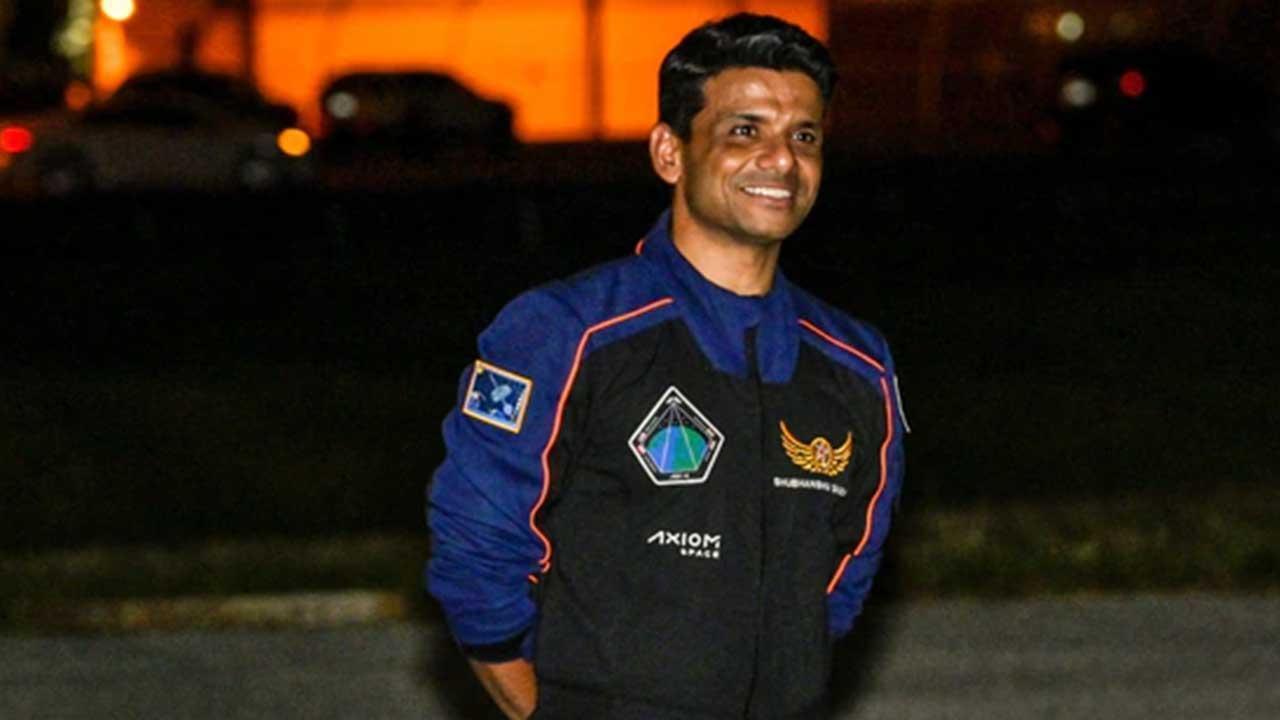
Shubhanshu Shukla Returns After Historic Mission to International Space Station, Opens New Chapter in India’s Space Journey
In a landmark moment for India’s space history, Group Captain Shubhanshu Shukla, an Indian Air Force officer and astronaut, has safely returned to Earth after completing a historic mission to the International Space Station (ISS). He was part of the Axiom Mission 4 (Ax-4), a fully commercial space mission organized by Axiom Space and launched aboard SpaceX's Crew Dragon spacecraft 'Grace'.
This mission has placed Shubhanshu Shukla in the history books as the first Indian astronaut to live and work aboard the International Space Station. His successful return marks a huge leap for India’s space ambitions and a proud achievement for the entire nation.
Splashdown in the Pacific Marks Successful Return
The Crew Dragon ‘Grace’ capsule, carrying Shukla and his three fellow crewmates, splashed down safely in the Pacific Ocean, off the coast of San Diego, California, on Tuesday, July 15. The return marked the end of a 22.5-hour journey from space and concluded an 18-day mission on board the International Space Station.
Shukla was accompanied on this mission by:
- Peggy Whitson (USA) – Mission Commander and former NASA astronaut
- Slawosz Uznanski-Wisniewski (Poland) – Mission Specialist
- Tibor Kapu (Hungary) – Mission Specialist
The crew undocked from the ISS on Monday at 4:45 PM IST, and SpaceX later confirmed their safe return with the statement:
“Splashdown of Dragon confirmed – welcome back to Earth, @AstroPeggy, Shux, @astro_slawosz, and Tibi.”
Immediately after landing, recovery teams reached the capsule in speedboats. The spacecraft was then towed to SpaceX's recovery ship Shannon, where all four astronauts were safely brought out.
Post-Landing Care and Rehabilitation
Returning from space is physically demanding. Astronauts experience weightlessness in space, and their bodies need time to readjust to Earth’s gravity.
The Ax-4 astronauts, including Shukla, are now undergoing medical tests and a week-long rehabilitation program. These evaluations are important to check the physical effects of microgravity on their bones, muscles, balance, and overall health.
They will spend the next few days recovering and re-adapting to Earth’s environment before they return home.
PM Modi and Rajnath Singh Hail the Hero
Prime Minister Narendra Modi was among the first to welcome Shukla back. In a social media post, the Prime Minister praised his courage and called the mission a step forward in India’s space journey.
“I join the nation in welcoming Group Captain Shubhanshu Shukla as he returns to Earth from his historic mission to space. As India’s first astronaut to have visited the International Space Station, he has inspired a billion dreams through his dedication, courage and pioneering spirit. It marks another milestone towards our own Human Space Flight Mission – Gaganyaan,” PM Modi posted on X.
Defence Minister Rajnath Singh also congratulated Shukla and said his success is a matter of pride for the country.
“Shukla has not only touched space but also raised the aspirations of a new India. His mission represents the power of our people and the strength of our space ambitions,” he said.
The Axiom-4 Mission: A Global Collaboration
The Ax-4 mission was launched by Axiom Space, a private American space company working with NASA and SpaceX to develop future space missions. This mission is part of Axiom’s plan to build the world’s first commercial space station, which could replace the ISS in the coming decade.
Ax-4 served as an important learning experience for space agencies, scientists, and astronauts worldwide. It also proved how international cooperation can take space research further.
India’s Growing Role in Global Space Efforts
For India, Shubhanshu Shukla’s successful space journey is more than just a personal victory – it’s a symbol of India’s growing presence in global space missions. His time aboard the ISS marks India’s deepening engagement in international space exploration, especially in the field of human spaceflight.
Until now, only Rakesh Sharma had gone to space from India, and that was way back in 1984, as part of a Soviet mission. Shukla’s mission is unique because it is the first time an Indian has stayed on the ISS, worked alongside global astronauts, and conducted scientific and technical activities in space as part of a modern international crew.
What This Means for Gaganyaan and India’s Future in Space
Shubhanshu Shukla’s mission is expected to greatly benefit ISRO’s Gaganyaan project, which plans to send Indian astronauts into space on an Indian spacecraft in the near future.
His experience aboard the ISS—ranging from handling space systems, performing research experiments, living in zero gravity, and maintaining communication with Earth—will offer valuable knowledge for ISRO engineers and scientists.
This marks the beginning of a new era where India is not just sending satellites to space, but also preparing to send humans into space regularly.
Shukla's Mission: A Dream That Inspires Millions
Shubhanshu Shukla’s journey is not just about science and technology. It is also about dreams, determination, and dedication. Coming from India’s defence forces, and trained both as a pilot and astronaut, Shukla’s life shows what is possible when talent meets opportunity.
His story will now inspire students, scientists, engineers, and explorers across India and beyond.
He has proven that with focus and training, even the sky is not the limit.
The return of Shubhanshu Shukla from the International Space Station is a moment of pride, hope, and progress. It is a message to the world that India is ready to lead in the future of space.
His journey shows that India is moving forward with confidence and strength, aiming not only for the Moon and Mars, but also for a permanent role in human spaceflight.
As the world watches, India rises — one astronaut, one mission, and one dream at a time.